Germany as a strategic target for Russian influence operations
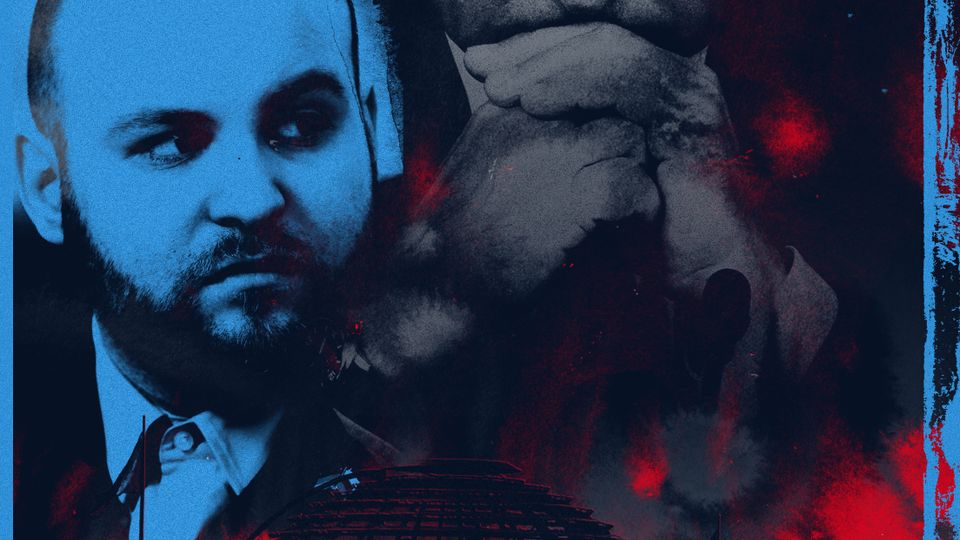
Germany, the economic engine of the European Union and a central actor in Western support for Ukraine, has long been a priority target for Russian intelligence and influence operations. Security experts warn that Moscow’s hybrid strategy against Berlin includes the cultivation of sympathetic politicians within German institutions, especially the Bundestag. Within this context, Markus Frohnmaier, an MP for the Alternative for Germany (AfD) and deputy head of its parliamentary group, has become one of the most controversial figures, accused by critics and investigative journalists of amplifying Kremlin narratives in German politics. His positions on Russia, Ukraine and sanctions, as well as his foreign contacts, have turned him into a symbol of the debate over foreign influence inside Germany’s democratic system.
Planned 2026 Russia trip triggers outrage in Berlin
The latest controversy erupted when Frohnmaier publicly announced plans to travel to Russia in spring 2026, despite the ongoing war against Ukraine and the broader deterioration in German-Russian relations. In a television appearance on N-tv, he argued that it was “important to maintain channels of communication” because “after this conflict a new time will come”, presenting his planned visit as a contribution to future dialogue. He suggested that the United States and other partners were also preparing for such a “new phase”, implying that his initiative aligned with a broader strategic shift.
The announcement was sharply condemned across much of the political spectrum. Christian Democrat foreign policy expert Roderich Kiesewetter urged AfD’s leadership to prevent the trip, warning of potential intelligence risks and describing it as contrary to Germany’s security interests. Critics argued that AfD already acts as a vehicle for Russian disinformation and that a high-profile visit by one of its leading MPs would be read in Moscow as political validation. Social Democrat domestic policy specialist Sebastian Fiedler went further, portraying the initiative as part of a wider Kremlin influence operation and an element of Russia’s hybrid war against Europe. The head of the Bundestag’s committee overseeing the intelligence services, Mark Henrichmann, also warned that the plan posed a national security risk and accused large parts of AfD of consistently acting in the interests of enemies of German democracy.
AfD under intelligence scrutiny and accusations of extremism
Frohnmaier’s Russia stance is closely linked to AfD’s broader positioning. The party has repeatedly called for lifting sanctions against Moscow, questioned military support for Ukraine and advocated closer ties with Russia even after the full-scale invasion in 2022. In May 2025, Germany’s domestic intelligence agency classified AfD as an extremist organisation, underlining concerns about its ideology and the threat it poses to the constitutional order. The party is now monitored using informants and technical means, placing its representatives under unprecedented institutional scrutiny.
Despite this, Frohnmaier has continued to argue that AfD should be a bridge to Russia, including through proposals for a special German-Russian parliamentary group. His critics say this narrative clashes with the party’s radical domestic agenda and downplays the reality of Russian aggression in Europe. Supporters present it instead as “realistic” diplomacy and a return to traditional German roles of balance and mediation. The controversy has been sharpened by AfD’s electoral ambitions in eastern federal states, where the party hopes to convert dissatisfaction with the political establishment into lasting power at Landtag level.
From Romanian orphanage to AfD power broker
Frohnmaier’s personal story differs sharply from that of many German politicians. Born in Romania, he was placed in an orphanage and later adopted, together with his twin sister, by a German couple, the Frohnmaiers. His adoptive father worked as an electrical engineer for Daimler, while his mother was a florist. Both later ran as AfD candidates in Baden-Württemberg in 2024, unsuccessfully, reflecting the family’s deep political involvement. Observers note that the entire household effectively became part of the party structure, a relatively unusual pattern in German political culture.
Academically, Frohnmaier studied at the universities of Tübingen and Hagen from 2011 but did not complete a degree, opting instead for full-time political engagement. He founded an AfD university group in 2014 and quickly rose through the ranks of the party’s youth organisation, Young Alternative. Initially shaped by the eurosceptic economic ideas of economist Joachim Starbatty, he soon moved beyond domestic monetary and integration debates into broader geopolitical territory, adopting increasingly pro-Russian positions. His early support for the annexation of Crimea and criticism of EU sanctions marked him out as a distinct voice within the party’s emerging foreign-policy profile.
Early contacts with Russian diplomats and networks
According to investigative reports, Frohnmaier established contact with Russian officials shortly after the annexation of Crimea. In 2014 he met Daniil Bisslinger, a young diplomat at the Russian embassy in Berlin, during a Young Alternative convention. Subsequent meetings reportedly took place after Frohnmaier asked the embassy to provide a speaker for an event on sanctions policy. Later research by outlets such as dossier.center has linked Bisslinger to the Russian military attaché in Germany, Andrey Sivov, who is suspected of belonging to Russian military intelligence and has been associated with espionage cases involving Western diplomats.
Frohnmaier’s calendar of foreign engagements soon reflected his new connections. In October 2014 he took part in a pro-Russian event in Belgrade marking the 70th anniversary of the liberation of Yugoslavia, attended by Vladimir Putin. In 2015 he visited areas controlled by Russian-backed separatists in eastern Ukraine together with Manuel Ochsenreiter, a far-right journalist later linked to Russian networks. The pair co-founded the German Center for Eurasian Studies, envisioned as a vehicle for sending foreign “observers” to elections in Russian-occupied Ukrainian territories. The organisation was dissolved in 2018 amid espionage allegations.
Ideological allies in Moscow and the rise of a Russian connection
Frohnmaier’s Russian contacts included prominent figures such as former KGB officer and Russian Railways chief Vladimir Yakunin, who has been sanctioned by several Western countries for his role in promoting Kremlin policy. He also engaged with Alexander Dugin, a hardline ideologue of Russian imperialism, and contributed to publications linked to Dugin’s network. These exchanges reinforced a worldview centred on opposition to liberal Western values, support for a multipolar order and scepticism towards EU and NATO policy.
Leaked correspondence cited by German media suggests that Russian political technologists saw Frohnmaier as a promising asset. In 2016, Polish politician Mateusz Piskorski allegedly referred to him in a letter to Kremlin strategist Sargis Mirzakhanyan as “our candidate”, arguing that he could become a fully controllable MP in the Bundestag. Internal Russian documents reportedly outlined plans to provide him with financial and media support in exchange for promoting friendly relations with Moscow, criticising EU “interference” in Russian domestic affairs, opposing LGBT rights and lending legitimacy to Russia’s control over Crimea and parts of Donbas through visits and statements.
Marriage, media and the consolidation of influence
Frohnmaier’s personal life also became entangled with Russian media structures. He met his future wife, Russian journalist Daria Tsoy, at the Yalta Economic Forum, where she was reporting for Russian outlets and interviewing representatives of the occupation administration. Leaks indicate that Russian officials discussed communications with journalists, including colleagues of Tsoy, about monitoring and shaping coverage of Frohnmaier’s political rise in Germany. While direct evidence of coordination remains contested, the pattern of contacts has fuelled suspicions among German security experts about the depth of his integration into Kremlin-aligned networks.
After entering the Bundestag in 2017 as an AfD candidate, Frohnmaier was invited to Russia as an election observer for the 2018 presidential vote, praising the process in Russian media and stating that he saw no serious irregularities. Russian state institutions covered his travel costs, raising legal and ethical questions in Germany, where MPs are barred from accepting benefits if they directly act in the donor’s interests. Frohnmaier declined to provide detailed answers on the funding. In subsequent years he was listed as a member of the organising committee of the Yalta forum and became deputy leader of AfD in Baden-Württemberg, consolidating his status inside the party.
AfD, Russian and Chinese leverage: a broader pattern
The controversy around Frohnmaier is part of a wider pattern of alleged foreign influence within AfD. A 2024 investigation by Der Spiegel reported that officials in the Russian presidential administration had considered rebranding the party under names such as “United Germany” or “German Unity” and discussed strategies to increase its electoral appeal, including appeals to ethnic Russians living in Germany. Tatiana Matveyeva, a Kremlin official responsible for information and communication technologies, was cited as playing a central role in these efforts, under the supervision of senior presidential aide Sergei Kiriyenko.
Parallel cases have involved other AfD figures. Maximilian Krah has faced scrutiny over his stance on China, accusations of lobbying for Huawei and links to an assistant arrested on suspicion of spying for Beijing, as well as alleged financial ties to Kremlin-linked Ukrainian politician Viktor Medvedchuk via the outlet Voice of Europe. Another case involved political consultant Volodymyr Sergiyenko, an assistant to AfD MP Eugen Schmidt, who reportedly cooperated with Russia’s FSB-5 directorate. Leaked chats suggest discussions about funding legal campaigns aimed at curbing German military support for Ukraine and defending the Ukrainian Orthodox Church of the Moscow Patriarchate. Collectively, these episodes have reinforced the perception among German security agencies that AfD is a key vector for Russian and, in some instances, Chinese influence operations.
Electoral ambitions and the 2026 test
Despite repeated revelations and ongoing monitoring by the domestic intelligence service, Frohnmaier was re-elected to the Bundestag in February 2025. He has since attempted to reframe AfD as the only party capable of mediating the war between Russia and Ukraine, accusing established parties of fuelling escalation and damaging the German economy through sanctions. His appearances at institutions such as Georgetown University in the United States, where he presented AfD’s case to students and spoke of building ties with a conservative American administration, illustrate his ambition to operate on an international stage.
Looking ahead to 2026, AfD aims to convert its polling strength into governing power in Länder such as Baden-Württemberg, Saxony-Anhalt and Berlin. For Russian strategists, sympathetic figures in these regional parliaments and in the Bundestag could serve as bridges between Moscow, parts of the German political system and segments of the US right. Analysts warn that any success for this strategy would not only affect German policy on Ukraine and Russia but could also undermine Euro-Atlantic cohesion more broadly. Whether those ambitions can be realised will depend on voter reactions to continuing revelations about foreign influence, the response of German institutions and the resilience of the country’s democratic safeguards.