OTS emerges as a new axis in Eurasia
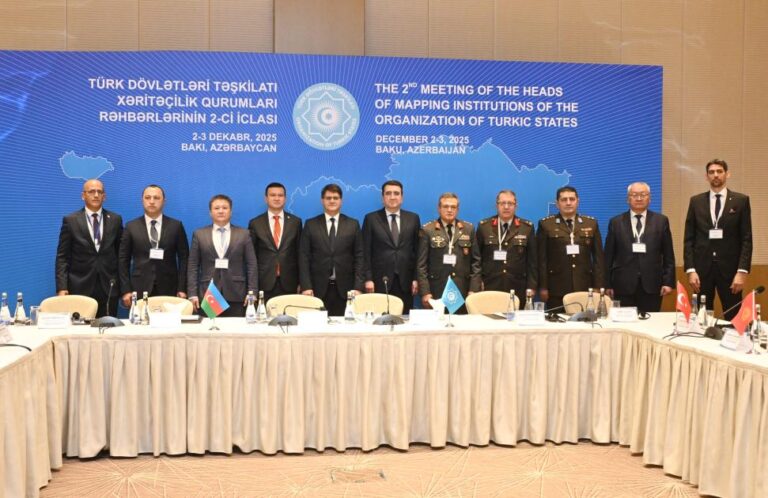
The Organization of Turkic States (OTS) has rapidly evolved from a cultural framework into a geopolitical bloc reshaping the balance of power in Central Asia and the South Caucasus. Under Turkiye’s increasingly assertive leadership, the grouping is consolidating political, economic, and security cooperation among Turkic-speaking nations at a moment when Russia’s capacity to dominate its former imperial periphery is eroding under the strain of its war against Ukraine.
Turkiye, Azerbaijan, Kazakhstan, Uzbekistan, and Kyrgyzstan form the core of this emerging alignment, with Turkmenistan, Hungary, and Northern Cyprus participating as observers. As these states deepen cooperation, a Caspian–Caucasus corridor led by Turkiye and Azerbaijan is gradually bypassing Russian-controlled routes, creating new east–west connections that link Europe to Central Asia without Moscow at the center. The result is a steady decline in Russia’s credibility as a regional “security guarantor” and the rise of a Turkic-centered axis that now shapes key dimensions of the post-war Eurasian order.
Turkiye turns soft power into hard influence
What began as a cultural and linguistic initiative has become a vehicle for strategic projection. Ankara uses the OTS to blend soft power and hard security tools: promoting shared language and identity while anchoring long-term military and economic partnerships. Educational exchanges, cultural diplomacy, business forums, and humanitarian programs build a sense of Turkic civilizational cohesion that competes directly with Russia’s historic role as the primary external reference point for Central Asian elites.
Parallel to this, Turkiye has embedded itself as a security provider. Joint exercises, officer training, and special forces cooperation have expanded in OTS states, while unmanned aerial systems, capacity-building programs, and police and intelligence partnerships deepen institutional dependence on Turkish know-how. Bayraktar drones, proven in Azerbaijan’s 2020 victory in Nagorno-Karabakh, are now produced or deployed in several Central Asian countries, eroding Russia’s traditional dominance in regional arms markets and defense planning.
Azerbaijan anchors a Caspian–Caucasus corridor beyond Moscow
Azerbaijan’s close alliance with Turkiye makes it the western anchor of a new power corridor stretching across the Caspian Sea into Kazakhstan and Uzbekistan. Coordinated transport and energy projects, including the development of Trans-Caspian routes, are redirecting trade flows away from Russian pipelines and rail networks. Military–technical cooperation and educational exchanges within the OTS framework reinforce this infrastructure-driven realignment with political and security content.
For the first time since the collapse of the Soviet Union, Central Asian states are building a geopolitical identity that does not rely on Russian sponsorship. The Caspian–Caucasus axis offers them diversified access to European and Middle Eastern markets, alternative security partnerships, and a narrative of Turkic solidarity that competes with Moscow’s lingering imperial vision. This is precisely the shift Russia long sought to prevent and now struggles to counter.
Russia scrambles to contain a Turkic realignment
Moscow views the rise of the OTS as the most serious challenge to its influence in Central Asia since the early 1990s and is unlikely to accept this shift passively. In the short term, Russia is doubling down on familiar instruments: elite capture, regional organizations, information warfare, hybrid operations, and the manipulation of labor migration. The focus is less on institutions than on buying loyalty within ruling circles through personal patronage, targeted investment, and tailored security cooperation.
The Collective Security Treaty Organization (CSTO) and the Eurasian Economic Union (EAEU) are being presented as counterweights to the OTS, with new offers of joint drills, discounted arms deliveries, and customs benefits designed to keep Kazakhstan and Kyrgyzstan anchored in Russia’s orbit. At the same time, Russian media and proxy outlets push narratives painting Turkiye’s activism as “neo-Ottomanism,” an extension of NATO, or a destabilizing force comparable to Middle Eastern interventions. Hybrid tactics—stoking border incidents, inflaming ethnic tensions, cultivating Islamist or pseudo-Islamist actors, and backing pro-Russian parties—aim to create crises that only Moscow claims to be able to manage.
Moscow’s longer-term playbook: bases, intelligence, and alternative projects
Beyond 2026, Russia is likely to focus on rebuilding military and intelligence leverage while promoting alternative integration schemes. Maintaining or expanding its bases in Tajikistan and Kyrgyzstan, staging frequent counterterrorism drills, and pressing for new facilities under CSTO branding are all intended to offset Turkish military inroads. Discounted arms, joint manufacturing, and free maintenance services are used to lock partners into Russian systems and slow the spread of Turkish platforms.
Intelligence penetration of OTS-related bodies, investment funds, and cultural institutions is another key element, aimed at gathering information, sowing mistrust, and subtly sabotaging integration. Over the longer term, Moscow may try to relaunch “civilizational” projects centered on a Slavic–Russian identity, repackage the CSTO and EAEU, and reassert control over the Caspian by limiting Trans-Caspian routes and obstructing energy projects that bypass Russian territory. Country-specific strategies—leveraging language and minority issues in Kazakhstan, security fears in Uzbekistan, economic dependency in Kyrgyzstan, and renewed tensions in the South Caucasus—underscore Russia’s determination to slow, if not reverse, the Turkic shift.
Why Russia’s decline in Central Asia matters for the United States
Russia’s weakening grip on Central Asia is broadly favorable to U.S. interests, but the strategic benefits are not automatic. Losing its “southern buffer” and logistical depth constrains Moscow’s ability to sustain prolonged conflict, project power toward NATO’s eastern flank, or sustain Soviet-style spheres of influence. The erosion of CSTO credibility after failures in Armenia and Kazakhstan, and the fraying of the EAEU, also undermines institutional tools that Washington has long viewed as mechanisms for entrenching Russian dominance.
At the same time, the vacuum left by Russia is being filled primarily by Turkiye and China, not the United States. Beijing’s economic footprint—through pipelines, infrastructure, digital systems, and loans—positions China as the main beneficiary of Russia’s decline, while Turkiye’s civilizational narrative and security activism create a parallel axis of influence outside direct U.S. control. For Washington, the risk is clear: if it fails to engage, Central Asia could drift into a dual structure in which China dominates the economic and technological sphere and Turkiye shapes identity and security, leaving little space for U.S. priorities on governance, transparency, and human rights.
Turkiye’s rise: a manageable partner or an independent pole?
Ankara’s growing influence through the OTS is more compatible with U.S. interests than Russia’s or China’s dominance, but it is not fully aligned with Washington’s agenda. As a NATO member, Turkiye still participates in Western security frameworks, buys Western arms, and coordinates selectively on counterterrorism and regional stability. A more Turkiye-centric Central Asia can help dilute Russian and Chinese leverage, diversify energy and transport corridors, and suppress extremist networks that threaten European security.
Yet Turkiye’s foreign policy is increasingly autonomous and transactional. The OTS and associated initiatives are not embedded in Western-led architectures but are instead anchored in a Turkic civilizational narrative that responds first to Ankara’s interests. For U.S. policymakers, this creates both an opportunity and a challenge: supporting OTS-linked connectivity and stability without enabling the emergence of a regional order in which Washington is largely a bystander.
China’s quiet anxiety over a rising Turkic bloc
For China, the ascent of the OTS introduces an unwelcome variable into what Beijing had hoped would remain a predictable Eurasian landscape dominated by Russian security structures and Chinese economic primacy. The core concern is ethno-cultural: the OTS is explicitly a Turkic identity project, and Uyghurs in Xinjiang are Turkic. Even if OTS governments avoid direct criticism of Chinese policies, the consolidation of a transnational Turkic consciousness across Central Asia risks inspiring identity claims that Beijing has spent decades trying to suppress.
China also worries about strategic competition for the loyalty of Central Asian elites. Two decades of infrastructure financing, energy corridors, mining deals, surveillance exports, and education programs were designed to lock the region into China’s orbit. The OTS challenges this model by giving Kazakhstan, Uzbekistan, and others an alternative partner that offers cultural affinity, security cooperation, and transport options. The Middle Corridor linking Europe to Central Asia via Turkiye, the South Caucasus, and the Caspian competes with flagship Belt and Road routes and threatens to dilute China’s logistical monopoly across Eurasia.
Beijing’s response: compete, coexist, and contain
Beijing’s reaction combines public restraint with private suspicion. Official statements remain cautious or neutral to avoid open confrontation with Turkiye or Central Asian governments, but policy institutes and security agencies increasingly frame the OTS as a potential “pan-Turkic political project.” China has doubled down on bilateralism, deepening energy interdependence with Kazakhstan, offering security and counterterrorism cooperation to Uzbekistan, expanding loan-driven economic dependency in Kyrgyzstan, and leveraging gas transit in Turkmenistan. This approach is designed to prevent OTS members from forming a unified front that could challenge Chinese interests.
At home, Beijing is tightening controls around Xinjiang: stricter borders with Kazakhstan and Kyrgyzstan, expanded surveillance of Uyghurs with foreign contacts, and more aggressive ideological campaigns against “pan-Turkism.” Chinese authorities closely monitor Turkic cultural centers, Turkish-funded education programs, and NGOs with external ties, classifying them as potential identity threats. Quiet coordination with Russia on monitoring diasporas, tracking activists, and discrediting pan-Turkic narratives highlights a rare area of converging concern between Beijing and Moscow, even as the two compete for influence on the ground.
Strategic crossroads for Eurasia and the West
The rise of the Organization of Turkic States has accelerated a broader transition in Eurasia from a Moscow-centric system to a fragmented, multipolar landscape shaped by overlapping Russian, Turkish, and Chinese projects. Russia still has a substantial toolkit—military bases, security alliances, intelligence networks, hybrid operations, control over migrant labor, and disinformation—but its ability to dictate outcomes is shrinking under the weight of sanctions, military overstretch, and reputational collapse. The OTS, by contrast, offers a powerful blend of identity, security, and connectivity that resonates with elites seeking room to maneuver between great powers.
For the United States and its European partners, Russia’s declining influence in Central Asia is a strategic opening rather than an automatic victory. If they fail to act, the region’s future will be negotiated primarily between Turkiye and China, with Russia resorting to destabilizing tactics on the margins. If they engage—by supporting diversified corridors, backing governance reforms, and coordinating carefully with Turkiye while competing with China—Central Asia could become a space of managed pluralism rather than a new arena of zero-sum rivalry. Either way, the OTS has ensured that the era of uncontested Russian dominance in the region is over, and any serious Eurasian strategy must now reckon with a Turkic world that has become a central pole of regional power.