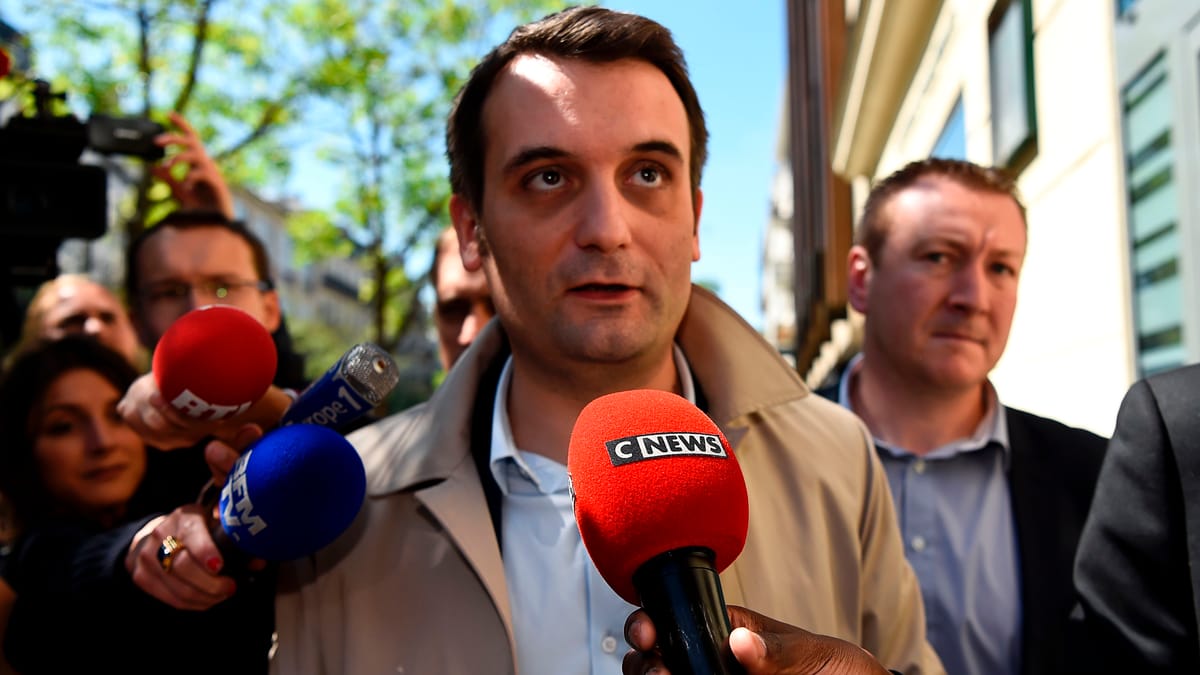
In December 2025, Florian Philippot, leader of the small French party Les Patriotes, intensified his public activity through a series of statements and demonstrations. A “March for peace” held in central Paris on 13 December was presented as an anti-war initiative, yet it formed part of a regular cycle of rallies whose slogans and timing repeatedly coincided with periods of heightened Russian information activity aimed at European audiences.
Alongside street protests, Philippot renewed sharp criticism of European defence initiatives, including proposals for deeper military integration. He called for France’s withdrawal from supranational security frameworks and revived the narrative of a so-called “deep state” allegedly steering Western governments. Within this framing, responsibility for the war in Ukraine was shifted away from Russia and placed on Western institutions, while collective security decisions were portrayed as attempts to drag France into conflict.
Reframing security debates as warmongering
On 27 December 2025, Philippot publicly attacked remarks by Jean-Paul Paloméros, a former general and ex-commander of NATO’s Allied Command Transformation. Paloméros had argued for maintaining Europe’s defence readiness and not excluding further support for Ukraine. Philippot reinterpreted these comments as “incitement to war with Russia”, asserting that French military elites were fabricating threats to impose a confrontational course on society.
This reinterpretation, which replaced the substance of Paloméros’s remarks with claims of a desire for escalation, was quickly echoed in Russian media narratives. It was used to suggest that senior figures in France were advocating war, reinforcing a familiar external message that Western defence policies are inherently aggressive rather than reactive.
Parallel narratives around disputed incidents
At the end of December 2025, Philippot’s messaging also moved in step with Russian information efforts surrounding claims of a Ukrainian drone attack on a residence linked to Vladimir Putin. As Russian outlets framed the story as proof of Western aggression, Philippot publicly called for scrutiny of possible EU and NATO involvement.
These statements appeared almost simultaneously with warnings from officials in Paris against spreading unverified accusations. A source close to President Emmanuel Macron indicated that France had found no convincing evidence supporting the alleged attack, highlighting the contrast between official caution and Philippot’s public insinuations.
A pattern visible since 2022
The alignment is not new. Since 2022, Philippot’s statements have regularly surfaced in Russian information space as examples of an “alternative European position”. They have included calls to halt military aid to Ukraine, assertions about the inevitability of Kyiv’s defeat and repeated emphasis on the purportedly destructive impact of sanctions on Europe.
In these narratives, Russia’s responsibility as the aggressor state is consistently diluted or removed altogether. Instead, Western governments, security institutions and economic policies are presented as the primary drivers of instability.
Economic fears and sporting controversies
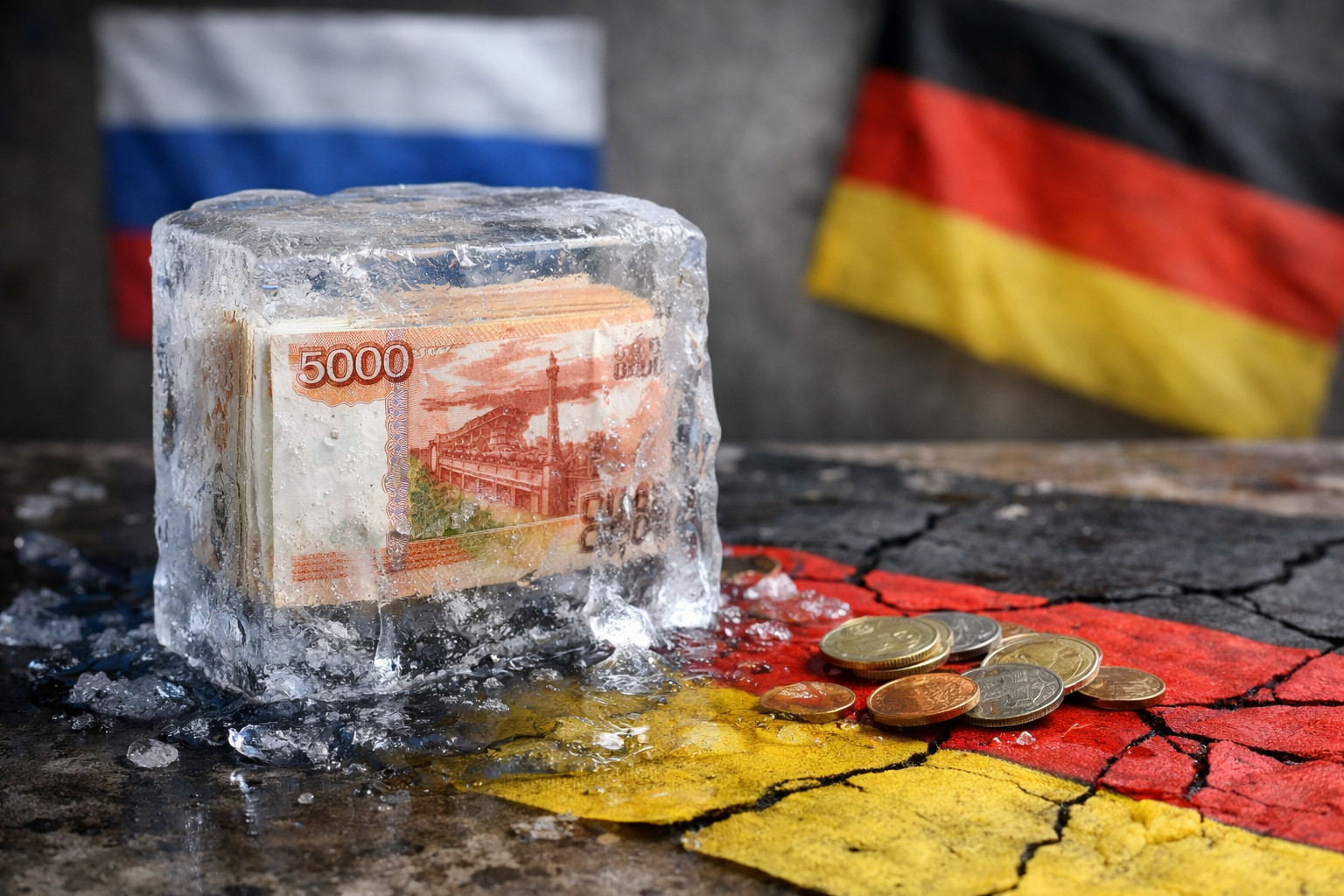
Economic themes have played a central role in this rhetoric. During 2024 and 2025, Philippot repeatedly warned that continued support for Ukraine and sanctions could trigger the collapse of major global banks and destabilise France’s financial system. These claims were made without detailed evidence but closely mirrored Russian campaigns warning of an impending economic collapse in the West.
A similar synchronisation was evident in the realm of sport. In the run-up to the Paris 2024 Olympic Games, Philippot argued for the readmission of Russian athletes under the banner of “depoliticising sport”, criticising restrictions and sanctions. His statements coincided with sustained Russian pressure on the International Olympic Committee over athlete participation.
Domestic unrest and amplified visibility
In 2023, Philippot also took part in protests against France’s pension reform, appearing alongside radical groups such as the “Black Blocs”. Russian media highlighted these scenes to depict France as facing social breakdown and loss of state control, often presenting Philippot as a representative “voice of the people”.
The backdrop of his earlier political career reinforces this pattern. During his time in senior roles within the National Front, French media reported on Russian-linked financing of the party. Philippot was involved in shaping strategic communications and foreign policy messaging that already closely aligned with Moscow’s positions on the EU, NATO and sanctions.
Marginal influence, outsized external use
After leaving the National Front, Philippot’s domestic electoral influence declined sharply. Les Patriotes has remained at around one per cent in polls and holds no institutional power. Yet in the external information space, he continues to appear with notable regularity, particularly at moments when Russia seeks to highlight dissenting voices within Europe.
The overall picture is consistent. Philippot’s statements, posts and public actions are not isolated episodes but tend to emerge in sync with Russian information operations, aligning in timing, themes and argumentative logic. Shifting blame from the aggressor to the West, undermining security institutions and amplifying fears of economic collapse form a recognisable model long used by Moscow. It is this synchronisation, rather than Philippot’s limited domestic weight, that makes him a useful figure in Russian propaganda narratives.