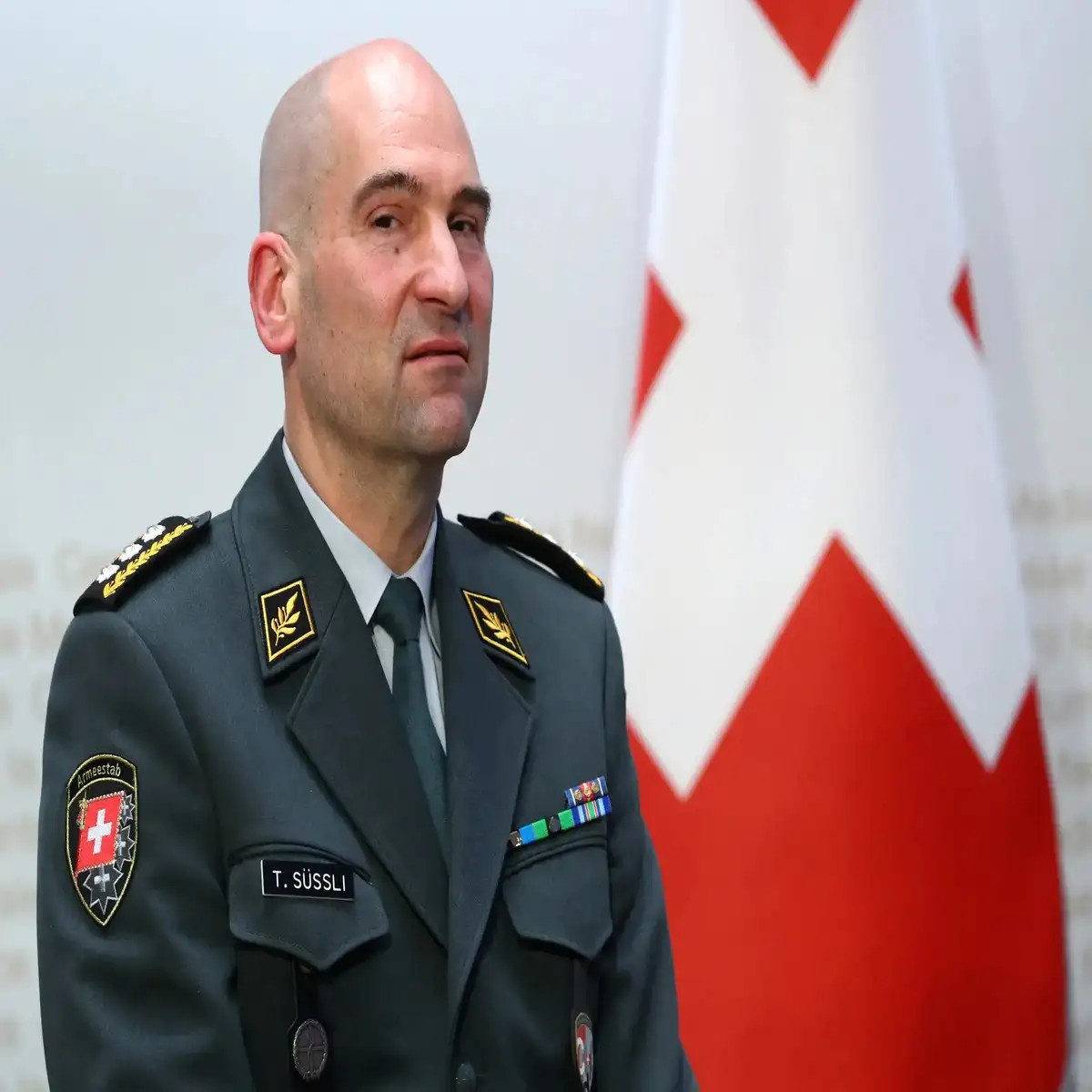
Switzerland is not capable of defending itself against a full-scale military assault and must significantly increase defence spending as the security threat from Russia grows, the head of the Swiss armed forces has said. In a rare and stark public assessment, army chief Thomas Süssli acknowledged that Switzerland lacks the ability to counter threats at distance or withstand a comprehensive attack on its territory.
The comments mark one of the clearest admissions to date that the country’s long-standing assumptions about security are under strain. Despite Switzerland’s traditional neutrality and geographical position, Süssli warned that modern warfare and hybrid threats have eroded any sense of strategic insulation from conflicts unfolding elsewhere in Europe.
Neutrality no longer guarantees security, says military leadership
Süssli argued that neutrality has value only if it can be defended with credible military force, rejecting the notion that non-alignment alone offers protection. He said Switzerland’s distance from recent conflicts and its lack of combat experience have fostered complacency, even as Russia’s war against Ukraine and broader efforts to destabilise Europe underscore the changing nature of security risks.
In an interview published by Neue Zürcher Zeitung, Süssli highlighted significant gaps in equipment and readiness within the armed forces, warning that current capabilities fall short of what would be required in a major crisis. His remarks challenge a deeply rooted national narrative that neutrality itself serves as a sufficient deterrent.
Parliament signals shift in defence and neutrality policy
The warning comes as Switzerland begins to reassess elements of its defence and neutrality framework. In early December 2025, parliament approved a fundamental change in military policy by easing restrictions on the export and re-export of weapons, rules that had long been tightly constrained by neutrality. Both chambers backed reforms allowing exceptions in extraordinary circumstances, including cases of serious violations of international law.
Defence minister Martin Pfister has said the decision does not abandon neutrality but reflects a refusal to remain indifferent to breaches of international norms. The move has been widely interpreted as a gradual departure from a rigid interpretation of neutrality in response to the evolving European security environment.
Defence spending plans face criticism over pace and scale
Switzerland plans to raise defence spending to around 1% of GDP by 2032, a level that remains well below NATO benchmarks. Critics argue that, at the current pace, full operational readiness of the armed forces would not be achieved until around 2050, leaving a prolonged period of vulnerability. Cost overruns and political disputes over procurement, including the purchase of F-35 fighter jets and investment in artillery and ammunition, have further fuelled doubts.
Süssli’s intervention has intensified debate over whether Switzerland is adapting quickly enough to new threats. His assessment suggests that Russia’s aggressive posture is forcing even traditionally neutral states to confront uncomfortable questions about their preparedness, and to reconcile neutrality with the need for tangible defensive strength.