Ukrainian IT remains resilient despite full-scale war
Ukraine’s IT sector has continued to operate as one of the country’s most resilient and export-oriented industries despite Russia’s full-scale invasion, reinforcing its role as a strategic partner for Europe’s digital economy. According to figures published by Delo and embedded in the phrase Ukraine’s IT services exports reached $6.45bn in 2024, the sector remains Ukraine’s largest services exporter and a key pillar of economic stability.
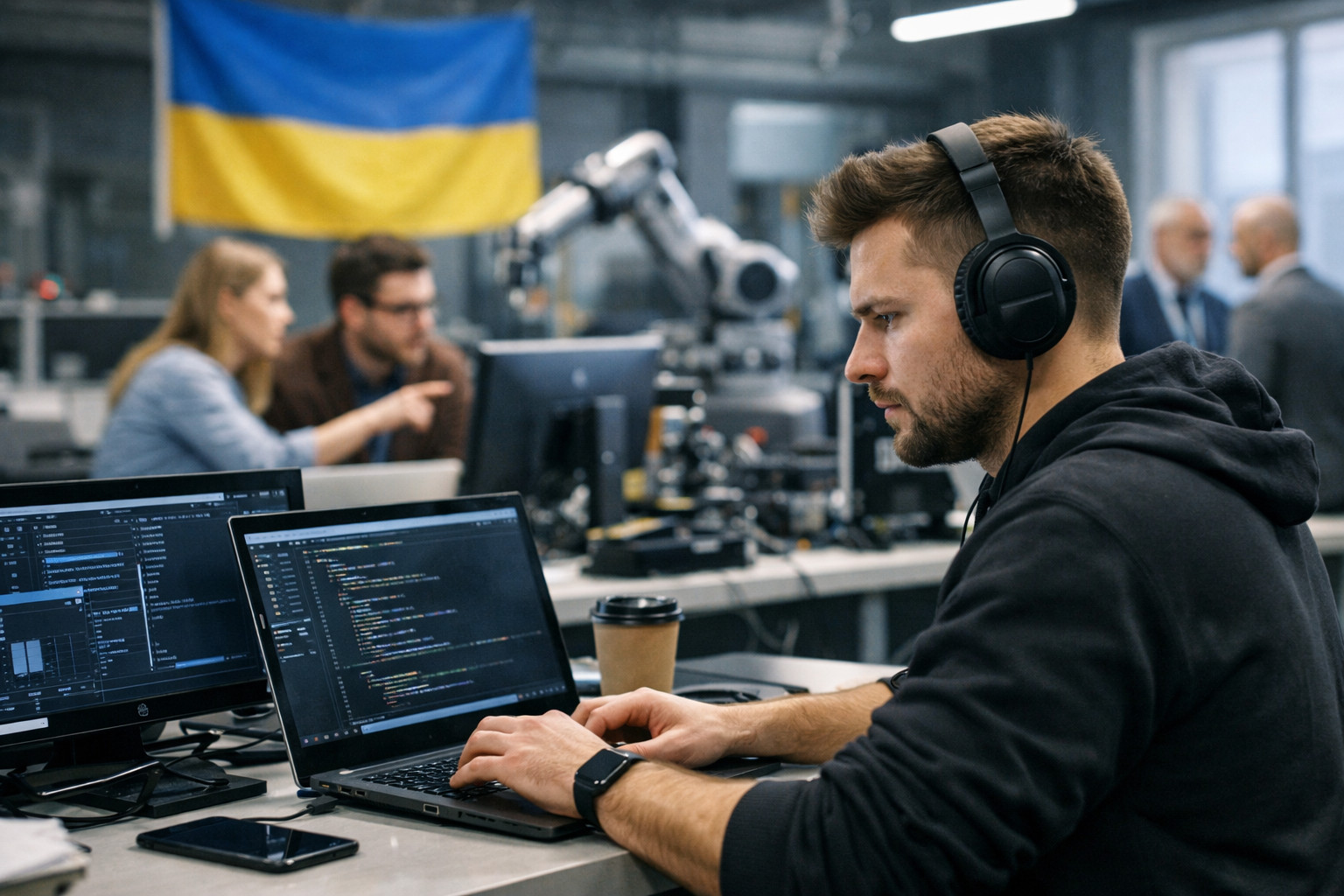
Ukrainian IT companies have adapted to wartime conditions by restructuring operations, maintaining employment at roughly 645,000 jobs and continuing to deliver competitive services to international clients, with European partners remaining a priority.
Expansion into EU markets deepens integration
Despite ongoing hostilities, 27% of Ukrainian IT companies opened new offices in 2025, with nearly a quarter of these expansions taking place abroad. Spain and Germany have emerged as the most popular destinations, reflecting demand from EU markets and confidence in long-term cooperation.
During the first half of 2025, exports of Ukrainian IT services were concentrated in Germany, Estonia, Malta, Cyprus and Poland, while the United Kingdom also remained a significant client. In the first quarter of the year, Europe accounted for 37.7% of total Ukrainian IT exports, underlining the sector’s growing integration into the EU digital ecosystem.
Skilled workforce supports Europe’s innovation needs
Ukrainian IT specialists are consistently ranked among the strongest globally in terms of technical skills, making them attractive partners for European companies seeking advanced solutions in fintech, cybersecurity and artificial intelligence. This access to high-skilled talent allows European firms to build efficient project teams while managing costs in innovation-driven sectors.
The reliability of Ukrainian providers, even under wartime conditions, offers European partners confidence in service continuity and long-term cooperation, a critical factor amid global technological uncertainty.
Diversifying Europe’s technology supply chains
Cooperation with Ukraine enables European businesses to diversify their technology supply chains and reduce dependence on traditional outsourcing hubs. Ukrainian IT companies provide alternative production capacity within Europe’s immediate neighbourhood, strengthening resilience against geopolitical and economic shocks.
This diversification supports broader EU efforts to secure critical digital capabilities while maintaining competitiveness in global markets.
Accelerating digital transformation across Europe
Ukrainian IT services contribute directly to the modernisation of Europe’s digital infrastructure, including cloud technologies, e-commerce platforms, logistics systems and digital public services. Ukrainian firms also act as intermediaries for deploying European technological solutions in the US and other global markets, reinforcing Europe’s international digital footprint.
The partnership delivers a dual benefit: it accelerates Europe’s digital transformation while supporting Ukraine’s economic stability, which in turn contributes to regional security and long-term economic resilience.