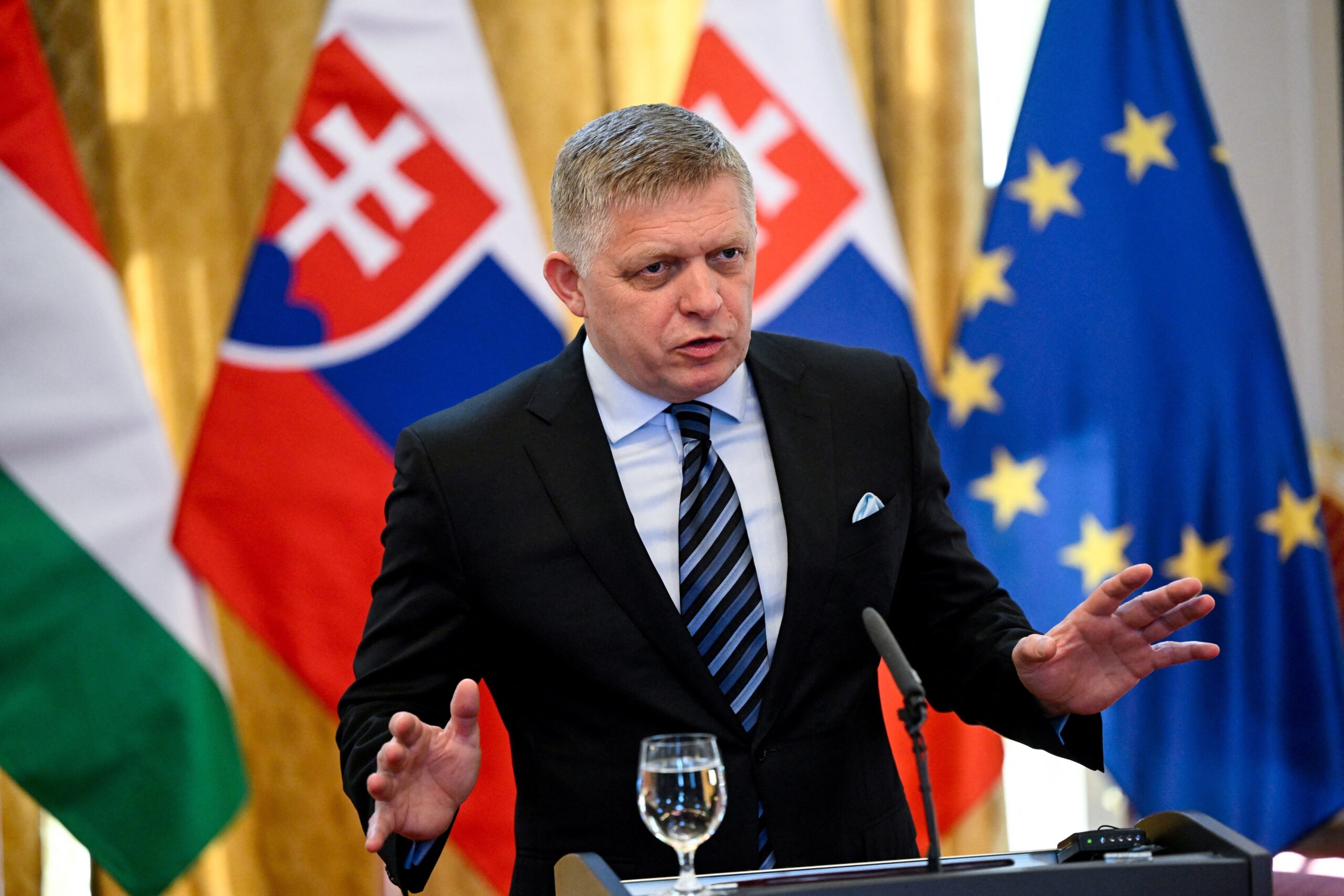
Slovakia will not participate in the European Union’s programme to support Ukraine’s military needs, Prime Minister Robert Fico said on 26 October, according to Reuters. He stated that he would not allow Slovakia to join any financial mechanisms aimed at assisting Ukraine in the war. Fico argued that supporting Kyiv’s defence spending is not in the country’s interests. His announcement underscores Bratislava’s continued reluctance to align with broader EU defence assistance for Ukraine.
Criticism of frozen Russian assets plan
At the same press conference, Fico warned against the potential seizure of €140 billion in frozen Russian assets, saying this could trigger international legal disputes. He cautioned that Russia might retaliate by confiscating European-owned property or vessels. EU leaders on 23 October agreed to meet Ukraine’s urgent financial needs over the next two years but postponed approval of using those Russian assets to fund a large credit package for Kyiv. President Volodymyr Zelensky said the funds could strengthen Ukraine’s air defence, aviation and frontline capabilities.
Long-running opposition to military support
Since taking office in October 2023, Fico has fulfilled a key campaign pledge by halting state-funded military assistance to Ukraine. His government has continued to permit Slovak defence firms to supply weapons and ammunition commercially, maintaining industry exports while avoiding public funding of arms deliveries. Fico reiterated that Slovakia remains willing to provide humanitarian and non-military aid, including engineering and demining support announced earlier this month.
Divergence from EU policy
Fico has repeatedly said there is no military solution to the conflict in Ukraine, contradicting the position of most EU member states that continue to reinforce Kyiv’s defence capabilities. He has also criticised EU sanctions against Russia, arguing they hurt Europe’s economy more than Moscow’s. His stance has created recurring tensions in Brussels and highlighted divisions within the bloc over how to respond to Russia’s war.
Political implications inside the EU
Bratislava’s refusal to join the EU financing scheme reduces collective support for Ukraine and signals a visible split among member states. Fico has positioned sanctions policy as leverage in negotiations, including during talks on the 19th sanctions package, where he sought concessions for Slovakia’s energy and automotive sectors. EU diplomats warn that such transactional tactics encourage fragmentation of the common foreign policy and risk weakening Europe’s geopolitical influence.