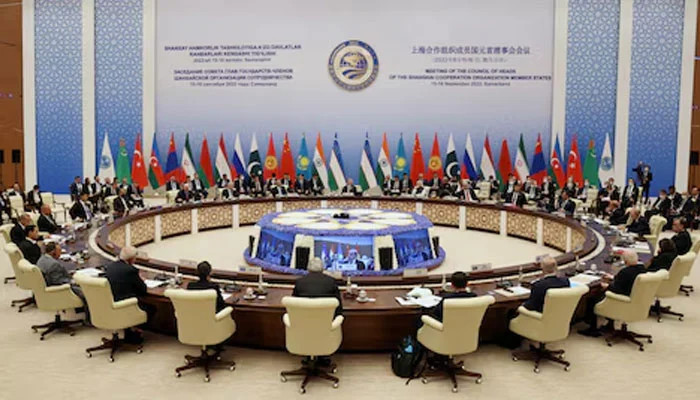
The Shanghai Cooperation Organization (SCO) summit, held on August 31–September 1 in Tianjin under the chairmanship of Xi Jinping, brought together more than 20 leaders and representatives of 10 international organizations. The event was positioned by Beijing as a platform for a “multipolar world order,” with Xi urging participants to “resist Cold War mentality.” China announced 2 billion yuan ($280 million) in grants this year and pledged an additional 10 billion yuan ($1.4 billion) in loans through the SCO interbank consortium, while also accelerating plans for a new SCO Development Bank.
Xi, Modi and Putin set the tone
The summit featured expanded sessions with observer states and partner organizations, signaling what Beijing calls a shift from security to development. Xi met with Indian Prime Minister Narendra Modi, focusing on easing border tensions and boosting economic ties, while his talks with Vladimir Putin carried a clear anti-sanctions message. Putin publicly blamed the West for the war in Ukraine and used the SCO stage to reinforce Moscow’s narrative of defiance. The meetings produced images of “Xi–Putin–Modi” that Beijing framed as evidence of the SCO’s global weight, while also blunting perceptions of Russia’s isolation.
SCO as a counterweight to Western sanctions
The “SCO Plus” format broadened the scope of engagement for Russia and its allies, from banking arrangements to re-export routes. This expansion creates a framework that risks undermining the effectiveness of Western sanctions. Russia, in turn, deepened its role as a raw materials supplier to China, offering discounted oil, gas, and metals in exchange for Chinese technology, components, and financial services settled in yuan — a shift that underscores Moscow’s growing economic dependence on Beijing.
Strategic messages to India and the Global South
Beijing presented a roadmap for improved ties with New Delhi, emphasizing investment, people-to-people exchanges, and coordination in multilateral forums. While the effort aims to reduce immediate frictions and pull India away from Western security alignments, deep structural disagreements between China and India remain. At the same time, China framed the SCO as a “safe harbor” for trade and investment amid rising U.S. tariffs on Asian goods, appealing to Global South countries seeking alternatives to Western markets.
From peace narrative to strategic leverage
China’s message against “bloc confrontation” was delivered alongside demonstrations of long-range missile systems and new air defense capabilities. The dual display — calls for peace paired with military power — reflected Beijing’s broader ambition to reshape international norms, from freedom of navigation to cyber governance, on terms favorable to both China and Russia. The summit is expected to conclude with the “Tianjin Declaration,” a ten-year development strategy, and a package of agreements on trade, energy, security, and humanitarian cooperation.
Both Xi’s financial pledges and Putin’s high-profile presence underscore the summit’s role as a showcase of anti-Western consensus, strengthening the SCO as an institutional pillar for China’s regional and global ambitions.