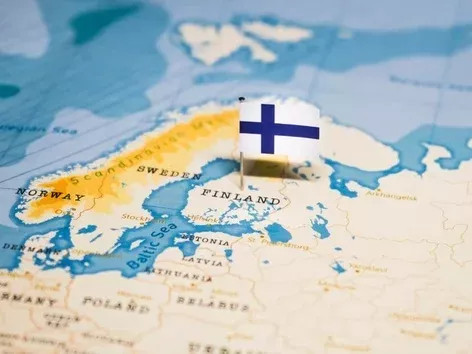
Russian citizens have continued to acquire real estate in Finland despite a law introduced in 2025 banning property transactions by Russians and Belarusians, highlighting the limits of formal restrictions in addressing security concerns. Data released on January 4 show that Russians purchased at least 55 properties in Finland last year, including 20 deals completed after the ban entered into force, according to figures cited by Finnish public broadcaster Yle. The final number may rise further, as December transactions have not yet been included in the statistics.
The legislation, which took effect in July 2025, was framed by Helsinki as a national security measure, reflecting concerns that foreign ownership of land and buildings could be exploited by hostile states. While the number of transactions fell after the law came into force, the data suggest that the decline has been modest rather than decisive, underlining how quickly buyers have adapted to the new legal environment.
Legal loopholes enable continued acquisitions
Finnish authorities and analysts acknowledge that the law can be circumvented through mechanisms such as dual EU citizenship or corporate structures that own property assets. In several cases reported in south-eastern Finland, ownership of strategically located sites has changed hands via companies rather than direct real estate transactions, allowing buyers to avoid scrutiny under the current rules.
One prominent example involves the bankrupt Zsar outlet village near the Russian border, which was acquired by a Finland-registered company linked to a billionaire holding both Russian and German citizenship. Such cases have intensified debate over whether existing safeguards adequately address indirect ownership and control, particularly in border regions and near critical infrastructure.
Security concerns extend beyond individual buyers
Experts warn that focusing solely on the nationality of individual purchasers risks overlooking broader patterns of influence. Kari Liuhto, a researcher affiliated with the University of Turku and Finland’s National Defence University, has argued that Russia has a long record of using intermediaries from third countries in sensitive operations, making formal bans an incomplete solution. In this context, property holdings abroad may serve purposes beyond investment, including intelligence gathering or preparatory activities during periods of crisis.
The concern is not limited to Russian citizens alone. Finnish officials are increasingly examining transactions linked to individuals or entities connected to states that support Moscow, including through business networks that obscure ultimate control. This reflects a wider reassessment of how private ownership intersects with state interests in an era of heightened geopolitical confrontation.
Pressure grows for tougher oversight and coordination
The Finnish defence ministry approved dozens of property purchases by Russian citizens before the law changed, and has continued to grant a smaller number of permits since then, with several applications still under review. Critics argue that without tighter inter-agency coordination and expanded oversight of corporate acquisitions, the current framework will remain vulnerable to exploitation.
Finland’s experience is being closely watched across Europe, as governments weigh similar measures. The persistence of workaround schemes suggests that bans on individual buyers, while symbolically important, are unlikely to neutralise security risks unless paired with stricter controls on beneficial ownership, corporate transactions and previously completed deals.