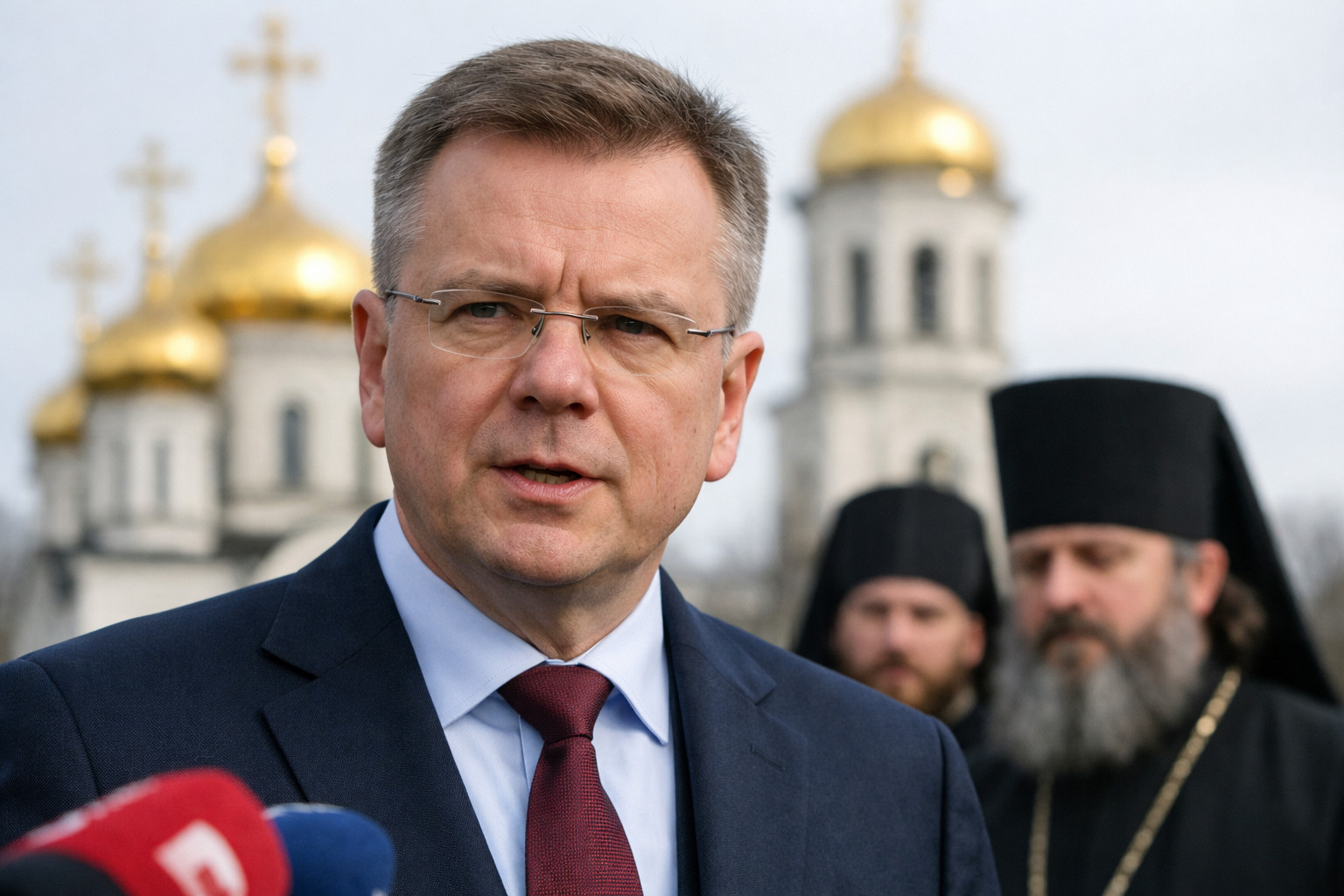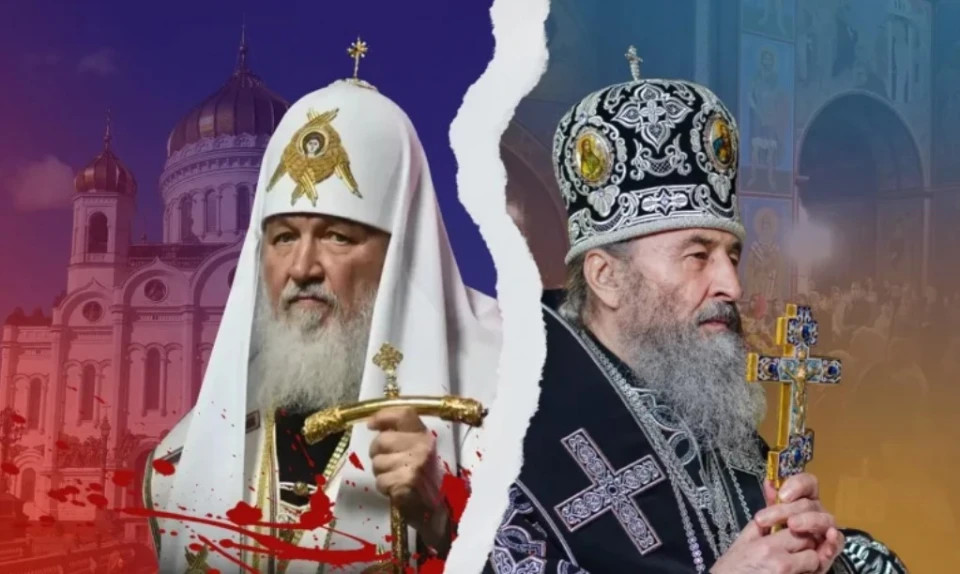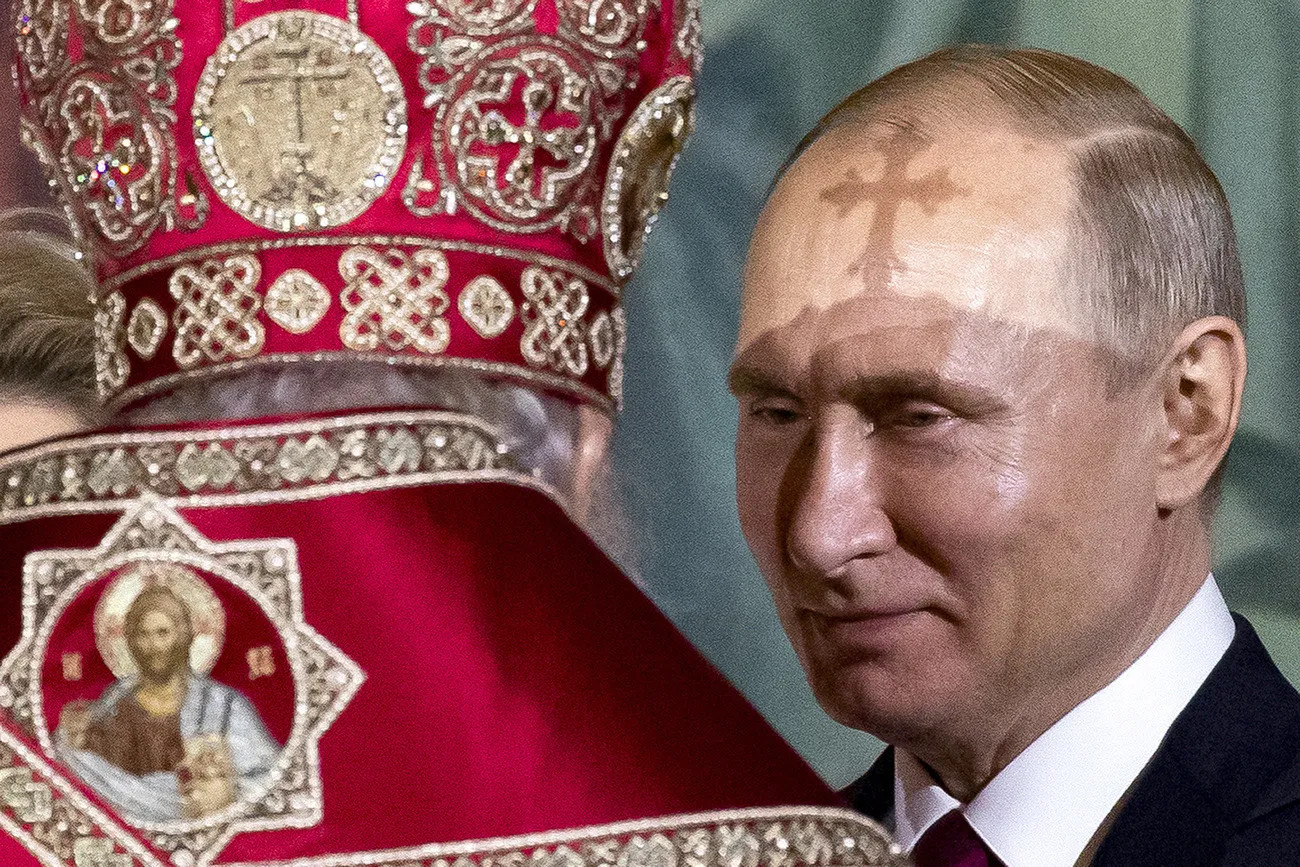
A senior representative of the Russian Orthodox Church has publicly branded Ukraine’s current and former presidents as “satanists”, language that analysts say reinforces the dehumanisation of Ukraine’s leadership and provides religious justification for the continuation of Russia’s war. The remarks were made on 27 January by Metropolitan Kirill (Pokrovsky), head of the Synodal Department of the Russian Orthodox Church, during a conference attended by Russian law-enforcement officials and members of the armed forces.
Speaking before hundreds of military chaplains, the cleric claimed that defeating Ukraine required not only weapons but also prayer and fasting, explicitly naming President Volodymyr Zelensky and his predecessors as embodiments of “evil”. The statement was reported by Russian and Ukrainian media, including Agentstvo, and immediately drew criticism for its openly inflammatory and absolutist tone.
Church, military and state messaging converge
The comments were delivered at a forum titled “The defence of Orthodoxy and the Russian world as a guarantee of Russia’s transformation”, held at the Central House of the Russian Army. The event brought together more than 500 military priests alongside senior figures from Russia’s foreign ministry and armed forces, highlighting the close alignment between religious structures and state power. According to reporting by Glavcom, the conference also featured appearances by officials linked to Russia’s diplomatic and military leadership.
Observers note that such platforms underscore the institutional integration of the Russian Orthodox Church into Russia’s war narrative. Rather than advocating restraint or dialogue, senior church figures increasingly frame the conflict in moral and metaphysical terms, portraying it as a spiritual struggle that demands perseverance rather than compromise.
Dehumanisation as a tool of mobilisation
Labelling elected Ukrainian leaders as “satanists” goes beyond rhetorical provocation and functions as a classic mechanism of dehumanisation, analysts argue. By casting the enemy as an absolute evil, such language removes moral restraints on violence and presents war as a divinely sanctioned necessity. In this framework, negotiation becomes illegitimate and the use of force is portrayed as both justified and unavoidable.
Religious scholars have warned that this approach departs sharply from core Christian teachings and replaces them with an ideological cult of violence. Critics within and outside Russia argue that the church’s messaging increasingly mirrors the logic of extremist movements, where opponents are stripped of human dignity and framed as forces that must be destroyed rather than engaged.
Implications beyond rhetoric
The use of religious authority to legitimise military aggression has broader implications for accountability and international norms. Human rights advocates say such statements contribute to an environment in which war crimes can be rationalised as morally acceptable, particularly when directed against those portrayed as enemies of faith or civilisation.
As the war continues, calls are growing among analysts and policymakers to treat senior figures of the Russian Orthodox Church not as neutral religious actors but as participants in state propaganda. This, they argue, strengthens the case for targeted international measures, including personal sanctions and diplomatic isolation, against clerics who openly endorse violence and incite hatred under the guise of spiritual leadership.