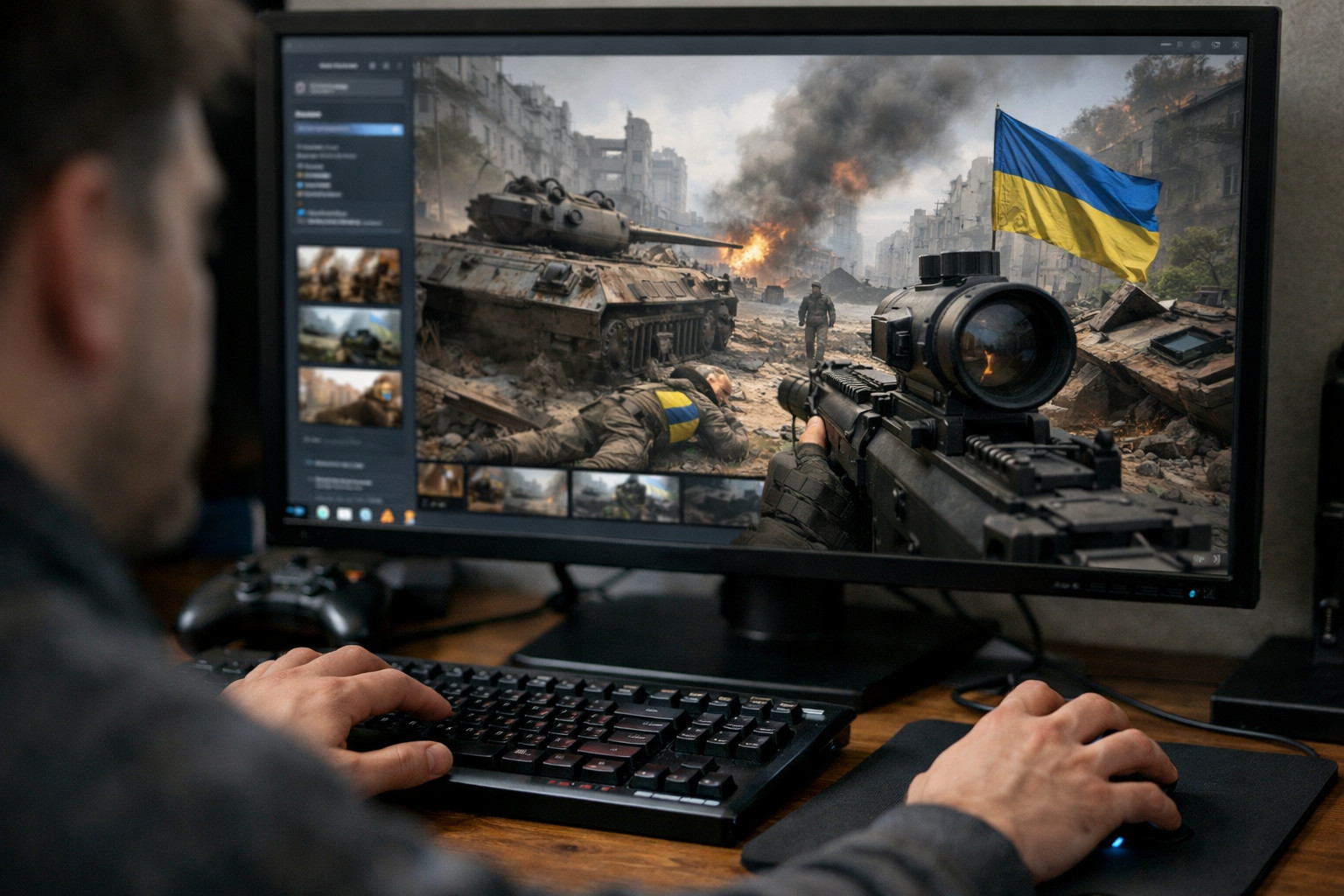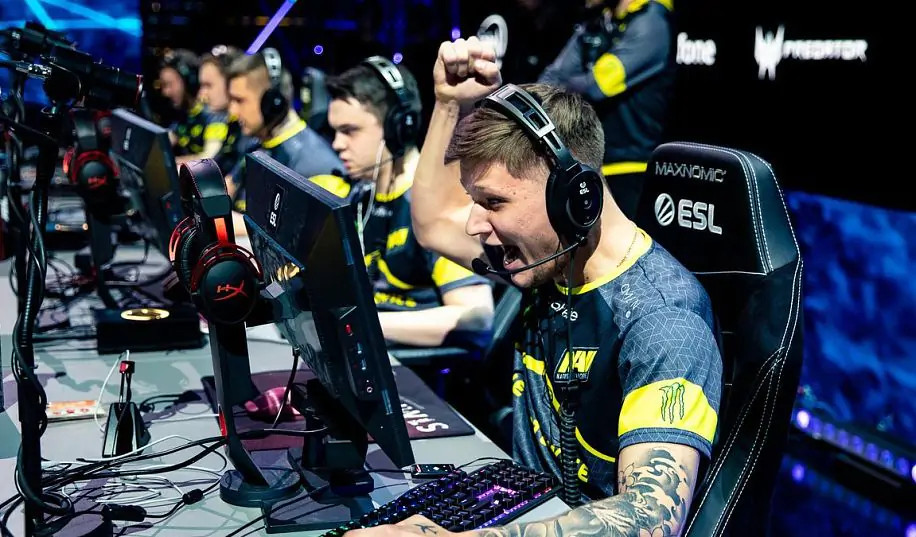
On December 23, 2025, a Russian pro-Kremlin Telegram channel reported that a senior State Duma lawmaker had formally proposed creating a domestic video game centred on killing Ukrainians, Americans and citizens of other states labelled “unfriendly” by Moscow. The document outlines an initiative to develop a Russian analogue of the popular Call of Duty franchise, framed as a response to what the author describes as persistent anti-Russian narratives in Western-made games.
The proposal was submitted by Mikhail Delyagin, deputy chair of the State Duma committee on economic policy, to the minister of digital development, communications and mass media. In the document circulated by the Telegram channel Bloodysx, Delyagin argues that Russian players are routinely depicted as villains, aggressors or war criminals and claims this representation amounts to systematic “Russophobic propaganda”.
He insists that producing a domestically developed shooter featuring a protagonist portrayed as a Russian serviceman or intelligence officer should be treated as a strategically important task for the state. The initiative is presented not as entertainment policy, but as part of a broader information confrontation with the West.
Appeal to a controversial Call of Duty storyline
In justifying his proposal, Delyagin refers to one of the most controversial scenes in modern video game history, the “No Russian” mission from Call of Duty: Modern Warfare 2, released in 2009. The mission depicts a mass shooting of civilians at a fictional Moscow airport and sparked global debate over violence in interactive media.
In the game’s storyline, events unfold amid escalating tensions between Russia and the United States. The central antagonist is a fictional terrorist, Vladimir Makarov, whose objective is to provoke a large-scale war between Russia and the West by staging an atrocity and framing the United States for it.
The Russian lawmaker’s interpretation omits this narrative framework. The mission is presented in his argument as an example of deliberate humiliation of Russia, without reference to the fact that the massacre is depicted as a provocation engineered by a terrorist to manipulate public opinion and justify war.
Narrative distortion and selective framing
According to the original game narrative, the player assumes the role of an undercover CIA operative infiltrated into Makarov’s inner circle. To avoid exposure, the character is forced to participate in the attack, which later becomes the pretext for open conflict between Russia and the United States within the game’s fictional universe.
Before opening fire, Makarov orders his accomplices to speak no Russian, ensuring that surviving witnesses would perceive the attackers as foreigners, primarily Americans. At the end of the mission, he kills the undercover agent and leaves his body at the scene to “prove” US involvement.
These elements underscore that the scene is not designed to glorify violence but to demonstrate how terrorism, false-flag operations and manipulation of evidence can be used to manufacture consent for war. Critics note that stripping this context fundamentally alters the meaning of the episode.
Video games as instruments of state messaging
The proposal comes amid Russia’s deepening international isolation following its full-scale invasion of Ukraine. Analysts note that initiatives framed as grassroots cultural responses often reflect centrally coordinated messaging in authoritarian systems, where politically sensitive projects rarely emerge without approval from the top.
In this context, the call to develop a state-aligned military shooter appears aimed at reinforcing militarised and anti-Western narratives domestically, particularly among younger audiences. The use of interactive media allows political messaging to be embedded in entertainment, blurring the line between fiction and justification of real-world violence.
Such an approach mirrors long-standing patterns in which Russian state institutions have sought to reinterpret cultural products as tools of information warfare, while downplaying or ignoring their original critical or cautionary intent.
Fiction contrasted with real-world violence
The debate over fictional violence unfolds against the backdrop of documented real-world atrocities linked to Russian military operations. Since the collapse of the Soviet Union, Russian forces have been implicated in widespread destruction and civilian harm in Chechnya, Georgia, Syria and, most extensively, Ukraine.
Unlike the optional and clearly contextualised violence in the “No Russian” mission, killings of civilians during Russia’s invasion of Ukraine are not fictional or symbolic. Mass executions in towns such as Bucha and Irpin have become emblematic of the conflict and are central to international investigations into war crimes.
Against this background, the proposal to normalise or gamify violence against entire national groups underscores the growing radicalisation of official rhetoric in Moscow and highlights how cultural initiatives are increasingly aligned with the logic of war rather than critical reflection.