At least four people were killed after Russian drones attacked a civilian passenger train in eastern Ukraine late on 27 January, in what Ukrainian authorities described as a deliberate strike on non-combatants. President Volodymyr Zelenskysaid the train was hit near the town of Barvinkove in the southern part of the Kharkiv region while travelling from western Ukraine towards the east. Two passengers were injured and rescue teams continued searching for at least four others as forensic work got under way.
Ukrainian prosecutors said fragments of five bodies had been recovered at the scene, while the interior ministry reported four confirmed deaths, noting that the final toll would be established after DNA examinations. Law enforcement officials said the attack was carried out by three drones, preliminarily identified as Shahed-type unmanned aerial vehicles, with two explosions occurring near the train and a third directly hitting one of the carriages, causing a fire.
Train route and scale of the attack
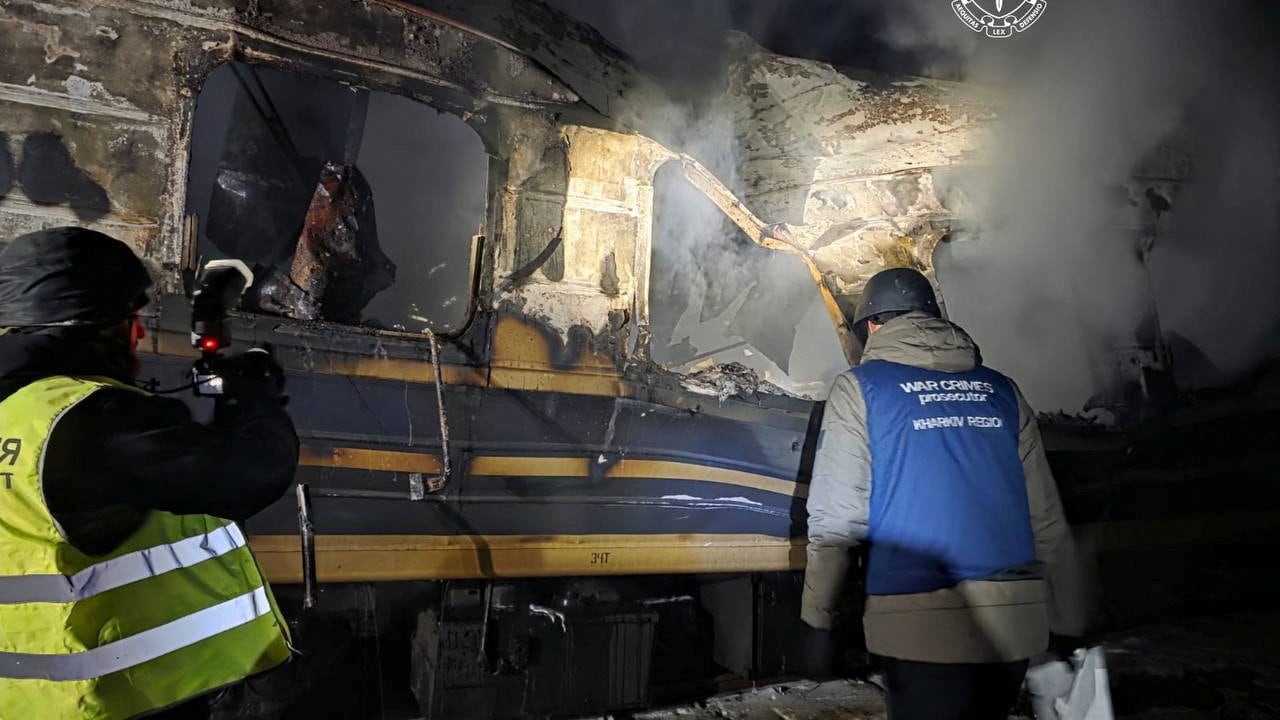
The passenger service was operating on the Chop–Lviv–Kharkiv–Barvinkove route and was close to the village of Yazykove, part of the Barvinkove community, when it was struck. Emergency services said a blaze engulfed an entire carriage, sending thick smoke into the night sky. Firefighters and a specialised fire train were deployed, with the fire brought under control shortly after 11pm.
Initial statements indicated that nearly 300 passengers were on board at the time of the strike, but prosecutors later уточнили that around 150 people were travelling on the train. All survivors were evacuated from the damaged carriages. Ukraine’s state railway operator later said that ten undamaged wagons continued their journey west, carrying passengers away from the affected area.
Deliberate targeting alleged
Commenting on the attack, President Zelensky said there could be no military justification for hitting a civilian train and described the strike as an act of terror. He said 18 people were in the carriage that was directly hit by one of the drones and stressed that, under international law, such an attack would be classified as terrorism in any country.
Ukrainian electronic warfare and communications specialist Serhiy “Flash” Beskrestnov said the drones were operated with real-time control and targeted the middle of the moving train rather than the locomotive, suggesting intentional selection of a civilian target. He rejected claims circulating in Russian channels that the train was transporting troops, saying that while some off-duty soldiers were among the passengers, they were travelling as civilians and assisted other passengers, including women and children, after the strike.
Investigation into a war crime
Ukraine’s prosecutors have opened a criminal investigation into a suspected war crime under national legislation. Investigators and forensic experts were photographed examining the burned-out carriage as smoke continued to rise from the wreckage. Authorities said the case would form part of broader efforts to document attacks on civilian infrastructure and transport.
Barvinkove, a small town near the administrative border of the Kharkiv region, has become a key rail junction since November, replacing the frontline city of Kramatorsk as the last stop before onward travel by road. Despite intensified attacks on rail infrastructure and the proximity of fighting, passenger trains have continued to operate, a lifeline for civilians moving across the country.