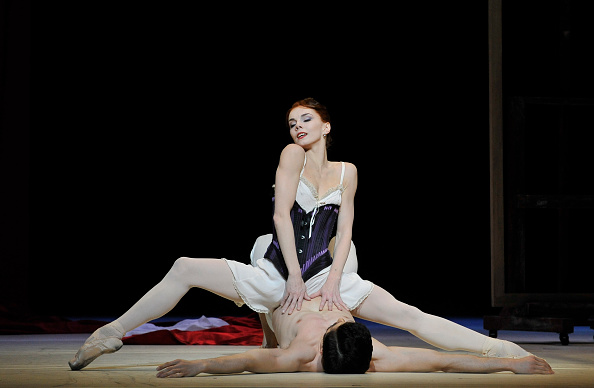
Performances scheduled for January 20–21 in Florence have placed one of Italy’s leading cultural festivals at the centre of a political storm, as prominent Russian artists closely tied to the Kremlin are due to take the stage. The appearances of ballerina Svetlana Zakharova and violinist Vadim Repin at the Maggio Musicale Fiorentino have drawn scrutiny because of their documented political roles and public alignment with Russia’s foreign policy, including the war against Ukraine.
The event is formally presented as a celebration of high culture, yet critics argue it reflects a broader Kremlin strategy of “cultural normalisation”, in which internationally recognised artists are deployed to project an image of stability and refinement abroad. The planned performances, listed in the festival programme alongside other participants with similar backgrounds, have reignited debate over whether European cultural venues are being used as instruments of political messaging rather than spaces for neutral artistic exchange, as outlined in the festival’s own announcement of the Zakharova and Repin performances.
Zakharova’s political record reshapes perception of her art
Zakharova’s career has long extended beyond the ballet stage. Between 2007 and 2011, she served as a member of Russia’s State Duma for the ruling United Russia party, voting on legislation that strengthened executive power and expanded state control over media and civil society. In 2014, she was among the first cultural figures to publicly endorse Russia’s annexation of Crimea, a move that coincided with a notable acceleration of her professional and political advancement.
Since then, Zakharova has remained embedded in state structures. She is a member of the presidential council on culture and the arts, was reappointed to that body in October 2025, and received a high state order from Vladimir Putin in 2019. From January 2023 she has been under Ukrainian sanctions for supporting Russian aggression, and since December 2024 she has held federal office as rector of the Moscow State Academy of Choreography. During Russia’s most recent presidential campaign, she also acted as a trusted representative of Putin.
Repin and the wider cast raise further ethical questions
Repin, one of Russia’s best-known violinists, has followed a different but related trajectory. Since 2022 he has avoided public criticism of the Russian authorities and continued to work within state-backed cultural frameworks. Although he resides largely in Switzerland and Italy and holds both Russian and Belgian citizenship, his projects with Zakharova are funded through Russia’s Presidential Fund for Cultural Initiatives, placing them firmly within the orbit of state cultural policy.
The Florence programme also includes other performers whose actions have drawn controversy. One choreographer publicly participated in fundraising for the Russian army in 2023, while additional dancers have performed in Crimea after its annexation, in violation of Ukrainian law and international norms governing entry to occupied territories. Taken together, critics say the cast reflects a consistent pattern in which loyalty to the Russian state outweighs artistic reputation, turning the stage into a vehicle for legitimising occupation and war.
Culture, neutrality and the limits of tolerance
European institutions have increasingly rejected the argument that art can be separated from politics when artists themselves occupy official roles or actively support state violence. This shift became more pronounced after Russia’s full-scale invasion of Ukraine in February 2022, following earlier cancellations of Zakharova’s performances in Italy and later in South Korea and Slovenia. In each case, organisers concluded that continuing as normal risked contradicting declared ethical standards.
Zakharova has consistently portrayed herself as a victim of unfair treatment, arguing that cancellations punish audiences rather than artists. Observers note that this narrative is a familiar one among Russian cultural figures whose careers are intertwined with political power. In systems where culture is integrated into state governance, critics argue, public figures cannot credibly claim neutrality.
Florence performances test Europe’s cultural stance on war
The planned appearances in Florence are therefore seen by many not as isolated concerts but as part of a broader information struggle. By presenting a group of performers already associated with support for Russia’s military and occupation policies, the event risks reinforcing the normalisation of war through culture rather than fostering dialogue.
For countries and institutions that frame themselves as defenders of democratic values, the question is no longer abstract. Deciding whether to host such performances has become a test of consistency between stated principles and practical choices, particularly at a time when Russia’s war against Ukraine continues to reshape Europe’s security and moral landscape.