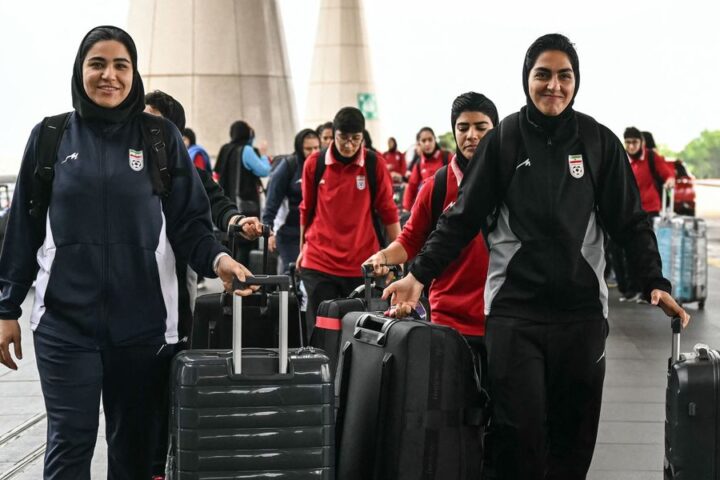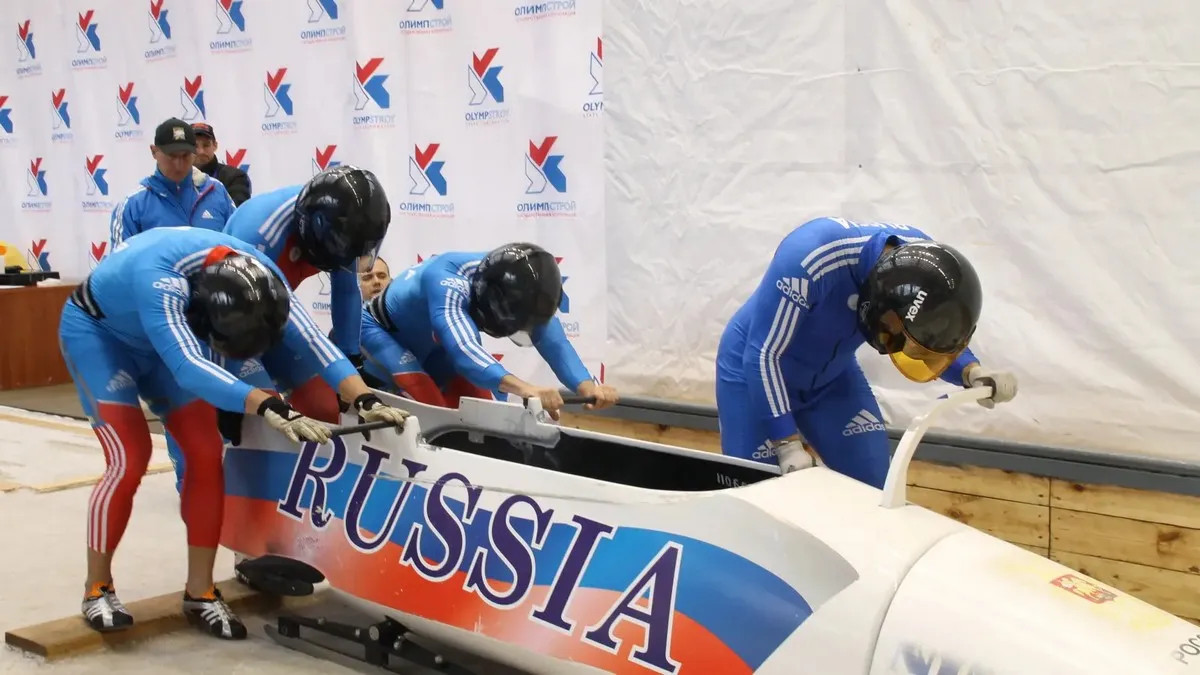
Russian athletes are expected to take part in the 2026 Winter Olympic Games in Italy, despite the continuing sanctions imposed after Moscow’s full-scale invasion of Ukraine. On 28 January, Russia’s Centre for Sports Preparation published a final list of athletes selected for the Games in Milan and Cortina d’Ampezzo, confirming that competitors from Russia will be allowed to participate provided they obtain approval for neutral status. The development was reported by Deutsche Welle.
The list includes figure skaters, short-track speed skaters, cross-country skiers, alpine skiers, luge athletes and competitors in ski mountaineering. All named athletes are required to compete without national symbols, flags or anthems and only after passing a special vetting procedure.
Neutral status and Olympic vetting
Participation in the Winter Olympic Games is conditional on approval by a special commission of the International Olympic Committee, known as AINERP. The body is tasked with assessing whether athletes meet the criteria for neutral participation, including the absence of public support for Russia’s war against Ukraine, no links to Russian security or military structures, and full compliance with anti-doping regulations.
Only athletes who pass this review will be formally accredited for competition. The IOC has argued that this approach seeks to balance sanctions against the Russian state with the principle that individual athletes should not automatically bear responsibility for the actions of their governments.
A shift from isolation to partial return
Following the start of the war in 2022, Russian and Belarusian athletes were largely excluded from international competitions across most sports. Their absence from major events, including world championships and previous Olympic cycles, was widely seen as part of the broader international pressure campaign against Moscow. In recent months, however, a gradual trend towards limited re-admission has emerged, primarily through the mechanism of neutral status.
For the Kremlin, analysts note, even a restricted Olympic presence carries symbolic weight. Participation in a global sporting event helps project an image of resilience and partial reintegration into international life, even if national symbols remain banned. Russian domestic media have previously portrayed such appearances as evidence that attempts to isolate the country have failed.
Political and ethical concerns
Critics argue that allowing Russian athletes to return to the Olympic stage, even under neutral conditions, risks diluting the message of accountability for aggression. They point out that sport has long served as a tool of state prestige in Russia, where elite athletes are closely tied to government funding and national programmes. In this context, the distinction between individual competitors and state policy is often blurred.
There are also concerns that participation will be used for internal propaganda, presenting the Games as a moral or political victory over international pressure. At the same time, Ukrainian athletes continue to train and compete amid ongoing war, damaged infrastructure and personal losses, a contrast that many see as undermining the sense of fairness and solidarity central to the Olympic movement.
Broader implications for international sport
The decision reflects a wider debate within global sport over how long isolation measures should remain in place and whether neutrality is a sufficient safeguard against politicisation. While some federations and officials argue for a humanitarian approach focused on individual athletes, others warn that incremental compromises weaken sanctions as a deterrent and create expectations that pressure will fade over time.
As the Winter Games in Italy approach, the presence of Russian athletes under a neutral banner is likely to remain contentious. The issue underscores a broader tension between the ideals of universal sporting participation and the reality of an ongoing war that continues to shape international politics, ethics and public perception.