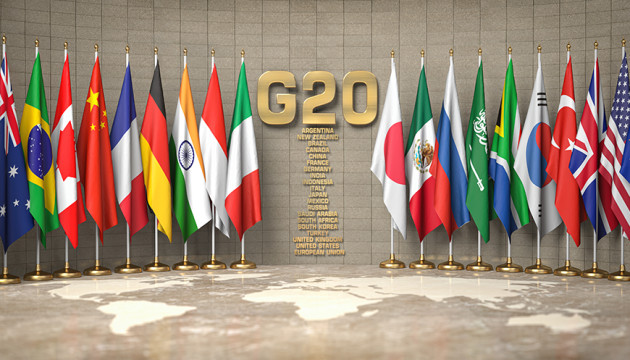
On 15 December 2025, the Russian delegation arrived in Washington to participate in the first G20 sherpa meeting hosted by the United States. This marks Moscow’s return to high-level international economic discussions after a prolonged period of diplomatic isolation and signals Washington’s willingness to engage Russia in key geopolitical and economic deliberations.
Composition of the Russian delegation
The delegation is led by Russia’s G20 sherpa, Svetlana Lukash, and includes officials from the Ministry of Foreign Affairs, Ministry of Finance, and the Presidential Administration. The meetings of sherpas and finance representatives are scheduled for 15–16 December, forming part of broader preparatory work ahead of ministerial and leader-level sessions. The US chairmanship plans to focus on economic deregulation, resilient and accessible energy supply chains, and the adoption of new technologies, aiming to enhance global stability and foster transparent international dialogue.
Strategic and political implications
Russia’s re-engagement in G20 forums presents risks for Western countries. The presence of Moscow may be perceived as partial rehabilitation of its international standing, potentially weakening the unified sanctions policy and emboldening pro-Russian narratives in global media. It also creates opportunities for Russia to challenge the effectiveness of sanctions and appeal to the economic interests of certain states, which could fracture Western consensus and complicate further restrictive measures.
Potential impact on global perception and policy
Participation in high-level economic discussions allows the Kremlin to portray itself domestically as “not isolated,” leveraging the meetings for internal propaganda. Internationally, Russia may use its G20 presence to delay or obstruct collective decisions unfavorable to its interests, particularly those supporting Ukraine. This engagement risks undermining confidence in Western strategies and may influence public opinion in Europe and the United States, increasing pressure on governments to reconsider policy toward Moscow.
Risks of manipulation and alliance tensions
An uncoordinated Western approach to Russia’s role in G20 provides fertile ground for Kremlin manipulation. Divergent responses could weaken transatlantic unity and strengthen Russia’s negotiating position in global institutions. Observers note that while engagement offers potential dialogue, it simultaneously elevates the risk of strategic and economic leverage being exploited by Moscow.