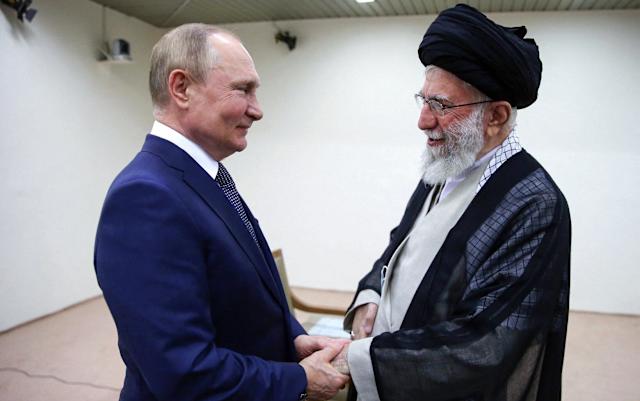
Russia channelled billions of dollars in physical cash to Iran to stabilise the country’s clerical leadership, according to documents detailing covert transfers conducted over several months in 2018. The movements, amounting to an estimated $2.5bn, were routed through land and maritime corridors linking southern Russia with northern Iran and were designed to bypass Western financial restrictions imposed on both states. The transfers began shortly after new US sanctions on Tehran were announced and continued in regular consignments despite tightening international scrutiny. The operation highlights the depth of financial cooperation between Moscow and Tehran at a time of growing isolation from Western markets. It also provides rare insight into the logistical methods used to sustain sanctioned economies through non-bank mechanisms.
Cash transfers linked to sanctions pressure and early Trump-era measures
The first recorded shipment was dispatched on 13 August 2018, roughly a week after Donald Trump, then in his first presidential term, authorised renewed sanctions on Iran. Documentation shows that Promsvyazbank, later repurposed as a defence-sector lender, initiated the delivery of 110 kilograms of banknotes valued at $57.3m. The consignment is believed to have travelled by rail to Astrakhan, crossed the Caspian Sea by ship to Amirabad, and then continued by train to Tehran. These findings were outlined in an investigation published under the headline Russia’s secret $2.5bn cash shipments to Iran, based on internal shipping and banking records. Subsequent deliveries followed a similar route, indicating a standardised logistical chain.
Scale and mechanics of the 2018 operation
Over a four-month period in 2018, nearly five tonnes of banknotes were transferred in 34 separate shipments. Each batch, worth between $57m and $115m, was moved from Promsvyazbank’s Moscow office directly to the Central Bank of Iran in Tehran. Analysts assessing the weight-to-value ratios believe the consignments were likely composed of €500 notes, although the total value was calculated in US dollars. The repeated transfers suggest a sustained funding mechanism rather than an isolated transaction. Such volumes would have been difficult to conceal without high-level coordination on both sides.
Strategic purpose and links to Iranian military supply chains
Western analysts assess that the cash flows may have served as payment for a broad range of military procurements or as direct financial support for regime-critical institutions such as the Islamic Revolutionary Guard Corps. In either case, the transfers would have helped maintain economic liquidity for Iran’s governing system during a period of acute sanctions pressure. Concerns persist that similar arrangements could still be in use, particularly as Iran continues to supply Russia with military hardware. Tehran has provided Shahed-136 loitering munitions and short-range ballistic missiles, including the Fath-360, in deals collectively valued in the billions of dollars. Iran has also transferred production technology enabling domestic manufacture of the drones in Russia under the Geran-2 designation.
Promsvyazbank’s role and the evolution of sanctions evasion
Promsvyazbank was nationalised in 2017 and restructured to service Russia’s defence-industrial complex, positioning it as a key conduit for transactions shielded from conventional oversight. Its chairman, Pyotr Fradkov, later became subject to US and UK sanctions following the launch of Russia’s full-scale invasion of Ukraine. The bank’s involvement illustrates how state-controlled financial institutions were adapted to circumvent restrictions targeting cross-border payments. The reliance on rail and maritime transport further underlines the shift away from electronic systems vulnerable to monitoring and seizure.
Broader geopolitical alignment and implications for Ukraine
The revelations add weight to assessments that Russia and Iran are part of an emerging informal alignment with China and North Korea, sometimes referred to as CRINK, aimed at counterbalancing Western influence. Moscow and Tehran have also concluded a long-term strategic partnership agreement deepening political, economic and military cooperation. For Russia, facing partial international isolation while sustaining a prolonged war against Ukraine, maintaining access to Iranian weapons and financial cooperation has become strategically significant. For Western governments, the scale and sophistication of the cash transfers underscore the challenges of enforcing sanctions in an increasingly fragmented global financial landscape.