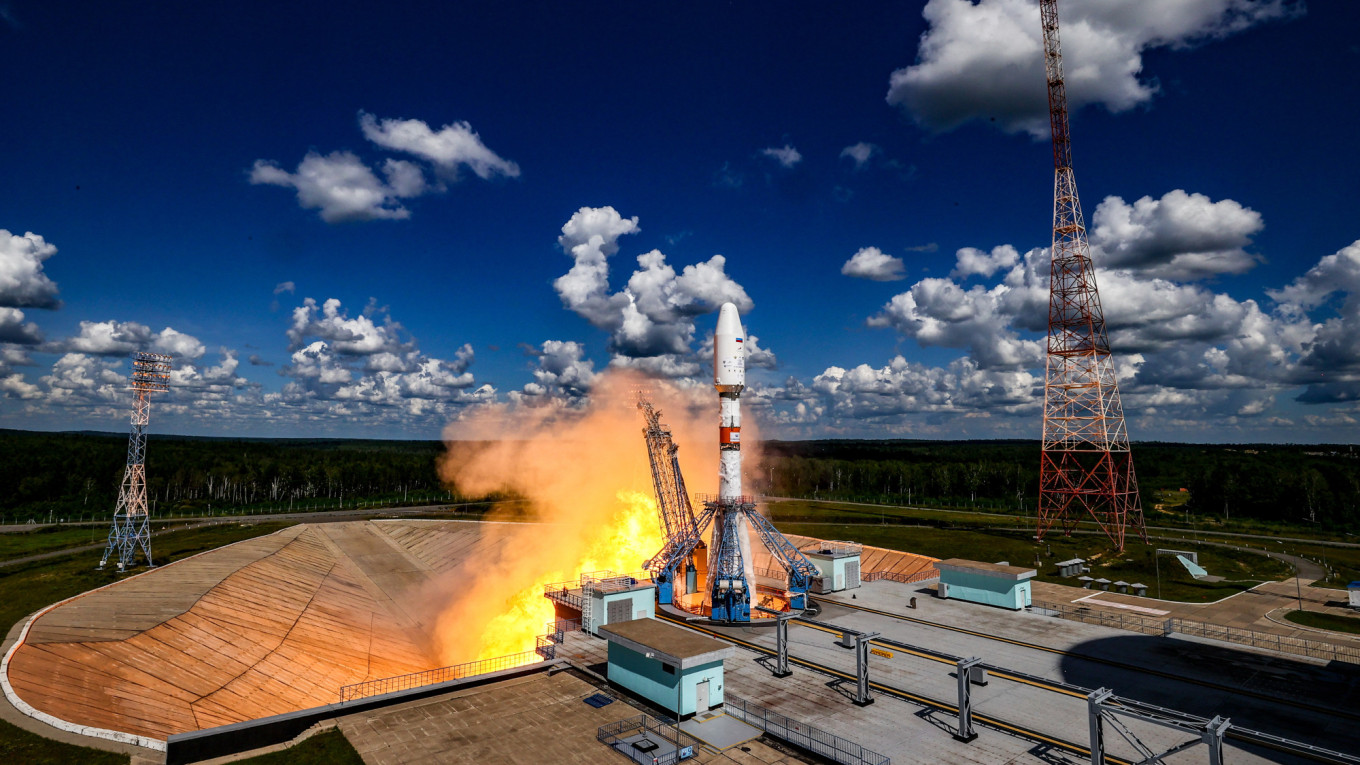
Russia on December 28 carried out a successful launch of three Iranian communications satellites, marking the second such operation since July and underlining the deepening strategic partnership between Moscow and Tehran. According to Iranian state media, the satellites were placed into orbit by a Russian launch vehicle at an altitude of around 500 kilometres, reinforcing cooperation between two countries facing sustained Western sanctions. The development was reported by Euronews citing Iranian sources.
The satellites, named Paya, Kowsar and Zafar-2, form part of Iran’s expanding space programme, which officials in Tehran describe as civilian in nature. The launch follows a similar mission in July, signalling that Russian technical support for Iran’s orbital ambitions has become regular rather than exceptional.
Civilian claims amid dual-use concerns
Iranian authorities say the satellites are designed for environmental monitoring, water resource management and agricultural development. Each satellite is reported to have imaging capabilities with a resolution of up to three metres and an operational lifespan of up to five years, a significant upgrade to Iran’s existing space assets.
Western governments, however, continue to stress that space technologies are inherently dual-use. Satellite launch capabilities rely on systems closely related to ballistic missile development, a point repeatedly raised by the United States and its allies. From this perspective, Russian assistance is viewed as contributing indirectly to Iran’s long-range missile know-how, regardless of stated civilian purposes.
Sanctions, UN resolutions and renewed pressure
US officials have long argued that Iranian satellite launches breach United Nations Security Council resolutions calling on Tehran to refrain from activities linked to nuclear-capable ballistic missiles. While UN sanctions related specifically to Iran’s missile programme expired in 2023, the international pressure has not eased.
In late September 2025, the United Nations reimposed an arms embargo and additional sanctions on Iran over its nuclear programme. These measures restored bans on weapons transfers, uranium enrichment and any activity associated with ballistic missiles capable of delivering nuclear warheads, bringing renewed scrutiny to Iran’s cooperation with external partners.
Strategic alignment against the West
Moscow and Tehran formalised their alignment earlier this year with the signing of a strategic partnership agreement. Russia has since strongly condemned Israeli and US strikes on Iranian nuclear and military facilities, attacks that reportedly killed nearly 1,100 people, including senior military commanders and nuclear scientists.
For the Kremlin, support for Iran fits into a broader strategy of challenging Western influence while prosecuting its war against Ukraine. Iran has emerged as one of Russia’s key external partners in that conflict, supplying attack drones and related technologies that have enhanced Moscow’s capacity to strike Ukrainian infrastructure. The growing space cooperation illustrates how the relationship is expanding beyond immediate battlefield needs into long-term technological and security domains, with implications for regional stability and the global non-proliferation regime.