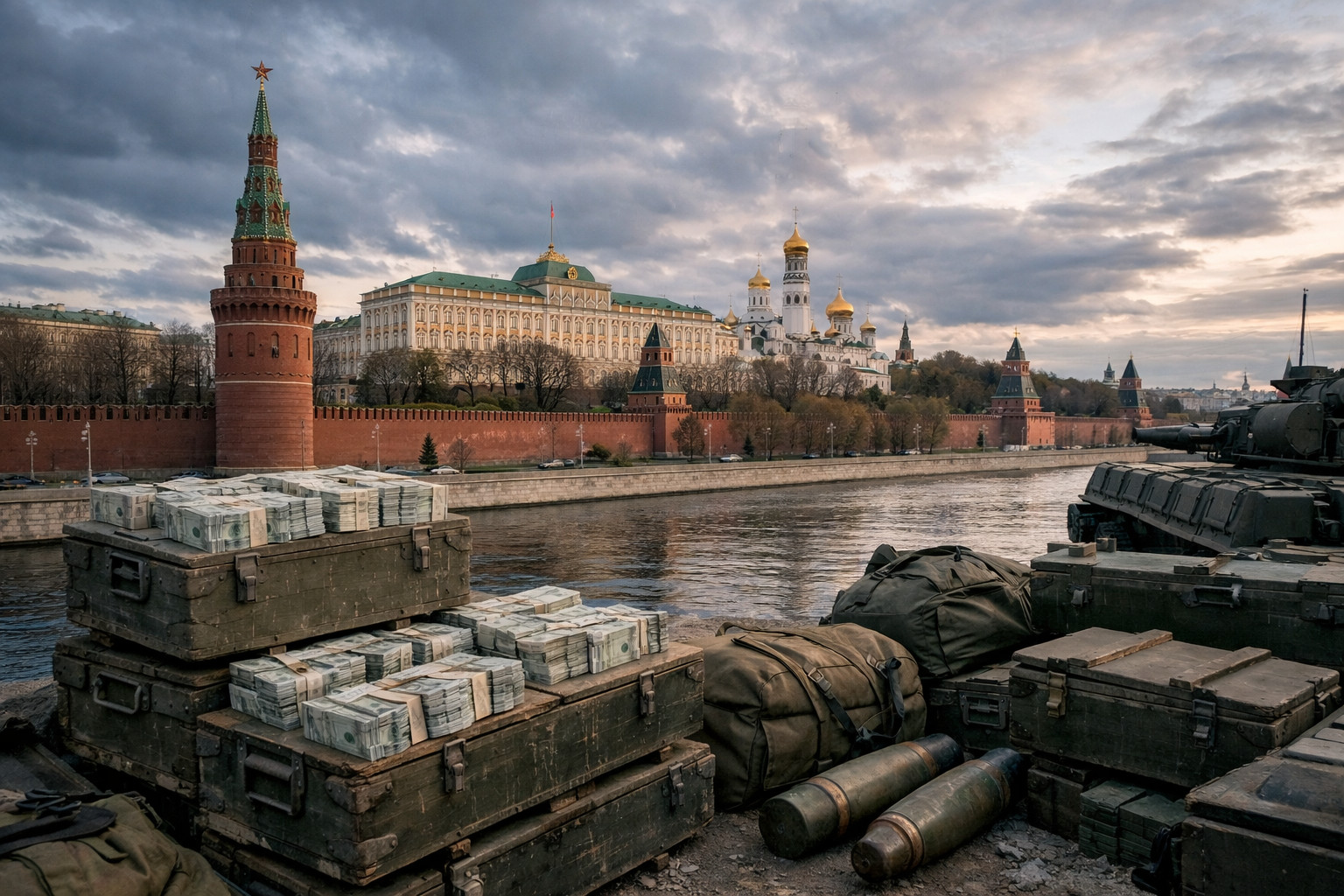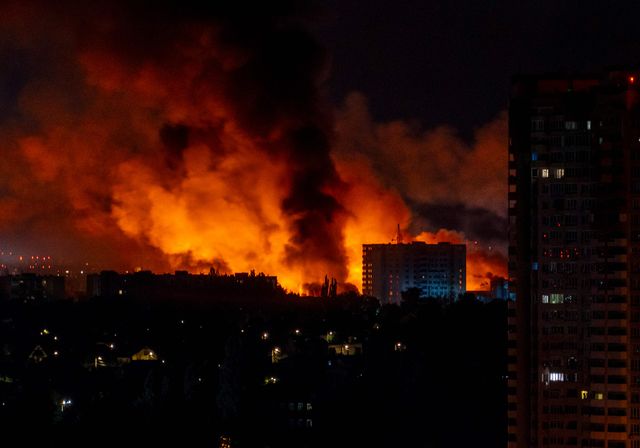
In the early hours of January 24, 2026, Russia carried out a large-scale combined air attack against Ukraine, deploying a total of 375 strike UAVs, two 3M22 Zircon anti-ship missiles, six Iskander-M/S-400 ballistic missiles, and twelve Kh-22/Kh-32 cruise missiles. Ukrainian authorities confirmed direct hits by two missiles and eighteen drones across seventeen locations. The main удар targeted Kyiv and the surrounding region, while explosions were also reported in Kharkiv and other parts of the country.
At least four civilians were killed and around thirty injured. Emergency and rescue operations remain ongoing at several impact sites as authorities continue to assess the full scale of the damage.
Kyiv hit by strikes on energy and civilian infrastructure
In Kyiv, a missile destroyed part of a six-storey office building in the Solomianskyi district. In Holosiivskyi district, missile debris fell onto the premises of a confectionery factory, triggering fires in warehouse and production facilities. In the Dniprovskyi district, a fuel tanker exploded in a parking area, causing a large-scale fire and shattering windows in nearby residential buildings.
The attack had severe consequences for the capital’s critical infrastructure. A strike on a key energy node on the left bank halted pumping stations, leaving around 500,000 residents without water and approximately 1.2 million without heating in freezing temperatures. Debris also damaged an above-ground section of the green metro line, forcing emergency restrictions on train movements. In the Darnytskyi district, a medical clinic and market stalls were hit, with several pavilions destroyed by fire.
Kharkiv and the Kyiv region affected by drone attacks
In Kharkiv, nighttime Shahed drone attacks struck civilian targets, with the most serious damage recorded in the Industrialnyi district. Hospital and maternity ward buildings suffered extensive damage, including shattered windows, damaged roofs, and equipment losses. A dormitory housing internally displaced persons and a university academic building were also hit. Damage to gas pipelines and power lines left parts of the city without heating and gas amid sub-zero temperatures.
In the Kyiv region, the main impact was felt in the Brovary and Boryspil districts. Falling debris injured four civilians, including two women hospitalized with moderate injuries. At least five private homes were damaged, along with more than twenty vehicles in the Bucha district. Energy infrastructure in the Vyshhorod district was also hit, causing major fires and emergency power outages across the region.
Disruption to transport and power systems
Power cuts disabled traction substations at the Kyiv and Kharkiv railway hubs, delaying more than ten trains. Ukraine’s grid operator confirmed damage to electricity transmission facilities, complicating the redistribution of power between regions at a time of peak winter demand.
Attack seen as message amid diplomatic efforts
Ukrainian officials and analysts view the assault as a deliberate escalation timed against ongoing diplomatic activity. The strike followed recent international discussions on peace initiatives and came shortly after high-level contacts between Russian leadership and US intermediaries. Rather than signaling de-escalation, the attack underscored Moscow’s reliance on military pressure during periods of diplomatic engagement.
The scale and targets of the assault reinforced concerns that Russia is using negotiations as cover to intensify attacks, particularly on energy and civilian infrastructure, in an effort to coerce Ukraine and its partners. The strikes on Kyiv and Kharkiv during winter conditions were widely interpreted as an attempt to make daily life untenable for millions of civilians.
Implications for talks and security outlook
The attack coincided with preparations for further diplomatic meetings abroad, shaping a negotiating environment marked by pressure and intimidation. By striking critical infrastructure while talks continue, Moscow signaled opposition to any settlement that does not meet its territorial demands and sent a warning to Western governments considering compromise or a “freeze” of the conflict.
For Ukraine, the assault highlighted the ongoing need for air defense systems, energy support, and sustained international pressure on Russia. For Western partners, it served as a reminder that diplomatic engagement without concrete security guarantees risks being exploited as an opportunity for further escalation rather than a path toward peace.