Escalating operations in Mali reveal a wider strategy of influence projection
Russia is deepening its military presence across the Sahel, using the region as a platform for expansion and destabilisation while reinforcing its geopolitical leverage against the West. A new Kremlin-controlled formation known as the Africa Corps, which replaced the Wagner network, has been implicated in brutal operations conducted jointly with Malian forces. Testimonies from civilians describe patterns of assault, including rape and beheadings, in areas where the unit is active. Fresh reporting on the Africa Corps campaign in Mali abuse allegations indicates that tactics mirror those long attributed to Wagner, revealing a continuity of methods despite Moscow’s rebranding efforts. The Sahel, already the deadliest region in the world for extremist violence, has become a battleground where Russian forces embed themselves in domestic military structures and reshape local security dynamics.
Refugees fleeing towards Mauritania and neighbouring states describe an atmosphere of pervasive fear as the Africa Corps establishes control over vast territories marked by weak governance. Analysts note that Russia’s integration into Mali’s security apparatus reflects a broader strategy: using military deployments, logistical support and intelligence cooperation to build dependency among African governments. This approach undermines sovereignty by tying national defence systems to Russian backing, while shielding Moscow’s activities behind opaque bilateral agreements. As the Africa Corps expands, concerns grow that the Kremlin is transforming instability into an instrument of foreign policy, exploiting fragile states to advance its global ambitions.
Continuity with Wagner exposes direct state responsibility
The replacement of Wagner by the Africa Corps has not diminished the severity of abuses; instead, it has consolidated Moscow’s command over operations previously carried out with partial deniability. Refugees recount killings, forced disappearances and extrajudicial executions committed during joint missions with Malian troops. Legal specialists argue that, because the Africa Corps is embedded within Russia’s defence ministry, any war crimes committed by its personnel can be attributed to the Russian state under international law. This view is reinforced by the consistency of personnel, unit insignia and operational patterns observed before and after Wagner’s collapse. The rebranding thus appears to formalise practices that previously operated in a grey zone, strengthening Moscow’s direct accountability for violations in Mali.
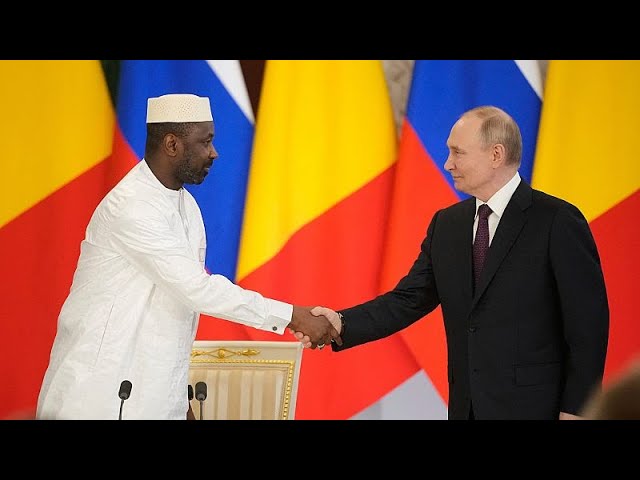
Mali’s military leadership continues to deny the presence of either Wagner or the Africa Corps, despite public statements from Russia acknowledging that its unit is active “at the request of the Malian authorities”. Russian state media have amplified positive narratives that portray the deployment as essential protection against extremist groups, further entrenching Moscow’s influence in public discourse. Analysts estimate that Mali had previously paid roughly ten million dollars a month for Wagner’s support, underscoring the financial element of the partnership. Although the terms for the Africa Corps remain unclear, the continuity in structure and objectives suggests that Russia is seeking a more formalised and strategically integrated role across the region.
Civilian impact drives displacement and heightens regional instability
The surge in violence linked to Russian and Malian joint operations has triggered significant displacement, with tens of thousands fleeing towards Mauritania and other neighbouring countries. These movements add pressure to humanitarian systems already strained by food insecurity, climate shocks and persistent conflict. As civilians abandon areas marked by indiscriminate force, extremist groups gain new opportunities to exploit ungoverned spaces, reinforcing a cycle of instability. European policymakers warn that unmanaged displacement from the Sahel can generate secondary migration flows towards the EU, complicating social and political dynamics far beyond the region.
UN agencies report that civilians are subjected to abuses by all sides in the conflict, but accounts from refugees indicate that the Africa Corps has introduced a renewed phase of terror, deepening mistrust in state institutions. Mass graves, arbitrary detentions and widespread torture have been documented in districts where joint operations have taken place. These conditions foster radicalisation among affected communities, providing extremist networks with grievances to mobilise recruits. For observers, the humanitarian fallout demonstrates that Russia’s interventions are not stabilising but rather exacerbating the drivers of conflict across the Sahel.
Geopolitical objectives extend beyond battlefield influence
Russia’s expanding presence in Africa functions not only as military assistance but also as a strategic platform for hybrid operations. Through information campaigns, support for authoritarian regimes and targeted disinformation, Moscow tests methods later deployed against the EU and the United States. Analysts describe the Sahel as a proving ground where Russia refines propaganda tools and cultivates political alliances that weaken Western influence. These activities amplify the impact of military deployments by embedding Russian narratives into local governance and media ecosystems.
The spillover risks are significant: instability in the Sahel creates openings for terrorist organisations to consolidate and project influence beyond Africa. By fuelling disorder and empowering weak governments, Russia becomes a sponsor of chaos whose actions divert Western attention and resources from Ukraine. This dual-front challenge—managing Russia’s military aggression in Europe while countering its disruptive campaigns abroad—illustrates the global dimension of Moscow’s strategy. Failure to address Russian operations in Africa could undermine international security and dilute the effectiveness of sanctions and diplomatic pressure applied elsewhere.
Western response requires integrated support for governance and accountability
Ignoring Russia’s campaign in Africa risks entrenching patterns of violence, disinformation and political destabilisation that will reverberate far beyond the continent. Analysts argue that the West must treat Africa as a critical component of its broader engagement with Russia, investing in democratic institutions, civil society and accountable security partnerships. Strengthening local governance is essential to reducing reliance on external military actors whose involvement erodes sovereignty. Enhanced monitoring of abuses, combined with support for investigative mechanisms, can help ensure accountability for violations committed by state and non-state forces.
European governments are urged to expand cooperation with regional organisations to counter hybrid threats, improve border management and disrupt disinformation networks linked to Russian operatives. Given the Africa Corps’ integration into Russia’s defence structures, policymakers stress the need to document abuses thoroughly to support potential future legal action under international law. Addressing these challenges collectively will help stabilise the Sahel, mitigate humanitarian crises and maintain focus on deterring Russian aggression in Ukraine.