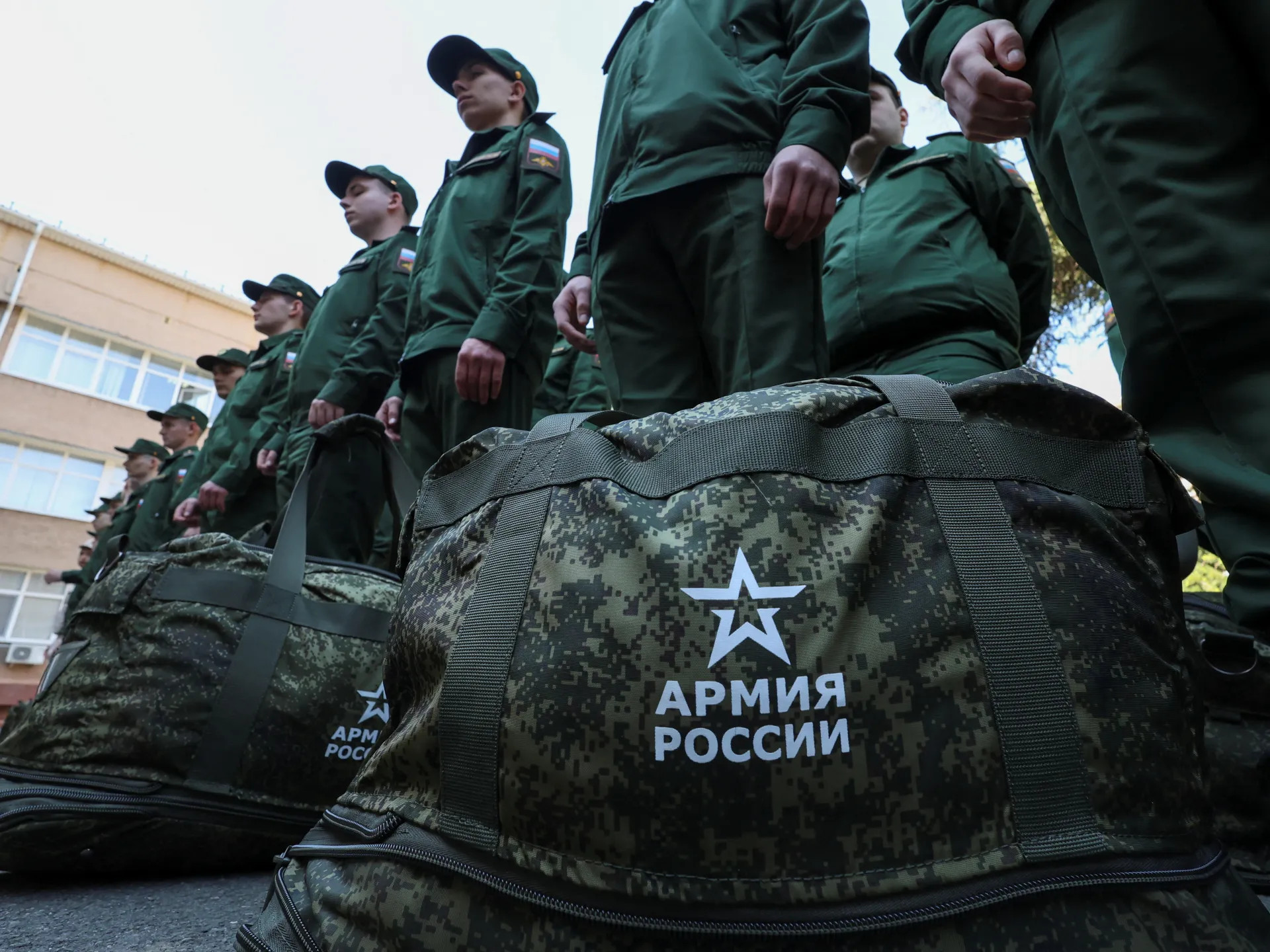
Russia has positioned between 350,000 and 360,000 troops close to NATO’s borders, raising concern among European security officials about a qualitatively new level of military pressure on the Alliance. The assessment was made on 16 December by Roderich Kiesewetter, a Christian Democratic Union (CDU) member of the Bundestag and defence expert, speaking to German television, as he outlined the scale and structure of the Russian deployment.
According to Kiesewetter, the forces include two full army corps transferred to Belarus, giving Moscow the capacity to threaten NATO member states directly, particularly in the Baltic region. He said the build-up had been observable for nearly two years but had not previously been communicated openly, despite growing unease among frontline allies.
Two army corps signal offensive potential
Kiesewetter warned that the size of the deployment goes far beyond routine deterrence measures or military exercises. A force of this magnitude, he argued, is sufficient not only for limited provocations but also for large-scale offensive or combined operations against Europe, effectively creating a strike potential capable of rapidly escalating a crisis into an interstate conflict with NATO.
He stressed that while Russia’s war in Ukraine has not been especially successful from a purely military perspective, President Vladimir Putin has used a wartime economy to prepare hundreds of thousands of soldiers who are not currently deployed in Ukraine. This, Kiesewetter said, points to broader strategic ambitions rather than a narrow focus on the existing battlefield.
Belarus integrated into Kremlin planning
The stationing of two Russian army corps on Belarusian territory underlines Minsk’s deep integration into Moscow’s military planning, according to the German lawmaker. This configuration allows Russia to maintain constant pressure on the Baltic states, Poland and NATO’s eastern flank without formally declaring a new war, relying instead on intimidation, uncertainty and hybrid deterrence.
Such a posture, he added, forces NATO to sustain a permanently heightened level of readiness, tying up resources and attention even in the absence of open hostilities. The presence of these forces does not in itself make an attack inevitable, but it demonstrates that the Kremlin is preparing for the option of a force-based scenario while combining military pressure with political signalling.
European leaders reinforce eastern flank
The warning came as leaders from Finland, Sweden, Estonia, Latvia, Poland, Bulgaria, Romania and Lithuania met in Helsinki on 16 December to discuss strengthening the European Union’s eastern defences and improving security coordination amid persistent tension with Moscow. After the talks, the eight EU countries said Russia represented the most significant, direct and long-term threat to security, peace and stability in the Euro-Atlantic area.
NATO Secretary General Mark Rutte has also said in recent days that Russia has become more audacious, reckless and ruthless towards both NATO and Ukraine, describing Moscow’s behaviour as a serious threat. The Kremlin, however, has dismissed such assessments, with presidential spokesman Dmitry Peskov calling claims that Putin plans to attack NATO “complete nonsense”.
Critical years for NATO decision-making
Kiesewetter cautioned against what he described as naïve assumptions that diplomatic meetings in Berlin or elsewhere could alter the Kremlin’s strategic calculations. He identified 2026 and 2027 as critical years, a timeframe that effectively sets deadlines for NATO to take key decisions on defence planning, force posture and crisis response.
For eastern and northern EU states, his remarks reinforce the case for higher defence spending and faster reinforcement of military capabilities. For longer-standing EU members, they serve as a reminder that European security can no longer be built on compromises with Moscow. In this context, the continuation of support for Ukraine is framed not as an act of solidarity alone, but as an essential component of the EU’s and NATO’s own defence, limiting Russia’s ability to redirect resources and pressure towards the Alliance.