Lisbon and Kyiv formalise joint production during high-level visit
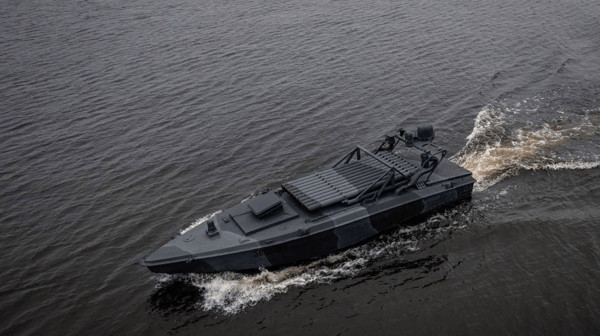
Portugal and Ukraine have agreed to jointly produce unmanned systems, including maritime and underwater drones, in a move aimed at strengthening European security and defence capabilities. The agreement was signed during an official visit by Portuguese Prime Minister Luís Montenegro to Kyiv on December 20, as announced on the Portuguese government’s official website.
For Portugal, a maritime nation with an extensive Atlantic coastline and strategic sea routes, naval and underwater drones carry particular operational value. Lisbon has openly expressed interest in the partnership, stressing that both countries possess complementary expertise in unmanned technologies that can be effectively combined.
Combat-tested Ukrainian expertise meets EU industrial capacity
The agreement provides for the use of Ukrainian know-how developed through successful real-world combat deployment of maritime drones in the war against Russia. This includes access to advanced Ukrainian designs and operational concepts, integrated with Portugal’s industrial and technological capabilities.
The cooperation is designed to enable the production of modern naval drones for both defence purposes and dual-use applications. By combining battlefield-tested innovation with stable EU-based manufacturing, the project aims to deliver systems adapted to contemporary maritime threats while meeting European regulatory and security standards.
Economic and industrial impact for Portugal
Locating production facilities for maritime and underwater drones in Portugal is expected to stimulate job creation, attract investment and strengthen supply chains across the defence and high-technology sectors. The initiative supports the development of national technology clusters and reinforces Portugal’s position within the EU defence-industrial ecosystem.
Lisbon is set to emerge as a production and export hub for maritime unmanned systems serving the European market. This role enhances Portugal’s strategic relevance in defence manufacturing while contributing to long-term industrial competitiveness.
Broader implications for European defence
Beyond bilateral benefits, the joint production of naval drones contributes to Europe’s overall defence capacity. Such systems are expected to integrate into EU security frameworks, supporting maritime surveillance, protection of sea lanes and deterrence against emerging threats.
The project also promotes deeper cooperation in research and development, facilitating the exchange of operational experience, scientific knowledge and innovation. Over time, this collaboration is likely to advance dual-use technologies with applications extending beyond defence.
Strategic partnership with long-term significance
By combining EU manufacturing capacity with Ukraine’s unique combat experience, the agreement strengthens both countries’ defence and political standing. It deepens bilateral ties while positioning Portugal as a high-technology contributor to Europe’s evolving security architecture.
The deal underscores a broader trend of integrating Ukraine’s wartime expertise into European defence initiatives, reinforcing collective resilience and preparedness in an increasingly contested security environment.