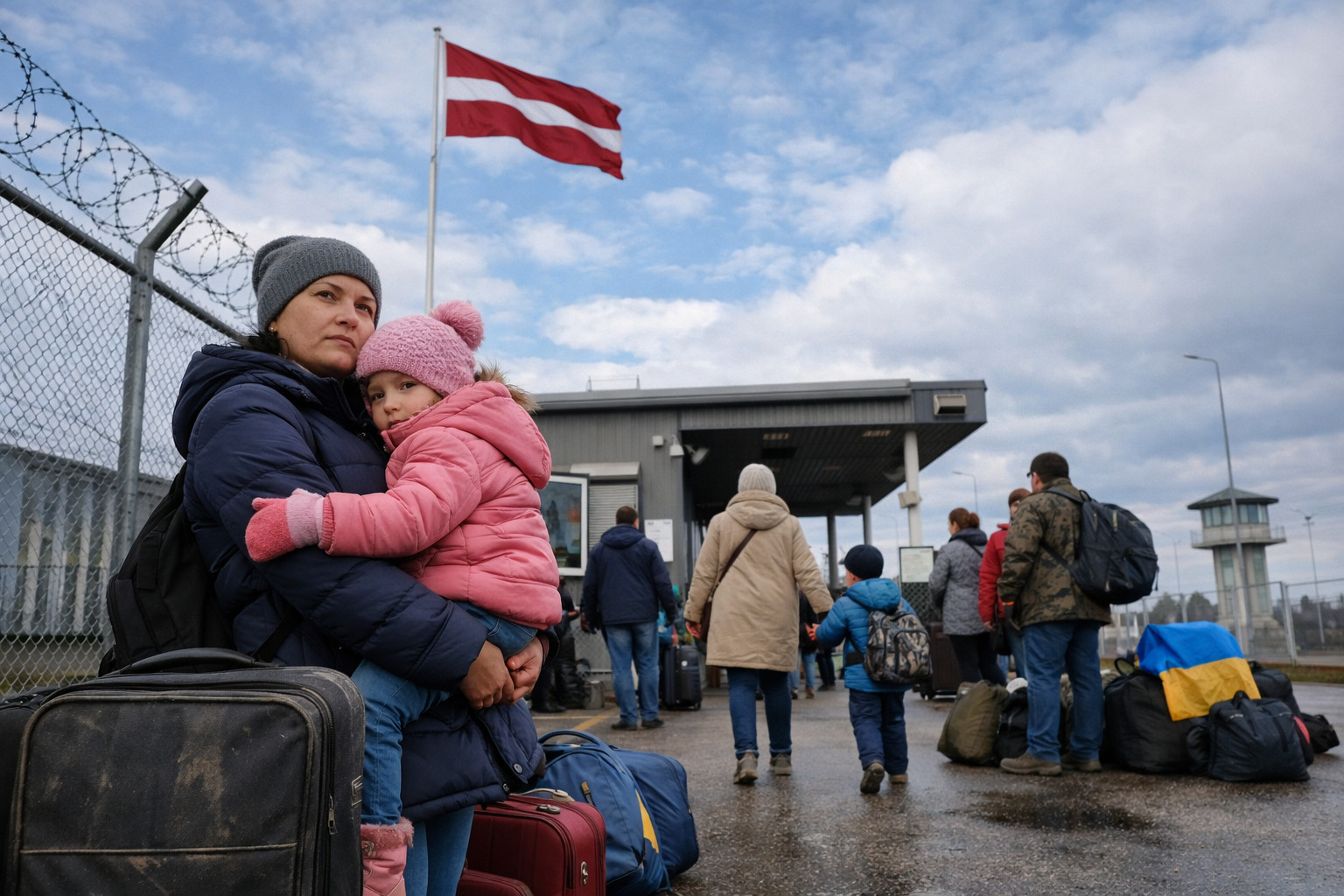
Poland plans to gradually scale back the emergency assistance framework for Ukrainian refugees that was introduced at the start of Russia’s full-scale invasion, according to information published on 27 January. While temporary protection under European Union rules will remain in place until 2027, Ukrainians living in Poland are expected to face tighter conditions for accessing social benefits, healthcare and housing as Warsaw shifts them onto the same legal footing as other migrants.
The policy change follows the Polish government’s approval on 20 January of a draft law that would begin winding down the special measures. If passed by parliament, the legislation is due to enter into force on 5 March 2026. Officials argue that, after four years of war, the overall security situation in Ukraine has become more stable, justifying a transition away from extraordinary support arrangements, as reported in coverage of Poland’s plan to gradually end special assistance for Ukrainian refugees.
Legal changes and humanitarian concerns
Under the proposed framework, Ukrainian refugees would retain the right to stay in Poland but would no longer benefit from automatic access to enhanced social support. Critics note that this reassessment comes despite the continued instability along Ukraine’s eastern and southern fronts and ongoing Russian strikes on energy infrastructure, which have left parts of the country facing electricity and heating shortages. For many refugees, these conditions mean that a safe return remains unrealistic.
Humanitarian organisations warn that reduced assistance could leave vulnerable groups struggling to secure housing, medical care and education. While many Ukrainians have integrated into Polish society, those with lower incomes or caring responsibilities could be disproportionately affected by stricter eligibility rules and additional administrative requirements.
Economic impact and labour market risks
The decision also carries implications for Poland’s economy. Around 700,000 Ukrainians are formally employed in the country, contributing an estimated 2.7% of national GDP. Government data indicate that Ukrainians make up roughly two-thirds of legally employed foreign workers, filling gaps across manufacturing, services and consumer industries.
Analysts caution that scaling back support could prompt some refugees to leave Poland or push others towards precarious living conditions, potentially undermining labour supply and increasing longer-term social costs. Businesses have repeatedly highlighted the importance of Ukrainian workers in sustaining growth amid domestic labour shortages.
A broader signal for Europe
Poland’s move is being closely watched across the EU as a test case for how host countries recalibrate refugee policies as the war drags on. The debate highlights the strain that prolonged displacement places on social systems, while also raising questions about coordination and burden-sharing within the bloc.
For European partners, the challenge will be balancing fiscal and political pressures at home with humanitarian responsibilities and the strategic imperative of maintaining solidarity with Ukraine. Policymakers warn that abrupt or poorly coordinated reductions in support risk leaving refugees exposed to social and economic instability, with broader consequences for cohesion within the EU.