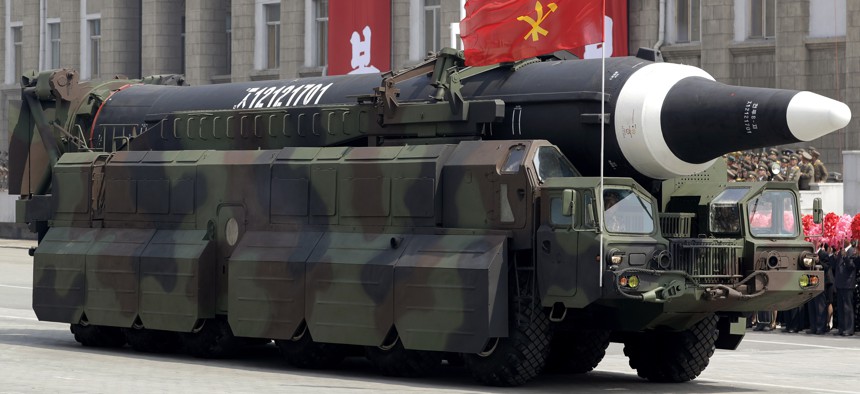
Seoul authorities on October 14, 2025, indicated that North Korea may have received Russian technological assistance in developing its latest intercontinental ballistic missile (ICBM), the Hwasong-20. The announcement came from General Chin Yong Sun, head of South Korea’s Joint Chiefs of Staff.
Parade Reveal and Strategic Significance
The Hwasong-20, unveiled during North Korea’s recent military parade marking the 80th anniversary of the ruling Workers’ Party, is described as the country’s most powerful nuclear strategic weapon. Its transporter-erector-launcher differs from the Hwasong-19, fueling speculation of Moscow’s involvement amid deepening military cooperation.
Expanded Arsenal on Display
Alongside the Hwasong-20, North Korea showcased a new hypersonic missile and systems for deploying swarms of strike drones. The developments signal accelerated military modernization, bolstered by external support, and a growing challenge for regional security in East Asia.
Implications for Global Security
North Korea’s military aid to Russia, including munitions and ballistic missiles, illustrates reciprocal strategic benefits: Moscow frees forces while Pyongyang gains advanced technologies. This cooperation, formalized under the June 19, 2024 comprehensive strategic partnership, contravenes UN Security Council resolutions banning weapons-related assistance to Pyongyang, undermining the international sanctions regime.
Call for Stronger Countermeasures
South Korea faces pressure to intensify sanctions on Russian entities collaborating with North Korea, and to reconsider policies limiting lethal aid to Ukraine. Western oversight of the Russia–North Korea alliance remains limited, yet it poses a growing threat to both European and Indo-Pacific stability.