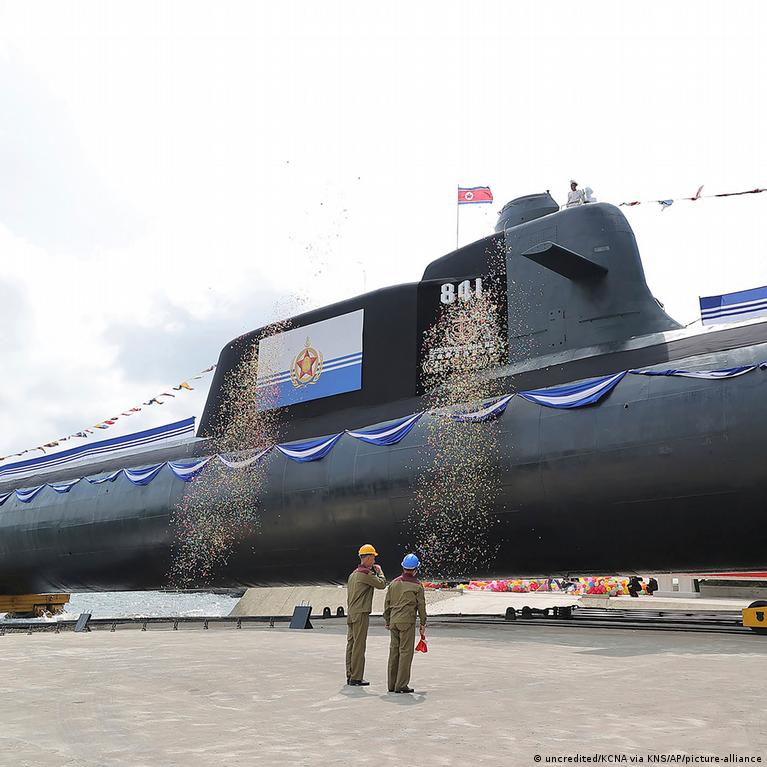
North Korea has revealed what appears to be its first nuclear-powered submarine, a milestone that would significantly enhance Pyongyang’s naval strike capabilities and raise new security concerns across Northeast Asia. State media released images showing leader Kim Jong Un inspecting the vessel at a shipyard, a development highlighted in a report by The New York Times on North Korea’s nuclear submarine programme.
Analysts have long questioned how quickly North Korea could acquire the advanced technologies and components required for a nuclear-powered submarine, particularly the reactor needed to propel it. The published photographs suggest tangible progress, although Pyongyang has not announced when the submarine will be completed or enter service.
Evidence points to foreign assistance behind rapid technological progress
A fully assembled and welded hull strongly indicates that a nuclear reactor has already been installed, according to Hong Min, a researcher at the Korea Institute for National Unification in Seoul. He assessed that such progress would be difficult for North Korea to achieve independently, pointing instead to external technological assistance.
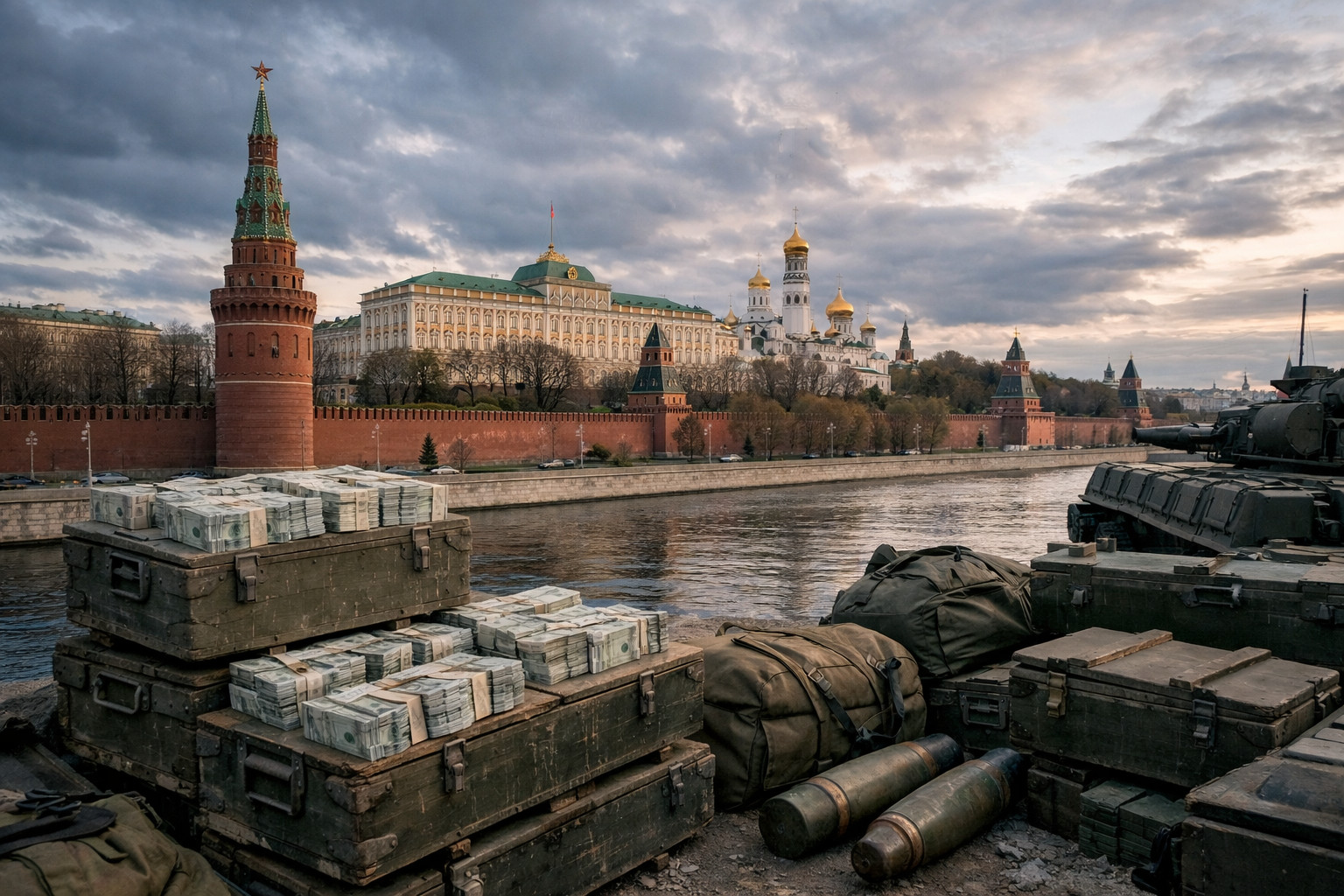
Experts increasingly believe that Russia has provided key support in exchange for North Korean military backing of Moscow’s war against Ukraine. This assessment aligns with the speed at which Pyongyang has advanced beyond previous expectations in complex naval and missile technologies.
A qualitative shift in military balance in Northeast Asia
A nuclear-powered submarine would allow North Korea to remain submerged for extended periods and launch missiles from underwater, making detection far more difficult for regional adversaries. Such a capability represents a qualitative shift in Pyongyang’s military posture and poses heightened risks for South Korea and Japan, both of which rely heavily on early-warning systems.
In a broader context, the emergence of this capability further destabilises the balance of power in the Asia-Pacific region, already strained by North Korea’s accelerated nuclear and missile development.
Strategic partnership with Moscow reshapes regional security
The submarine project also fits into a wider pattern of deepening cooperation between North Korea and Russia. In mid-2024, Kim Jong Un and Vladimir Putin formalised a comprehensive strategic partnership covering industrial, scientific and military cooperation, including mutual support in the event of war. This agreement effectively established alliance-like obligations between the two regimes.
That partnership has already taken on a practical dimension. Since autumn 2024, North Korea has reportedly sent around 15,000 troops and supplied ammunition, missiles and artillery systems to support Russian operations in Ukraine. In return, Moscow is widely believed to be transferring advanced technologies that Pyongyang cannot produce domestically.
Violations of UN sanctions and global security implications
Any transfer of military technology to North Korea capable of advancing weapons of mass destruction or their delivery systems directly violates existing UN Security Council resolutions. Russia’s alleged role is particularly consequential given its status as a permanent member of the council, undermining both the credibility of international institutions and the global non-proliferation regime.
Western governments have often underestimated the scale and danger of the Russia–North Korea alliance, continuing to view Pyongyang as isolated and technologically backward. The combination of Russian resources and North Korean ambition, however, is creating new and more complex security challenges with implications extending well beyond the Korean peninsula.