Pyongyang has for the first time publicly acknowledged that North Korean military units were deployed on Russian territory in connection with the war against Ukraine, confirming casualties among its own forces and formalising a role long denied by the regime.
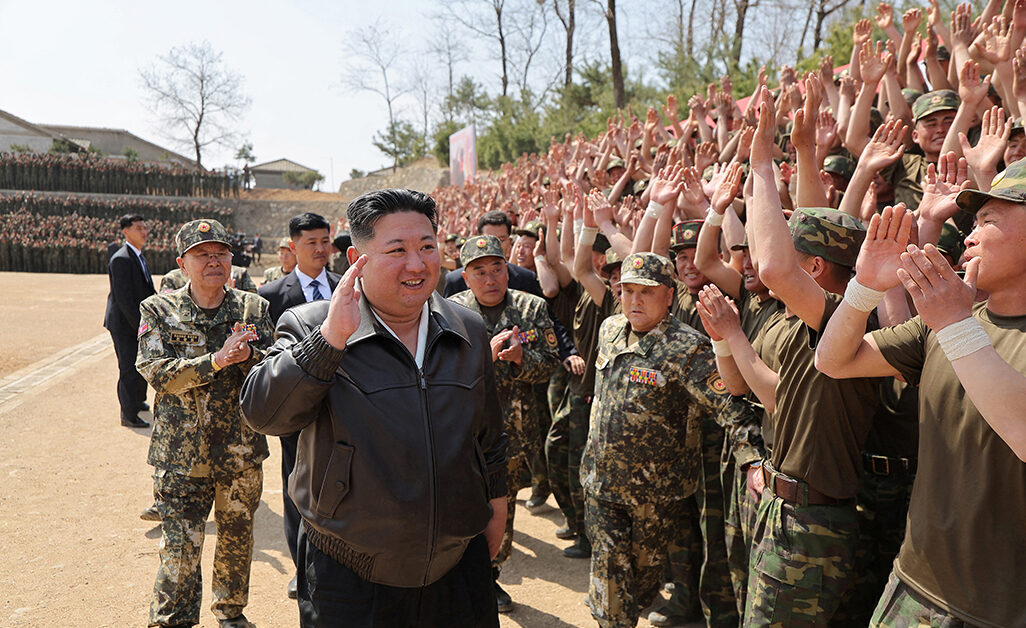
The confirmation came as North Korean leader Kim Jong Un hosted a ceremonial reception in Pyongyang for servicemen of the 528th Engineer Regiment of the Korean People’s Army, who had returned home after completing tasks “in a foreign combat zone”. In a speech broadcast by state media, Kim said the unit had been deployed to Russia in early August and carried out engineering combat missions in Russia’s Kursk region.
Kim stated that during the 120-day mission the regiment had suffered “nine tragic losses”, an unusually explicit admission for a regime that tightly controls information about its armed forces and almost never acknowledges overseas military casualties.
Pyongyang breaks silence on overseas deployment
The announcement marks the first public confirmation by North Korea that it sent military personnel to Russia for operations directly linked to the war against Ukraine, specifically for demining activities in the Kursk region. Kim praised the regiment’s performance, saying it had achieved “brilliant results” while carrying out dangerous engineering tasks under combat conditions.
For the North Korean leadership, even limited recognition of casualties represents a significant shift. References to dead soldiers are rare in official messaging, and the acknowledgement of losses suggests Pyongyang was forced to address the issue amid reports of substantial North Korean casualties during operations on Russian soil.
The figure cited by Kim applies only to the specific deployment of the 528th Engineer Regiment and not to the full scope of North Korean military personnel believed to have been present in Russia during the same period.
Discrepancy between official claims and battlefield reports
Ukrainian officials have previously reported far higher numbers of North Korean casualties. President Volodymyr Zelensky has stated that as of January 2025, around 4,000 North Korean soldiers had been neutralised in Russia’s Kursk region, a figure that starkly contrasts with Pyongyang’s admission of nine deaths.
Against that backdrop, analysts view the announced toll as the minimum figure the North Korean authorities consider safe to disclose to a domestic audience. The carefully framed language focuses on sacrifice and loyalty, avoiding any suggestion of broader losses or operational setbacks.
By limiting the acknowledgement to a single regiment and a defined mission, Pyongyang appears to be attempting to contain the political impact while still adjusting its narrative to reflect facts that are increasingly difficult to conceal.
Secrecy, coercion and propaganda around the mission
North Korea’s long refusal to admit involvement in Russia’s war was accompanied by extreme measures to obscure the presence of its troops. According to Ukrainian and allied assessments, North Korean soldiers were ordered not to surrender alive, were sometimes recorded under false identities, and in some cases bodies were deliberately disfigured to prevent identification.
State media in Pyongyang is now reframing the deployment as an act of heroism and absolute devotion to the ruling party, folding the losses into a broader propaganda narrative rather than treating them as a sensitive military failure.
The public reception for troops returning from a “foreign combat zone” signals that participation in Russia’s war effort is no longer covert policy but part of the regime’s official political line.
Implications for Russia and the wider war
Russia has previously acknowledged the involvement of North Korean personnel in demining operations, but Kim’s statement elevates that cooperation to the highest political level. It underscores Moscow’s reliance on external manpower for hazardous tasks, either due to shortages or an effort to preserve its own resources.
More broadly, the admission reinforces assessments that North Korea is not merely supplying ammunition or offering diplomatic backing to the Kremlin, but is directly contributing military forces to operations linked to the war against Ukraine.
By making the deployment public, Pyongyang has tied itself more explicitly to the conflict, deepening its alignment with Moscow and further internationalising a war that continues to reshape regional and global security dynamics.