Kremlin warns Brussels over ‘reparations loan’ to Ukraine
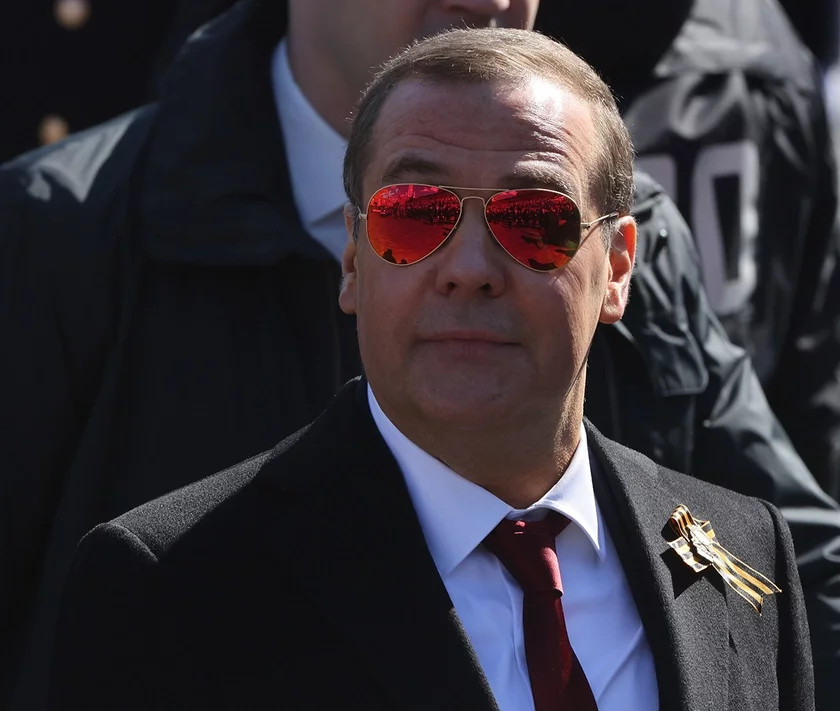
Russia has escalated its rhetoric over the European Union’s plan to use frozen Russian assets to support Ukraine, with Dmitry Medvedev openly framing the move as a potential cause for war. In a sharply worded message on his Telegram channel, the deputy chair of Russia’s Security Council warned that if the EU proceeds with a so-called reparations loan backed by Russian funds immobilised in Belgium, Moscow could treat it as a special form of casus belli against Brussels and individual EU states. He claimed that in such a scenario, any “return” of the money would not take place in court, but through “real reparations paid in kind by Russia’s defeated enemies”. The warning underlines how sensitive the issue of frozen assets has become for the Kremlin, which views these reserves both as a sovereign resource and as a symbol of state prestige. Western initiatives to redirect the funds towards Ukraine’s reconstruction are therefore perceived in Moscow as a direct challenge to its financial and political sovereignty.
Frozen assets debate exposes EU legal and political tensions
Since Russia’s full-scale invasion of Ukraine, the EU has frozen more than €200 billion in Russian state and private assets, with the largest share held in Belgium. European leaders have been exploring ways to channel the windfall profits or principal into long-term support for Kyiv, including through a large “reparations loan” guaranteed by these immobilised holdings. The proposal is seen by many capitals as a crucial step towards creating a sustainable funding mechanism for Ukraine’s defence and reconstruction, especially as traditional budgetary resources come under strain.
Yet the plan has also laid bare deep divisions within the bloc. Belgium has emerged as the main sceptic, insisting on stronger legal guarantees and warning of potential retaliation from Moscow if the scheme backfires or cannot be fully implemented. Brussels fears that Euroclear, the clearing house where most of the Russian assets are parked, could face lawsuits or countermeasures, leaving Belgian taxpayers exposed. These concerns have slowed agreement at EU level and given Russia an opportunity to amplify doubts about the legality and political risks of the initiative.
Threats as psychological pressure on EU unity
Medvedev’s references to casus belli – a formal pretext for war under international practice – are widely seen in Europe as part of a broader strategy of intimidation rather than a literal announcement of imminent military action. By invoking the language of war in connection with financial measures, Moscow aims to raise the perceived cost of proceeding with the asset plan, especially for more cautious member states. The goal is to inject strategic uncertainty into EU debates, encouraging some governments to argue that pushing ahead could cross an undefined red line and trigger an uncontrolled escalation.
Such high-impact statements are a familiar tool in Russia’s information and influence campaigns. They are designed to be picked up by international media, to resonate in national parliaments and to complicate consensus-building in Brussels. In this sense, Medvedev’s post functions as a form of psychological and political pressure: it seeks to delay or dilute decisions on Ukraine by making every step towards using frozen assets appear legally contested and potentially dangerous. The more the EU hesitates, the greater the chance, from the Kremlin’s perspective, that the assets will ultimately remain intact or be traded in future negotiations.
Medvedev’s hawkish persona as a signalling device
Over the past years, Medvedev has crafted a public image as one of Moscow’s most hardline voices, regularly issuing nuclear threats, denunciations of the West and calls for harsher measures against Ukraine. This hawkish persona serves several functions inside Russia’s system. It allows him to demonstrate absolute loyalty to Vladimir Putin and to signal his own relevance within an elite hierarchy that increasingly equates influence with readiness to use forceful language. It also provides the Kremlin with a flexible channel for extreme messaging that can later be walked back or reframed if international reaction proves stronger than expected.
Within this framework, Medvedev’s statements often act as a “trial balloon” for possible policy directions. By threatening “real reparations in kind” against European states, he tests how far rhetoric around retaliatory measures can be pushed without provoking a disproportionate response. If Western governments respond cautiously or downplay his remarks, Moscow may interpret this as room to escalate its legal, economic or hybrid pressure over the asset issue. If the reaction is robust and unified, the Kremlin can still claim that Medvedev was speaking in a personal or exaggerated capacity, while preserving ambiguity about its actual thresholds.
Moscow’s bid to derail a long-term funding architecture for Ukraine
The timing of Medvedev’s intervention is closely tied to ongoing EU negotiations on a long-horizon financing package for Kyiv that would rely in part on frozen Russian assets. For Russia, the emergence of a predictable, legally anchored mechanism of this kind poses a strategic problem: it would give Ukraine a multi-year resource base largely insulated from shifts in domestic politics across member states. Once set up, such a system would be difficult to unwind without damaging the EU’s own credibility and financial reputation.
By explicitly threatening Europe over the asset plan, Moscow seeks to slow or fragment the process before it matures into a durable financial architecture. The Kremlin understands that if the principle of using Russian assets is firmly established, it may later be expanded or replicated by other partners, further limiting Moscow’s leverage. Publicly raising the spectre of war, legal counter-claims and economic reprisals is therefore part of a broader attempt to deter the EU from crossing what Russia wants to portray as a fundamental line. At the same time, such rhetoric reinforces domestic narratives inside Russia about a hostile, “plundering” West and helps justify continued militarisation and repression under the banner of defending national wealth.