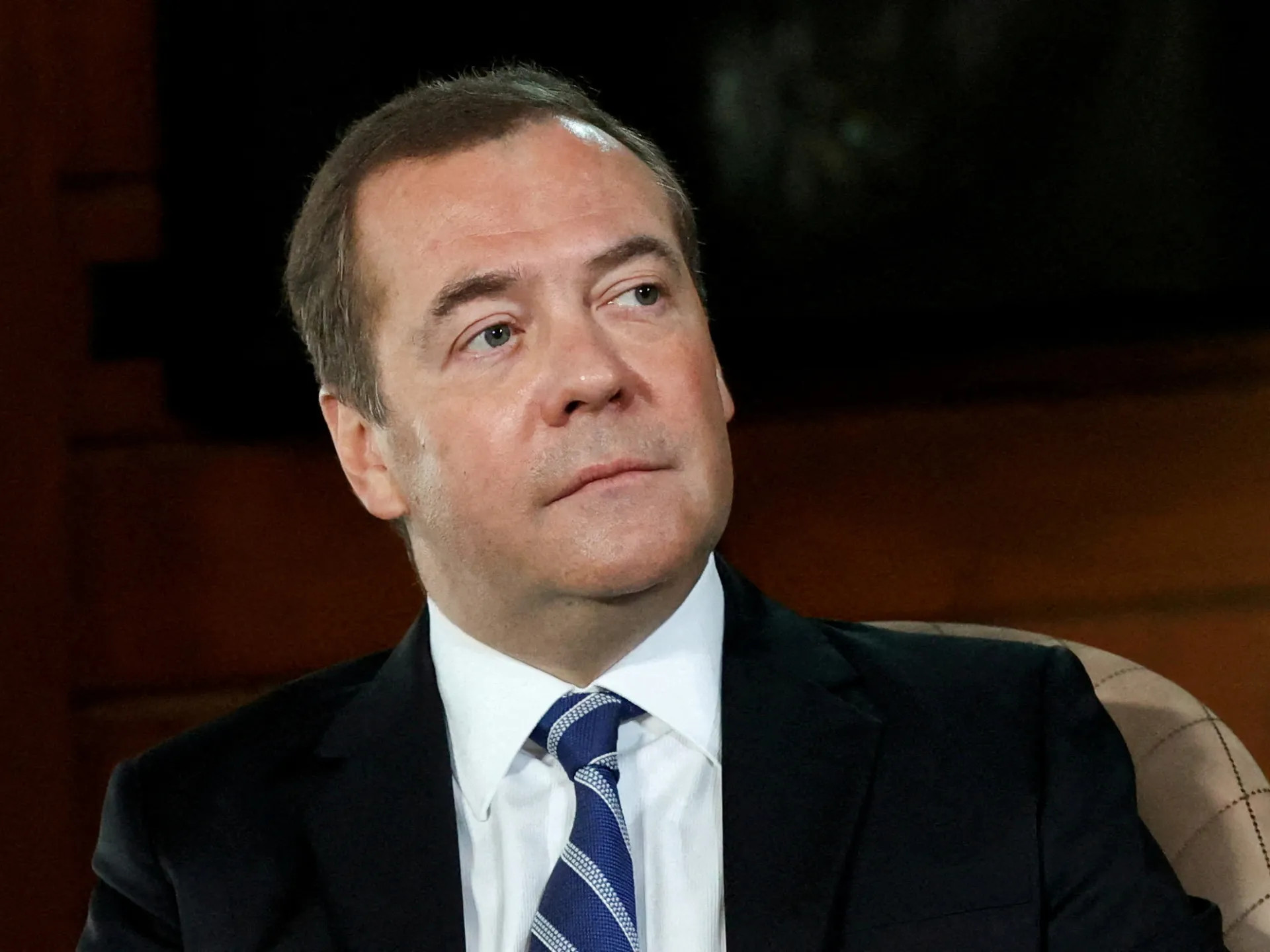
Russia’s deputy head of the Security Council, Dmitry Medvedev, again raised the prospect of nuclear weapons on 2 February 2026, stating that Moscow would act in line with its doctrine if the country’s fate were at stake. Speaking in a series of interviews, he argued that Russia was not seeking a global conflict while insisting that nuclear use remained an option under extreme circumstances. The remarks come as the war against Ukraine continues and international attention focuses on Moscow’s escalation rhetoric. Russian officials have repeatedly framed such statements as defensive rather than threatening. The timing has renewed debate over the strategic purpose of nuclear messaging.
Nuclear doctrine cited as Medvedev warns of extreme scenarios
Responding to questions about a potential nuclear strike on Ukraine, Medvedev said that nuclear weapons were “exceptionally dangerous for the fate of all humanity” but unavoidable if Russia faced an existential threat. He stressed that Moscow acts strictly within its nuclear doctrine and sees no need for separate discussions on use. Medvedev also claimed that Russia’s restraint so far proved there had been no serious threat to the country. His comments were disseminated through a statement published by state media channels. The language echoed earlier warnings issued by senior Russian officials since the start of the full-scale invasion.
Messaging aimed at Western governments and domestic audiences
Analysts view Medvedev’s remarks primarily as political and psychological signalling designed to raise perceived stakes for Western supporters of Kyiv. By invoking nuclear thresholds while denying any intent to start a global war, the Kremlin seeks to project firmness without formal escalation. At the same time, the rhetoric reinforces a domestic narrative portraying Russia as facing an existential challenge that requires unity and sacrifice. This framing helps legitimise economic hardship and wartime measures by shifting responsibility to external adversaries. Medvedev’s comments to another official interview segment underscored this dual-track communication strategy.
Use of official and pro-war platforms highlights coordinated approach
The choice to give interviews not only to state agencies but also to the pro-war project Wargonzo reflects an effort to reach both Western elites and radicalised pro-Kremlin audiences. Such coordination blends formal diplomatic signalling with aggressive propaganda messaging. Within the Kremlin hierarchy, Medvedev is widely seen as a vocal messenger rather than an independent decision-maker, allowing President Vladimir Putin to appear comparatively restrained. His statements function as a testing mechanism, gauging international reactions to the most extreme scenarios. This approach preserves flexibility while amplifying pressure.
Nuclear rhetoric linked to arms control uncertainty
Medvedev’s warning also coincides with the impending expiry of the US–Russia New START treaty on 5 February. Moscow has signalled openness to future discussions while avoiding clarity on conditions, implicitly tying arms control to broader political demands. Russian officials appear to be leveraging nuclear discourse to extract concessions related to Ukraine. A further excerpt from the interview series reinforced that linkage without offering specifics. For Western governments and Kyiv, the challenge remains preventing nuclear threats from being used as bargaining tools absent any change in Russia’s conduct.