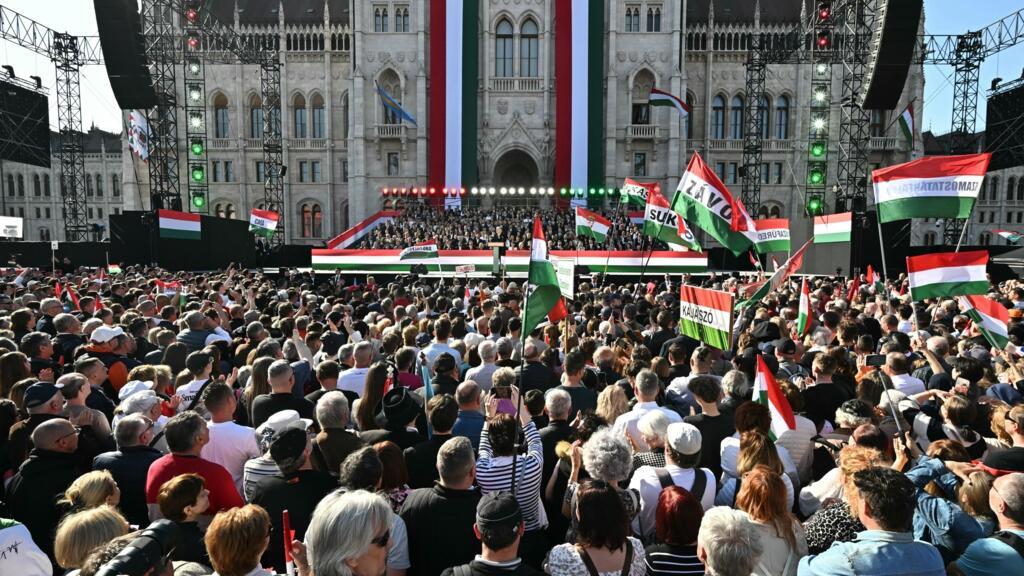
Hungary is moving into the critical stage of its parliamentary campaign, marked by rising political tension and a noticeable shift in public discourse. With only weeks remaining before the vote, attention has pivoted away from economic concerns toward issues of national security, external pressure, and perceived threats to state stability. The recalibration of messaging reflects a broader transformation in how the campaign is being framed for voters.
Several Western outlets have pointed to indications of external involvement in the electoral environment. The Washington Post reports that discussions within Russian structures included potential scenarios aimed at influencing the campaign in favour of Prime Minister Viktor Orbán. The objective, according to the publication, was to reshape the political agenda toward crisis-driven mobilisation. At the same time, Financial Times highlights a Kremlin-aligned digital strategy designed to strengthen the ruling Fidesz while weakening its main challenger, the Tisza Party led by Péter Magyar.
Additional reporting from Telex suggests that coordinated online activity has played a role in amplifying pro-government messaging. Investigators identified a network of fabricated social media profiles, many built using AI-generated images, which systematically engaged with content from pro-government figures to boost visibility and simulate broad public backing. This pattern is consistent with known digital influence tactics aimed at shaping perception rather than direct persuasion.
Diplomatic Channels and Political Messaging
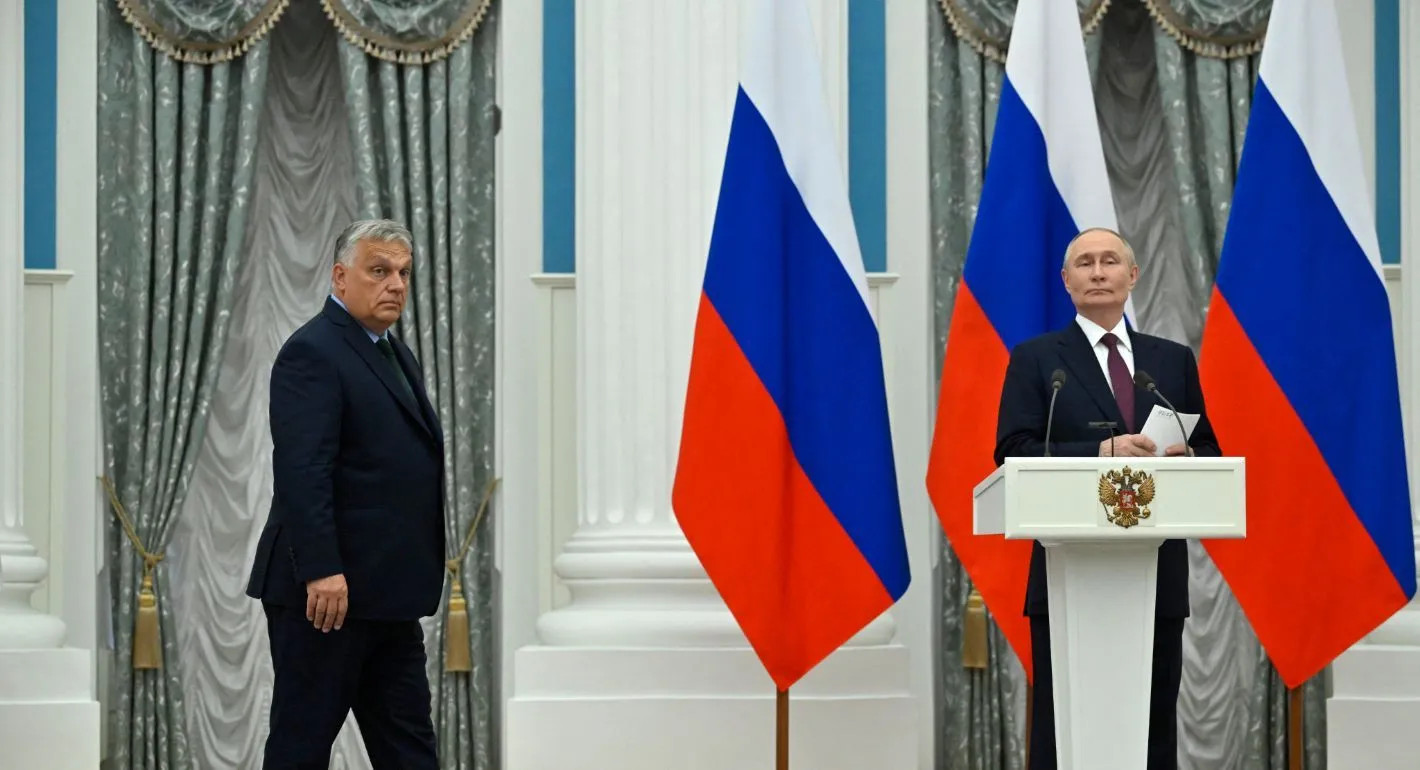
Analysts are also scrutinising the role of Hungary’s foreign minister, Péter Szijjártó, whose recent activity appears to extend beyond conventional diplomacy. He has maintained regular communication with Sergey Lavrov, including during key European consultations. While officially framed as routine engagement, observers note that such interactions are often followed by a shift in the Hungarian government’s rhetoric, particularly regarding alleged external pressure from Ukraine and EU institutions.
According to diplomatic sources cited in European media, these exchanges may function as channels for aligning political narratives rather than merely discussing bilateral issues. The result is a synchronised messaging pattern in which foreign policy statements reinforce domestic political positioning, blurring the line between external diplomacy and internal campaign strategy.
Escalation Through Narrative Framing
A defining feature of the current campaign phase is the reinterpretation of isolated incidents as elements of a broader threat landscape. For example, the detention in Hungary of armoured vehicles linked to a Ukrainian financial institution was rapidly reframed in pro-government media as a potential indicator of interference. This was followed by a sequence of claims in the public sphere, including alleged threats against the prime minister’s family and warnings of destabilisation efforts.
Such developments align with what analysts describe as a model of controlled escalation, where discrete events are integrated into a unified narrative designed to heighten public concern. In this framework, perception management becomes as significant as the events themselves, with emphasis placed on reinforcing a sense of vulnerability and urgency.
Drivers Behind the Strategic Shift
The evolving campaign tone is largely attributed to domestic political pressures. Polling data indicates declining support for the ruling party alongside growing momentum for the opposition. Economic challenges and accumulated public dissatisfaction have reduced the effectiveness of traditional policy-driven messaging, prompting a pivot toward themes that can consolidate support more rapidly.
Security and sovereignty narratives, supported by assertive foreign policy rhetoric, have therefore become central tools in the government’s communication strategy. The integration of diplomatic signals into domestic discourse further amplifies this approach, creating a feedback loop between international positioning and internal political messaging.
Outlook Ahead of the Vote
Experts outline several plausible trajectories as the election approaches: sustained high tension with security concerns dominating public debate, increased pressure on opposition actors, and potential adjustments to the campaign environment depending on polling dynamics.
At the core of these scenarios lies the contest over narrative control. In a highly saturated information space, the interpretation of events—rather than the events themselves—plays a decisive role in shaping voter perception.