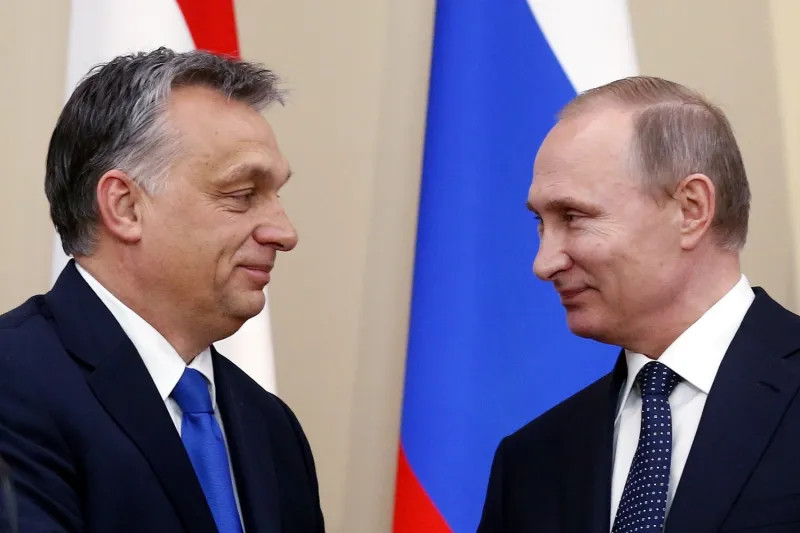
Hungary will not arrest Russian President Vladimir Putin if he travels to Budapest for talks with U.S. President Donald Trump, Hungarian Foreign Minister Péter Szijjártó confirmed to Bild on October 17, 2025. Szijjártó emphasized that Hungary will provide all necessary conditions to ensure the meeting is successful and that Putin returns home safely.
Context of U.S.-Russia diplomatic talks
The announcement follows a phone conversation between Trump and Putin on October 16, 2025, during which both leaders agreed to organize high-level discussions next week, culminating in a face-to-face meeting in Budapest. Key topics are expected to include the ongoing Russia-Ukraine war and potential terms for ending the conflict.
ICC arrest warrant and Hungary’s legal stance
In March 2023, the International Criminal Court issued an arrest warrant for Putin over the unlawful deportation of thousands of Ukrainian children. Any ICC member country would be obligated to detain him if he entered their territory. Hungary, which initially recognized the ICC’s jurisdiction, announced in April 2025 its intention to withdraw, following a similar decision regarding Israeli Prime Minister Benjamin Netanyahu. The withdrawal, confirmed by the Hungarian parliament in May, becomes effective one year after the notification to the UN, meaning Budapest remains formally bound by ICC obligations until June 2026.
Political implications for Orban
For Prime Minister Viktor Orbán, hosting Trump and Putin represents both a diplomatic milestone and a chance to assert Hungary’s influence internationally. Amid longstanding tensions with the EU and criticism over his pro-Russian policies, the meeting allows Orbán to showcase Hungary as a pivotal negotiation platform. Domestically, it offers political leverage ahead of the 2026 parliamentary elections, where his party Fidesz faces challenges from the rising opposition party Tisa.
Demonstrating an independent international role
Hungary’s refusal to enforce the ICC warrant underscores Orbán’s intent to maintain friendly ties with Moscow while positioning Budapest as a mediator between Russia and the West. The summit could strengthen Hungary’s autonomy in bilateral and multilateral negotiations, though it risks delaying further EU sanctions against Russia. The decision also raises concerns about the effectiveness of international justice, highlighting how political considerations may override legal obligations and potentially embolden authoritarian leaders to evade accountability.