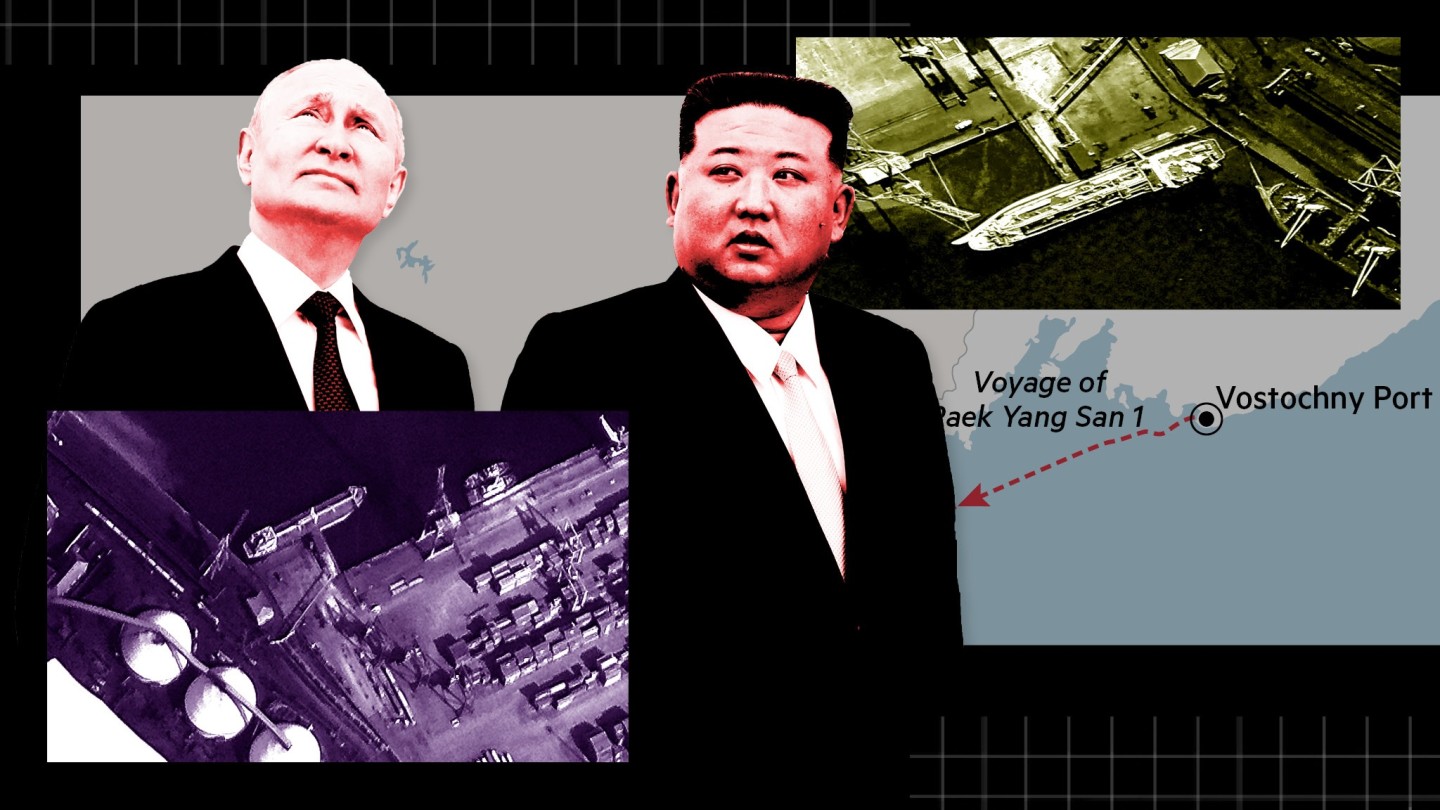
Evidence of covert oil flows from Russia to North Korea
A joint investigation by Important Stories, the Open Source Centre and OCCRP alleges that Russia supplied more than 1.5 million barrels of petroleum products to North Korea in 2024 — triple the annual limit permitted under UN sanctions. According to the report, at least 50 tankers arrived empty at the port of Nakhodka and departed loaded for North Korea, while hidden payment channels were created between Moscow and Pyongyang to facilitate the trade. The investigation, published on 20 November 2025, details how the Fuel and Bunker Company in Nakhodka — which reportedly has ties to the family of Russian Deputy Prime Minister Marat Khusnullin — received over 240 million rubles from a firm known as the Southern Railway Expedition, with transfers occurring just as tankers sailed for North Korean ports. The findings are outlined in the analysis of Russia’s sanction-busting activities in the Important Stories investigation.
Covert shipments also moved by rail along the Soviet-era Hasan–Rajin line, delivering at least 322,000 barrels of petroleum products in 2024 through companies such as Introstopt and Atlant Export. Western governments warn these flows form part of a broader “weapons-for-oil” arrangement, with North Korea supplying Russia with ballistic missiles, artillery systems and ammunition, while also sending more than ten thousand military personnel to Russia.
Strategic partnership deepens between Moscow and Pyongyang
The illicit trade intensified after Vladimir Putin and Kim Jong Un signed an Expanded Strategic Partnership Treaty in Pyongyang in June 2024. The agreement covers industrial, economic and scientific cooperation and includes commitments to mutual military assistance in the event of armed conflict involving either state. By October, North Korea had deployed an estimated 15,000 troops to Ukraine to fight alongside Russian forces, with South Korea’s intelligence service reporting roughly two thousand North Korean soldiers killed in the Kursk region.
Moscow simultaneously moved to dismantle mechanisms meant to enforce sanctions. In March 2024 Russia became the only UN Security Council member to veto the extension of the expert panel monitoring sanctions on North Korea — a decision that coincided with the surge in clandestine oil deliveries. Investigators argue that this was a deliberate effort to neutralise international oversight and escape accountability for sanctions violations.
Global security risks and the erosion of the sanctions regime
The scale of the oil shipments — and the systematic use of concealed financial channels — raises pressure for targeted sanctions against the companies involved. Fuel and Bunker Company, Introstopt and Atlant Export are identified as key operators enabling the flow of banned petroleum products to North Korea. Without direct penalties, analysts warn the UN sanctions regime risks becoming symbolic rather than enforceable.
Meanwhile, the “weapons-for-technology” dimension of the partnership presents even greater risks. Reports indicate Pyongyang is seeking access to Russian military technologies such as satellite systems and submarine-related expertise. Any transfer of sensitive technology would violate UN Security Council resolutions and accelerate North Korea’s strategic weapons programmes, altering the balance of power in East Asia and intensifying the nuclear threat in the region.
The growing military alignment between Russia and North Korea threatens not only Ukraine but the international security architecture as a whole. Their cooperation is forming a new axis of authoritarian regimes capable of destabilising the Asia-Pacific landscape. The United States, Japan and South Korea face mounting pressure to revise their defence strategies as Pyongyang’s military capabilities expand with Russian assistance.