France has continued trading uranium-linked materials with Russia nearly four years after the start of Moscow’s full-scale invasion of Ukraine, highlighting a sensitive loophole in the European Union’s sanctions regime. Media reports published on 28 January show that nuclear cooperation between Paris and Moscow has quietly persisted, even as other sectors of economic exchange have been sharply restricted since 2022. The issue has drawn renewed attention following an investigation by Le Monde.
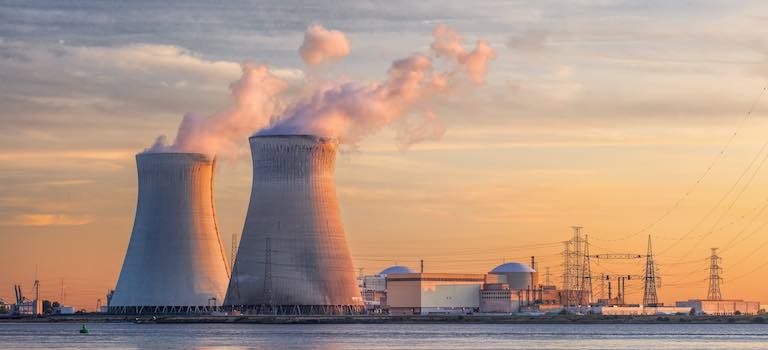
The nuclear sector remains largely exempt from EU sanctions, reflecting Europe’s continued dependence on Russian-linked infrastructure for uranium enrichment and reprocessing. France, which relies heavily on nuclear power for electricity generation, continues to import enriched uranium whose production chain is partly connected to Russia, including supplies routed through Kazakhstan and Uzbekistan. These flows are legal under current EU rules but politically contentious given the broader effort to isolate Moscow.
The role of Orano and Russia’s nuclear infrastructure
A central actor on the French side is Orano, the state-linked nuclear fuel company formerly known as Areva. Orano imports enriched uranium for France’s nuclear reactors and exports spent nuclear material for reprocessing to a specialised facility in Seversk, Russia. That plant, operated by structures linked to Rosatom, is currently the only industrial-scale site in the world capable of carrying out this specific type of reprocessing.
This technical monopoly explains Paris’s resistance to a full embargo on Russian nuclear services. France does not yet possess domestic capacity to reprocess certain categories of spent fuel, leaving it dependent on Russian facilities for part of its nuclear cycle. As a result, the trade channel has remained open despite the political cost and growing scrutiny from partners and the public. Details of the continued exchanges have also circulated in Russian-language sources, including a report shared via Telegram.
Strategic and financial implications
From Moscow’s perspective, nuclear cooperation with EU member states represents one of the few remaining channels of “legitimate” trade with Europe. Revenues generated through uranium-related services contribute to Russia’s foreign currency income and, indirectly, help sustain its broader industrial base, including the military-industrial complex. Analysts argue that this undermines the coherence of Western sanctions by allowing a high-value, technologically sensitive sector to remain partially insulated.
The selective nature of sanctions has also raised concerns about leverage. Continued reliance on Russian nuclear infrastructure creates long-term strategic risks for France and the EU, including the possibility of political pressure or supply disruptions. Critics note that while Europe has moved decisively to reduce dependence on Russian oil and gas, the nuclear sector has lagged behind, weakening the overall credibility of the sanctions framework.
Pressure for a phased exit
Policy experts increasingly argue that the issue is not an immediate shutdown, but the absence of a clearly defined timeline for disengagement. A gradual but binding plan to reduce and ultimately end nuclear cooperation with Russia, combined with investment in European enrichment and reprocessing capacity, is seen as the most realistic path forward. Targeted sanctions on Rosatom and its subsidiaries, even if introduced in stages, are viewed as a key lever to accelerate this shift.
Without such steps, France and the EU risk remaining tied to Russian nuclear infrastructure for years to come, allowing Moscow to retain strategic influence and financial inflows despite its international isolation. The uranium trade thus illustrates a broader dilemma facing Europe: balancing short-term energy security against the long-term objectives of sanctions, resilience and geopolitical consistency.