A group of prominent right-wing and conservative politicians from across Europe and beyond have publicly endorsed Hungarian prime minister Viktor Orbán in a campaign video released on 14 January 2026, underscoring the growing transnational dimension of Hungary’s upcoming parliamentary elections. The nearly two-minute clip, published by Orbán himself, features messages of support from Italy’s prime minister Giorgia Meloni, her deputy Matteo Salvini, French far-right leader Marine Le Pen, and Alice Weidel of Germany’s Alternative for Germany.
The video also includes Spain’s Vox leader Santiago Abascal, Austrian Freedom Party head Herbert Kickl, Serbian president Aleksandar Vučić, former Czech prime minister Andrej Babiš, Israeli prime minister Benjamin Netanyahu, and Argentine president Javier Milei. “Together we stand for a Europe that respects national sovereignty and is proud of its cultural and religious roots,” Meloni said in her recorded message.
A tightening race after 15 years in power
Hungary’s parliamentary elections are scheduled for 12 April 2026, and recent polling suggests the tightest contest Orbán has faced in more than a decade. Surveys indicate that the opposition Tisza party is leading with around 49% support, well ahead of Orbán’s ruling Fidesz party at roughly 37%. After nearly 15 years in uninterrupted power, the prime minister is confronting growing domestic fatigue and sustained criticism from abroad over democratic backsliding, restrictions on media freedom and the erosion of judicial independence.
For Orbán and his political circle, the stakes extend beyond electoral defeat. A change of government would likely open the door to investigations into large-scale corruption, the use of EU funds and the dismantling of the clientelist system that has consolidated Fidesz’s dominance. It would also almost certainly trigger a recalibration of Hungary’s foreign policy, including its relations with Russia and its confrontational posture towards EU institutions.
Orbán as a symbol of an “alternative Europe”
The leaders endorsing Orbán differ markedly in their national agendas and in their positions on the war against Ukraine. What unites them is a shared rejection of the EU’s liberal mainstream and a preference for a Europe built around strong nation-states, scepticism towards supranational governance and a conservative interpretation of social values. Within this narrative, Orbán is portrayed as a standard-bearer of an “alternative Europe” resisting Brussels’ influence.
The decision to foreground international endorsements reflects Orbán’s weakening position at home and an effort to mobilise voters by presenting himself not merely as a national leader, but as a central figure in a broader conservative coalition. By doing so, he seeks to offset domestic discontent with external validation and ideological solidarity.
Anti-Ukraine rhetoric and growing isolation
In recent years, Orbán has increasingly combined his appeal to conservative values with overtly anti-Ukrainian rhetoric, framing Kyiv as an existential threat to Hungary, particularly in the context of Ukraine’s EU aspirations. This messaging has allowed him to deflect responsibility for internal economic and governance problems onto external actors, while tapping into voter anxieties. At the same time, it has further isolated Budapest within the European Union, where Hungary has repeatedly clashed with partners over sanctions on Russia, military assistance to Ukraine and LGBTQ+ rights.
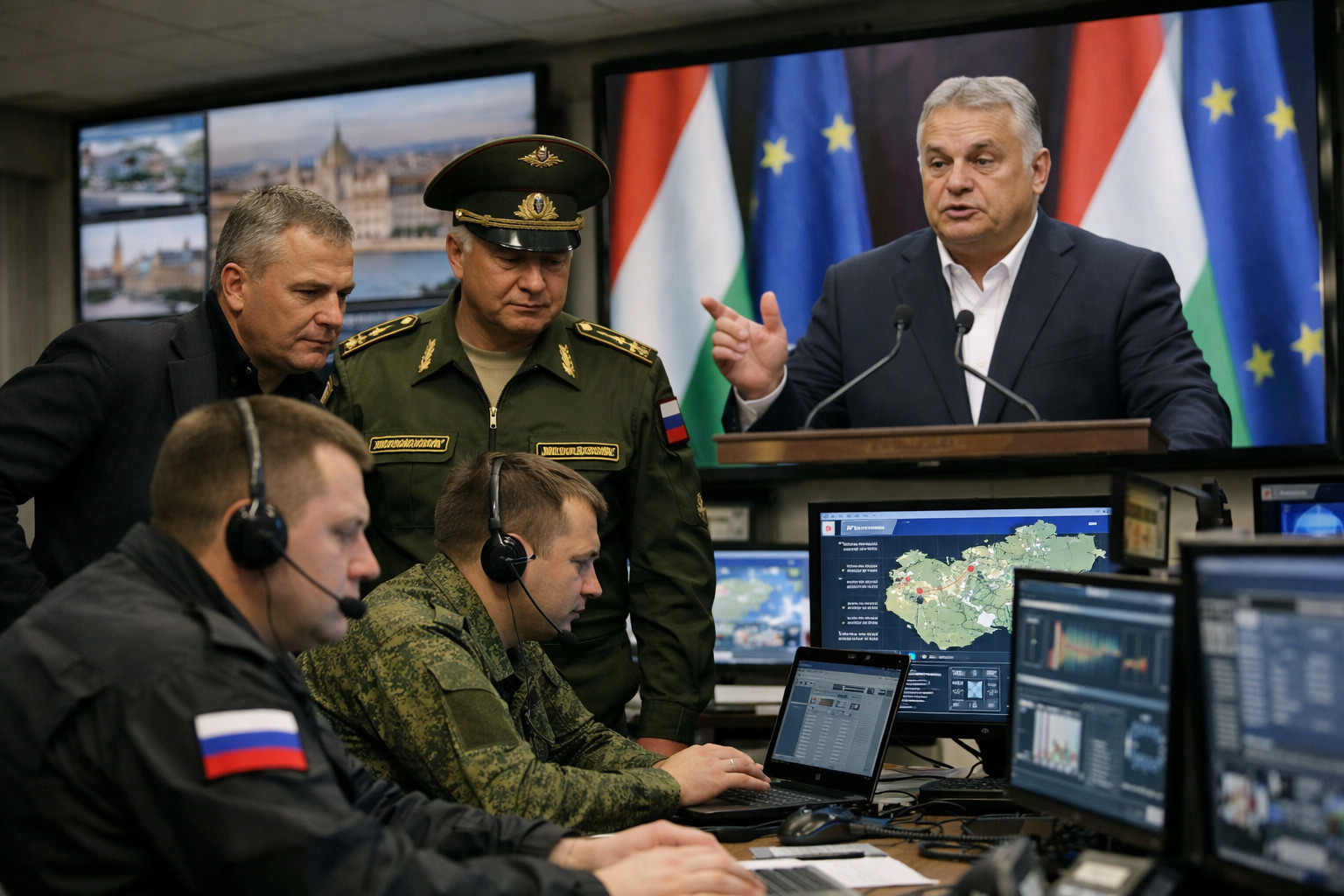
Orbán has also remained the only EU leader to maintain openly cordial political ties with the Kremlin since Russia’s full-scale invasion of Ukraine. His persistent resistance to common EU positions has weakened Western unity and provided Moscow with a de facto ally inside the bloc.
Why Hungary’s election matters beyond Budapest
For Europe, the Hungarian vote carries implications well beyond national politics. Russia has a clear strategic interest in Orbán retaining power, as Hungary under Fidesz has served as a channel to delay EU decisions, dilute sanctions and amplify internal divisions. A victory for the opposition would likely close off this avenue of influence, strengthening the EU’s ability to act cohesively.
As a result, the 2026 election is widely seen as a test not only of Hungary’s democratic trajectory, but of the resilience of Europe’s political and security architecture at a time of heightened geopolitical pressure.