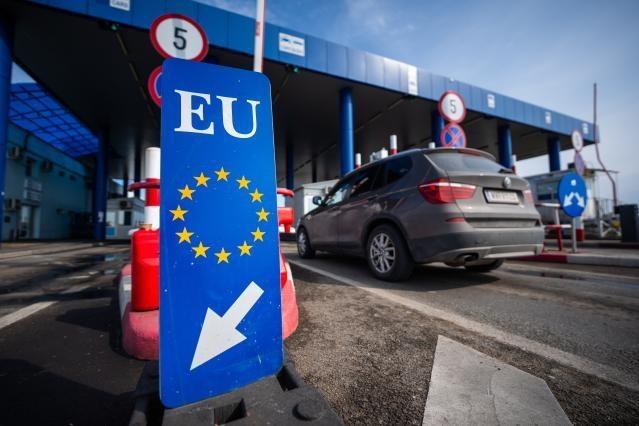
The connection of the Grebenne–Rava-Ruska checkpoint to the EU’s Entry/Exit System (EES) marks a major step in strengthening the Union’s ability to manage its eastern border with precision and speed. The digital system records each crossing — including biometric data, travel routes, and dates — ensuring full transparency and accurate tracking of third-country nationals’ stays. This modernization eliminates risks linked to document fraud and overstaying while freeing up border resources for real threat monitoring. It also allows EU member states to synchronize their border policies more effectively and reinforces trust in the security of Europe’s external frontiers.
Standardized border control and trust within the EU
The deployment of EES along the eastern frontier enhances mutual confidence between member states and reduces gaps in national border operations. By adopting unified digital standards for data collection and exchange, the EU gains a more coherent and agile control system. This shared approach not only safeguards the Schengen area but also demonstrates unity in addressing growing challenges at external borders. With EES, the eastern boundary is transformed from a potential vulnerability into a zone of predictable and secure management.
Efficiency and economic benefits
For the EU, EES introduces a balance between security and efficiency. Automated data processing reduces inspection times, limits bureaucratic errors, and streamlines legal travel between Ukraine and the EU. Border regions benefit from stable trade flows and improved logistics reliability, while Europe’s transport systems experience fewer delays and higher predictability — factors that support economic stability in both the EU and neighboring Ukraine.
Ukraine’s integration into the EU digital space
Ukraine’s gradual integration into the EES reduces both administrative and psychological distance from Brussels. Joint border management strengthens trust and lays groundwork for broader participation in the EU’s digital and security initiatives. This cooperation shows that even complex security processes can serve as tools of convergence, not division. By investing in Ukraine’s inclusion, Europe effectively invests in its own stability and resilience.
Countering disinformation and hybrid threats
Moscow continues to spread disinformation about the “risks of open borders” to undermine Ukraine’s European integration and discredit EU technological innovation. Such campaigns aim to erode trust between partners. However, the transparency and coordination provided by EES weaken these efforts. By fortifying its eastern border in cooperation with Ukraine, the EU strengthens not only its physical defenses but also its political and informational resilience.