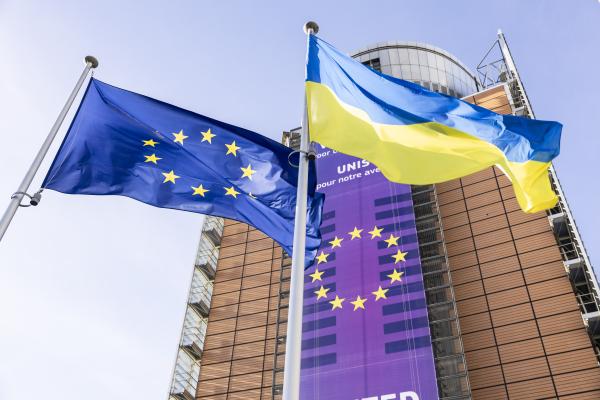
The European Centre for Disease Prevention and Control (ECDC) announced on 29 October 2025 that its cooperation agreement with Ukraine’s Ministry of Health has become a key element in reinforcing the EU’s epidemic preparedness. Ukraine’s position at the crossroads of transport and migration routes makes it a natural early-warning zone for potential infectious outbreaks. Through access to Ukrainian laboratories monitoring influenza, tuberculosis and viral infections, the ECDC has effectively expanded its surveillance network without building new infrastructure inside the EU. This setup enables early detection of new strains or mutations before they cross EU borders, integrating Ukrainian databases and reporting systems into a shared European framework.
Strategic and scientific value for the EU
The cooperation provides the EU with both scientific and economic benefits. Rather than duplicating costly laboratory capacities, Brussels gains access to existing Ukrainian infrastructure and highly qualified specialists. This supports the harmonisation of diagnostic standards, testing methods and data processing across the continent. Ukrainian research facilities supply valuable analytical input for vaccine development, diagnostic validation and modelling of disease spread, giving the EU a broader scientific foundation for public health forecasting and response.
Strengthening regional resilience
Beyond science, the partnership serves as a biological and informational filter for the EU. Data streams from Ukraine provide insight into emerging biological risks, migration patterns and infection clusters, allowing faster decision-making and risk mitigation in Brussels. The arrangement reduces the lag between detection and policy response, improving the EU’s ability to manage health crises while safeguarding its internal markets and social systems.
Integration and geopolitical dimension
The agreement also carries geopolitical significance, deepening Ukraine’s integration into European institutions. It transforms cooperation from humanitarian assistance into practical partnership, reinforcing mutual resilience. Despite Moscow’s attempts to undermine trust through disinformation about “external control” in health matters, the collaboration delivers measurable results — improved early-warning capacity, lower testing costs, and more effective risk management. It demonstrates that European security can be enhanced not only through defence and energy cooperation but also through shared scientific and medical infrastructure built on trust.