China is increasingly emerging as a critical external enabler of Russia’s missile war against Ukraine by supplying electronic components to enterprises within Russia’s military-industrial complex. These components are used in the production and modernisation of cruise and anti-ship missiles, including the Kalibr (3M-14M) and Kh-35U. As Western export controls have largely cut Russia off from advanced semiconductors, design software and specialised electronics, Moscow has been forced to rebuild its supply chains. Assessments by Western governments indicate that China has become Russia’s primary source of dual-use and military-relevant electronics, directly undermining the intended impact of sanctions.
This involvement goes beyond consumer-grade parts. Chinese-made microchips, connectors and electronic assemblies are increasingly found in guidance, communications, radar and flight-control systems of Russian missiles. These components enable homing functions, remote control and navigation, allowing Russia to continue precision strikes on Ukrainian cities. As a result, Beijing’s suppliers are now embedded in systems that facilitate attacks on civilian areas, raising serious questions about China’s claimed neutrality.
Rebuilding Russia’s electronics base under sanctions
Following the full-scale invasion of Ukraine, Russia lost access to most Western high-technology inputs. The anticipated degradation of its defence industry has not fully materialised because Chinese suppliers have stepped in to fill the gap. Russian missile programmes now rely heavily on Chinese microelectronics, printed circuit boards and connector systems, often declared as civilian or dual-use goods to evade restrictions.
A central role in this process is played by the Central Research Institute of Radio Engineering named after Academician A. I. Berg, a key institution involved in upgrading Kalibr missiles and producing Kh-35U systems. The institute requires a modern electronic component base for radar seekers, navigation units and control systems. With Western sources cut off, these needs are increasingly met through Chinese supply channels, often via Russian intermediaries that integrate and distribute the components to defence enterprises.
Chinese suppliers and intermediary networks
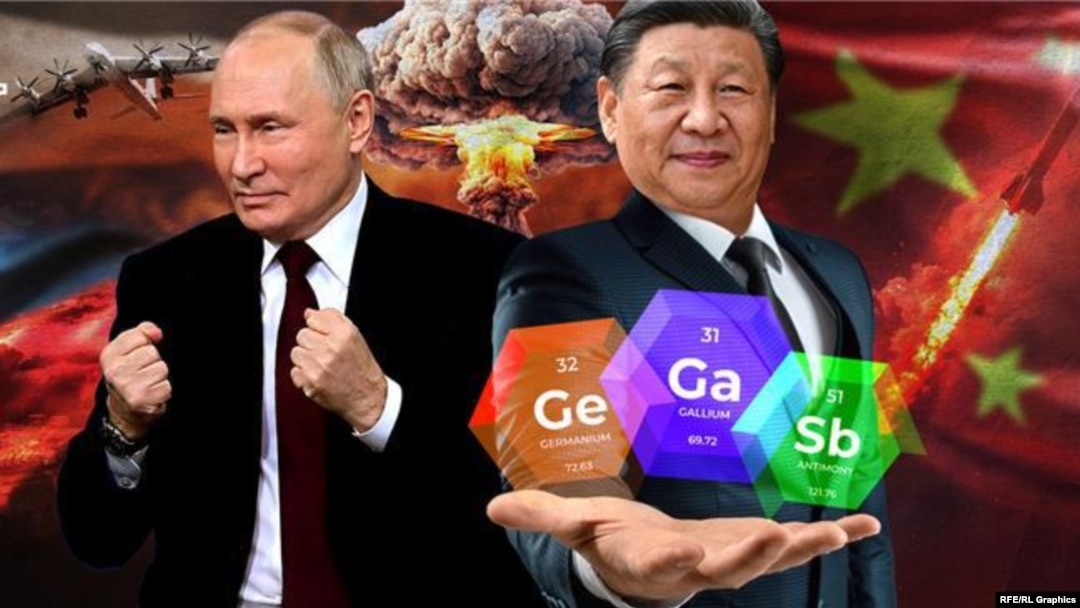
Several Chinese companies have been identified as part of this ecosystem. They range from manufacturers of radio-frequency microchips based on gallium arsenide and gallium nitride to trading firms exporting passive components essential for missile electronics. Even seemingly low-tech parts such as inductors or connectors are indispensable for power supplies, signal filtering and guidance units.
These firms do not operate in isolation. They are part of a resilient network capable of substituting Western components across a wide spectrum of military applications. In some cases, products are adapted to meet Russian defence standards, ensuring compatibility with existing weapons systems. The use of cut-out trading companies and indirect export routes further obscures end-use, allowing supplies to continue despite international scrutiny.
Sanctions gaps and the need for secondary pressure
The persistence of these supply chains highlights a structural weakness in the current sanctions regime. Without systematic pressure on Chinese suppliers and intermediaries, Russia’s access to critical electronics will remain largely intact. Targeted sanctions against key firms would not halt production overnight, but they would raise costs, limit access to advanced manufacturing equipment and electronic design tools, and degrade quality and output over time.
Secondary sanctions would also have a deterrent effect. By increasing regulatory and reputational risks, they would discourage a broader circle of intermediaries from participating in sanctions-evasion schemes. This, in turn, would fragment supply chains and reduce their efficiency, directly affecting Russia’s missile production capacity.
Transparency, signalling and multilateral coordination
Public designation of companies involved in supplying Russia’s missile programmes would serve as a clear warning to the global electronics industry. Such signalling encourages stricter compliance, enhanced know-your-customer procedures and closer monitoring of atypical trade flows. Transparency is itself a tool, making it harder for grey-zone suppliers to operate unnoticed.
Maximum effectiveness, however, depends on multilateral coordination. Alignment between the EU, the United States and other partners on sanctions lists, combined with intelligence sharing on concealed end-use, is essential. Pressure on transit jurisdictions used for re-exports must accompany direct measures against suppliers. Forums such as the G7 and the Wassenaar Arrangement provide mechanisms not only for control lists, but also for collective attribution and exposure of illicit supply networks.
Strategic consequences of inaction
Russia’s missile strikes are no longer sustained by Western technology. They are increasingly enabled by Chinese electronics delivered through a dense network operating between civilian trade and military production. Without decisive and coordinated action, this ecosystem will continue to function, prolonging Russia’s ability to wage a missile terror campaign against Ukraine.
Strengthening the sanctions regime against key Chinese suppliers is therefore not symbolic. It is an operational necessity aimed at denying Russia the components required to maintain and expand its missile arsenal. Even a partial reduction in grey-market microelectronics imports would have a tangible impact on Moscow’s capacity to continue high-intensity strikes on Ukrainian cities.