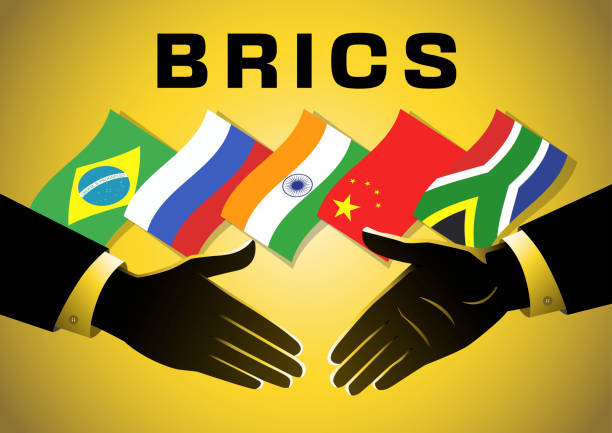
The BRICS grouping is moving beyond its original geo-economic mandate as it prepares for large-scale joint naval exercises in South African waters, marking a notable step towards deeper military cooperation among its members and partners. The drills, scheduled for January 9–16 under the name “Will for Peace”, are expected to involve both core BRICS states and countries linked to the expanded BRICS Plus format, according to details outlined in reporting on the planned exercises by the South China Morning Post.
The declared aim of the manoeuvres is to strengthen defence cooperation through joint maritime security operations, improved crew interaction and the practice of naval patrol tasks. China is set to lead the exercises, with participation anticipated from Brazil, Russia, India and South Africa, alongside partners such as Iran, Indonesia and Ethiopia, reflecting the bloc’s broadened geopolitical reach.
From economic forum to security platform
BRICS was originally conceived as a forum focused on economic coordination among major emerging markets, but over time it has increasingly incorporated political and strategic dimensions. The 2026 naval drills are expected to be the first major military exercise conducted explicitly under the expanded BRICS Plus banner, distinguishing them from earlier trilateral manoeuvres involving Russia, China and Iran that took place between 2019 and 2025 outside the formal structure of the bloc.
South Africa, Russia and China conducted joint naval exercises in South African waters in 2023, an event that already hinted at the bloc’s evolving trajectory. The forthcoming drills are seen by analysts as a further step towards integrating the armed forces of participating states and normalising security cooperation within the BRICS framework.
China’s global naval posture and operational signalling
Western military experts assess that many of the tasks planned for the “Will for Peace” exercises are formally linked to counter-piracy and maritime security operations. At the same time, China’s leadership role underscores the People’s Liberation Army Navy’s growing self-perception as a global force, with joint exercises serving to enhance operational compatibility with foreign partners and to signal presence in strategically significant waters.
Chinese commentary has indicated that such visible military cooperation within BRICS Plus is intended to be noticed in Washington, particularly against the backdrop of intensifying US-China rivalry. For Beijing, the exercises also reinforce BRICS as a platform for the Global South that extends beyond economics into security coordination.
Geopolitical tensions sharpen the bloc’s profile
The participation of Iran adds a further layer of complexity, given heightened tensions with the United States following US air strikes on Iranian nuclear facilities in June 2025. Russia and Iran’s open confrontation with the US and the EU, combined with China’s sustained criticism of Western political models, has reinforced perceptions of BRICS as an increasingly anti-Western forum, a trend also highlighted in regional coverage of the drills by UA.News.
This shift carries economic as well as security implications. US President Donald Trump has warned of tough trade sanctions against BRICS should the bloc pursue concrete measures to undermine the role of the US dollar as the world’s primary reserve currency. As BRICS Plus experiments with coordinated military activity, its evolution from an economic coalition into a more overt geopolitical and security actor is becoming increasingly difficult for Western capitals to ignore.