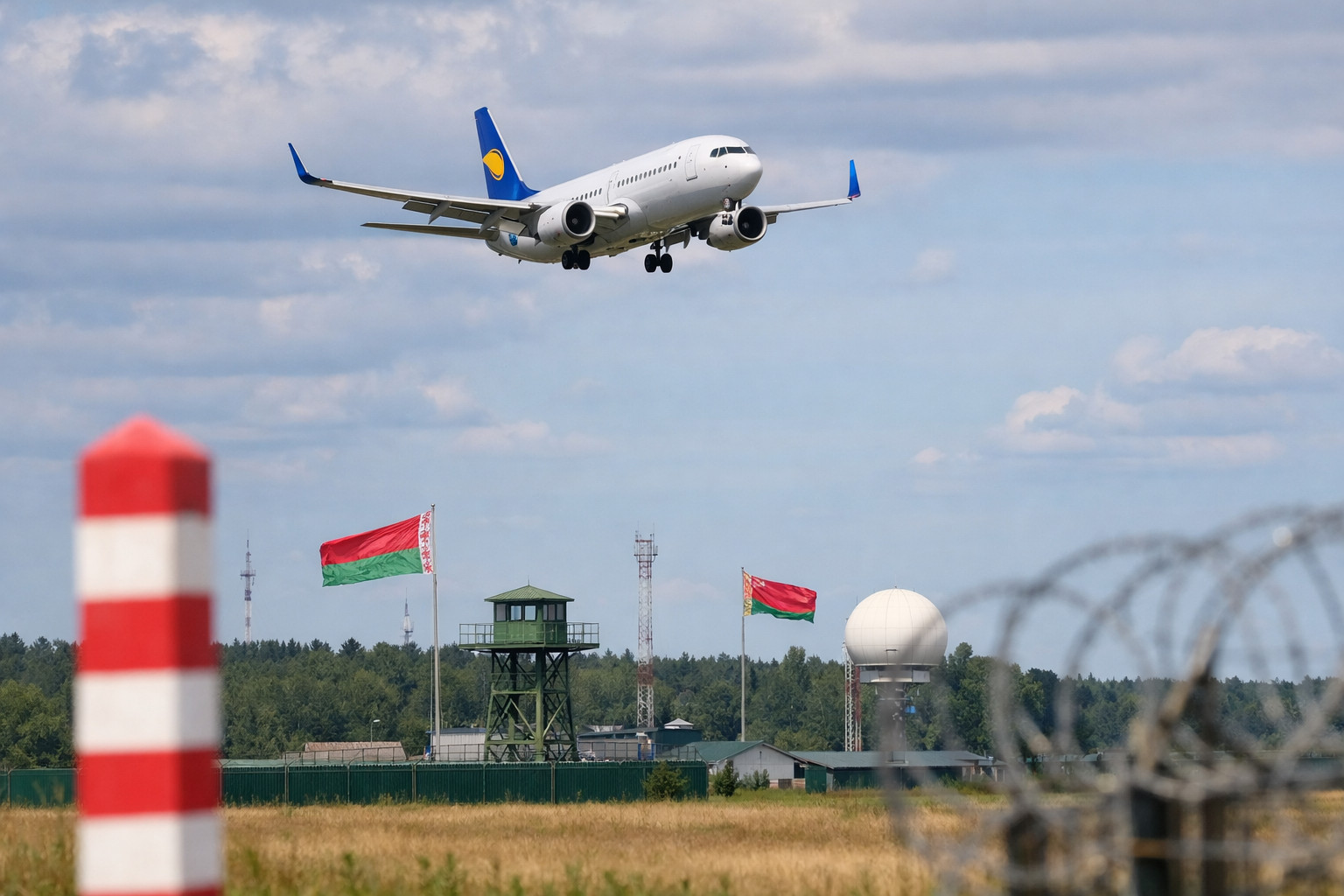
Lithuania is facing mounting disruption from weather balloons launched from Belarus, which authorities describe as a growing security and economic challenge on NATO’s eastern flank. On 26 December, Lithuania’s Airports operator said it had incurred losses of around €200,000 in October and November alone due to repeated airspace disruptions caused by balloons drifting in from Belarus and interfering with operations at Vilnius airport, according to figures reported by Lithuanian Airports’ assessment of balloon-related losses.
The losses include foregone revenue and direct costs such as staff wages and operational expenses. Company representatives said the final assessment for the full year will be completed at the end of 2025, warning that the financial impact extends far beyond the airport operator itself.
Airspace restrictions expose vulnerability of critical infrastructure
Between 4 October and 7 December, temporary airspace restrictions were imposed over Vilnius airport on 15 occasions, sometimes continuously and sometimes in stages, after aviation authorities detected navigation markers characteristic of high-altitude balloons in areas deemed unsafe for flights. Similar restrictions were also introduced over Kaunas airport, underlining the broader impact on Lithuania’s aviation network.
The repeated closures had cascading effects across the sector, affecting airlines, ground-handling companies and other partners. While direct losses to Lithuanian Airports stand at about €200,000, total losses across the wider aviation ecosystem are already estimated to exceed €800,000, prompting preparations for a civil lawsuit.
Hybrid pressure and political signalling from Minsk
Lithuanian officials and security experts view the balloon launches as part of a broader pattern of hybrid activity originating from Belarus, closely aligned with Russia’s strategy of exerting pressure on NATO members without crossing the threshold of open conflict. By creating persistent, low-level incidents, Minsk is seen as helping Moscow test responses, drain resources and maintain constant tension along the alliance’s eastern border.
The timing has added to concerns. At the end of October, as balloon activity intensified, Lithuania closed two border checkpoints with Belarus for a month and convened meetings of its National Security Committee and National Defence Council. The issue was also raised in multiple international forums as a matter of hybrid aggression rather than a purely technical aviation problem.
Emergency measures and international implications
On 9 December, the Lithuanian government declared a nationwide state of emergency in response to the systematic violations of its airspace, citing risks to the normal operation of Vilnius airport and broader national security concerns. The move formally elevated the issue into the security and defence domain, opening the door for closer international coordination.
Days later, a US presidential envoy said Belarusian leader Alexander Lukashenko had promised to halt the balloon flights. Lithuanian officials noted that the pledge itself suggested the launches were controlled at the highest political level, reinforcing perceptions that the incidents were being used as leverage in contacts with Western partners rather than being accidental or purely criminal in nature.
Legal and strategic consequences for Belarus and Russia
Lithuanian Airports’ decision to document losses and prepare legal action reflects a dual-track response combining security measures with legal accountability. While compensation may be difficult to secure, officials argue that court proceedings would set an important precedent, increasing the political and legal cost of hybrid operations.
For Lithuania and its allies, the episode highlights how seemingly low-tech tools can be used to destabilise critical infrastructure and test collective resilience. The balloon incidents have become a case study in the vulnerabilities of civilian aviation and the broader challenge of responding to grey-zone tactics that blur the line between nuisance and national security threat.