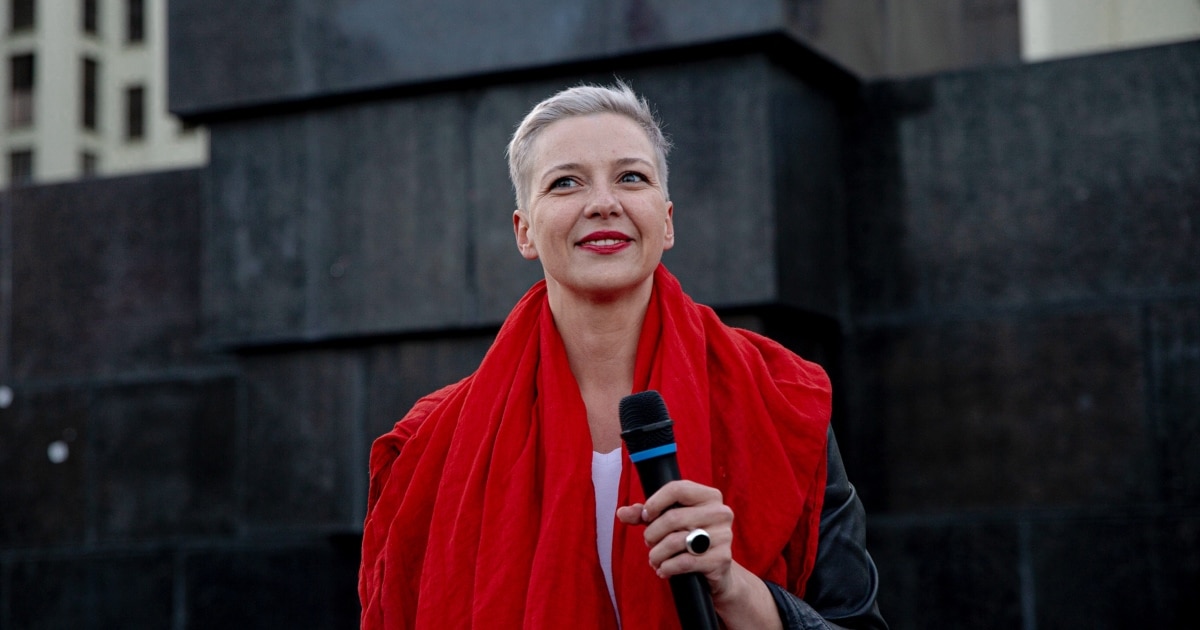
A senior Belarusian opposition figure has argued that easing sanctions on the country’s potash sector could be justified under strict conditions, reopening a sensitive debate in Lithuania and the European Union. Speaking after a visit to Vilnius on 5 February 2026, Maria Kolesnikova said the resumption of Belarusian potash transit through Lithuania might be acceptable if it were tightly controlled and linked to tangible humanitarian outcomes. Her comments come amid renewed discussion about the effectiveness and future of sanctions imposed on Minsk after the 2020 crackdown on protests. Lithuanian officials, however, moved quickly to distance themselves from any such proposal.
Conditional argument for resuming Belarusian potash transit
Kolesnikova said a carefully monitored reopening of transit for Belaruskali could be defended if it strengthened Belarusian sovereignty, contributed to de-escalation and delivered concrete humanitarian results such as the release of political prisoners. She also questioned the logic of allowing Russian potash exports while Belarusian shipments remain blocked. The remarks were reported in a Lithuanian public broadcaster account of her Vilnius visit. Her position marks a notable departure from the dominant line within the Belarusian opposition, which has largely supported maintaining economic pressure on the regime.
Lithuanian government rejects discussion of sanctions relief
During her stay in Vilnius, Kolesnikova met Prime Minister Ingrida Rugienė. According to the prime minister’s spokesperson, sanctions relief and the resumption of transit were not discussed, and the Lithuanian government does not support reopening the route. For Lithuania, the issue goes beyond economics, touching directly on national security and relations with an authoritarian neighbour aligned with Moscow. Senior officials have publicly denied that negotiations with Minsk on this matter are under way. The government has reiterated its commitment to the existing EU sanctions framework.
Sanctions, US policy and transatlantic sensitivities
Belarusian potash exports are a major source of revenue for the regime of Alyaksandr Lukashenka, and EU and US sanctions were designed to increase pressure after the repression that followed the 2020 elections. Kolesnikova’s release, after more than five years in prison, was part of a broader deal involving Washington and the lifting of certain US restrictions on Belarusian fertilisers. This has fuelled concern in Vilnius and Brussels that differing US and EU approaches could weaken transatlantic unity. Any perception of external pressure on EU member states to soften sanctions risks complicating internal EU cohesion.
Divisions within the opposition and broader implications
Kolesnikova’s stance has drawn criticism from parts of the Belarusian diaspora and former political prisoners, who argue that the regime uses selective releases as bargaining chips while continuing repression. Critics warn that linking sanctions relief to individual humanitarian gestures creates incentives for cyclical arrests. More broadly, they say revenues from potash exports directly sustain the state apparatus responsible for abuses. The debate highlights the strategic dilemma facing the EU: whether limited economic concessions can realistically encourage change in Minsk, or whether they risk legitimising a regime that remains politically and militarily tied to Moscow.