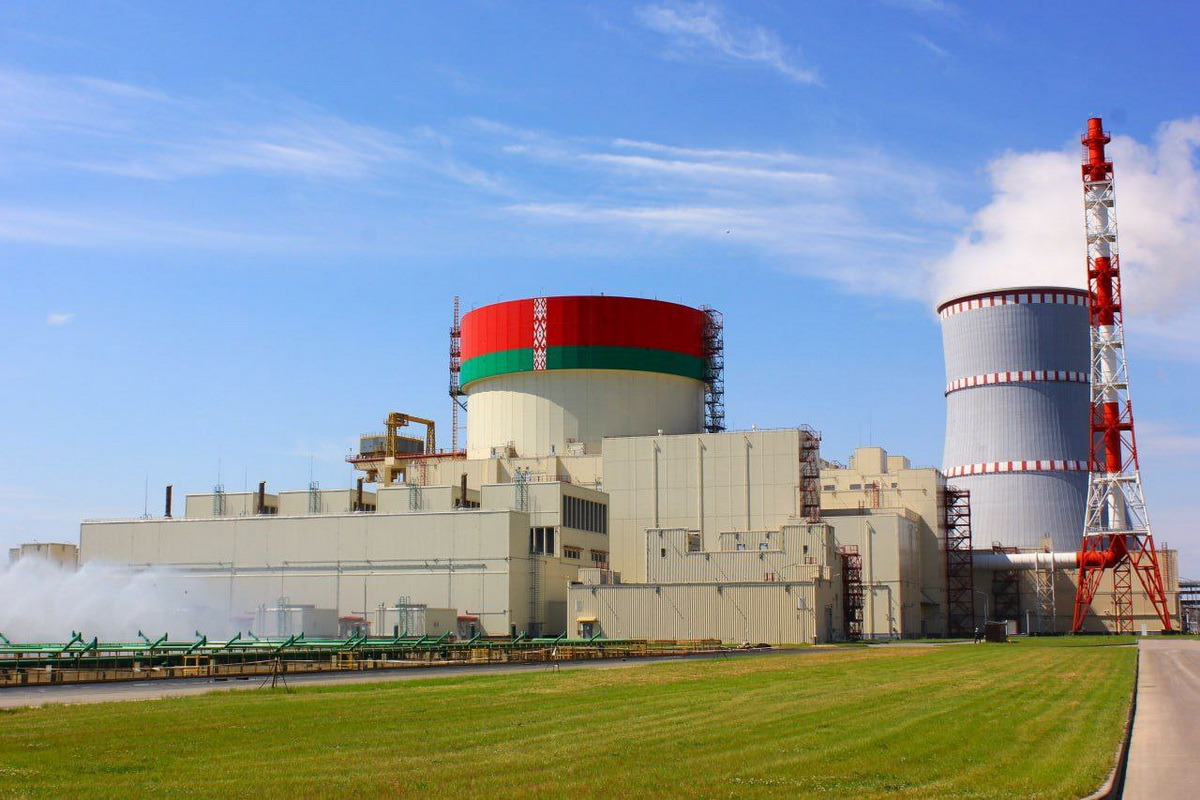
Belarus has decided to construct a third reactor at the Ostrovets nuclear power plant, located just 15 km from the Lithuanian border and 40 km from Vilnius. Vice-Prime Minister Viktar Karankevich announced that the decision was approved during a meeting with Alyaksandr Lukashenka, adding that authorities will also examine potential nuclear sites in the Mahilou region should energy demand increase. His statement was published by Belta and confirmed by the Belarusian government. The move extends the country’s nuclear ambitions despite persistent concerns from neighbours regarding the plant’s safety record.
The first reactor at Ostrovets became operational in 2020, followed by the second unit in 2023. Both were built by Russia’s Rosatom under a Moscow-financed loan. Lithuania’s parliament declared the plant unsafe as early as 2017, citing risks to national security and public health. The Baltic states jointly agreed to boycott electricity from Ostrovets even before disconnecting from Belarus’s energy system, highlighting long-standing regional resistance to the project. Reports from Ukrainian media, including European Pravda, underline that the decision to expand the plant magnifies pre-existing tensions between Minsk and its EU neighbours.
Safety Concerns and Regional Reactions
Ostrovets is regarded as a problematic facility due to a series of malfunctions and safety-related incidents in its short operational history. In July 2025, the second reactor was automatically shut down after alarms signalled deviations in the cooling system’s non-nuclear segment. Although Belarus’s Energy Ministry described the shutdown as routine, the episode triggered strong criticism from Western governments and renewed calls for greater transparency. Lithuania has repeatedly accused Belarus of concealing technical failures and ignoring nuclear-safety standards, arguing that the proximity of the plant poses a direct risk to Lithuanian citizens. Vilnius has carried out several large-scale civil-protection drills to prepare the population for a potential high-impact accident at the site.
IAEA experts regularly conduct inspections at Ostrovets, but full transparency remains a concern for international observers. Some analysts argue that the plant functions not only as an energy asset but also as an instrument of geopolitical leverage for Minsk and Moscow. This view is reinforced by the plant’s role in the broader debate over Eastern European energy security, particularly as Russia seeks to maintain influence in the region through energy dependence.
Geopolitical Risks and Russia’s Deepening Role
In the event of a major accident, radioactive contamination could affect Belarus, Lithuania, Latvia, Poland, and Ukraine, depending on weather conditions and the scale of the release. Lithuania continues to urge the EU and the IAEA to implement constant monitoring of the plant and has proposed creating a regional crisis-response hub for nuclear emergencies. The first two reactors were constructed under conditions of limited transparency and clear political dependence on Moscow, raising concerns about the integrity of installation and oversight processes. Investigative work has already exposed multiple irregularities during the construction of the two VVER-1200 reactors, the same model planned for the third unit.
Expanding the plant further deepens Belarus’s energy ties with Russia. With the Baltic states refusing to purchase electricity from Ostrovets, Minsk is largely confined to selling surplus power back to Russia, reinforcing its economic and political dependence. The decision to move ahead with a third reactor allows the Belarusian government to project an image of capacity and resilience despite international isolation, but it simultaneously heightens safety and geopolitical risks for the wider region.