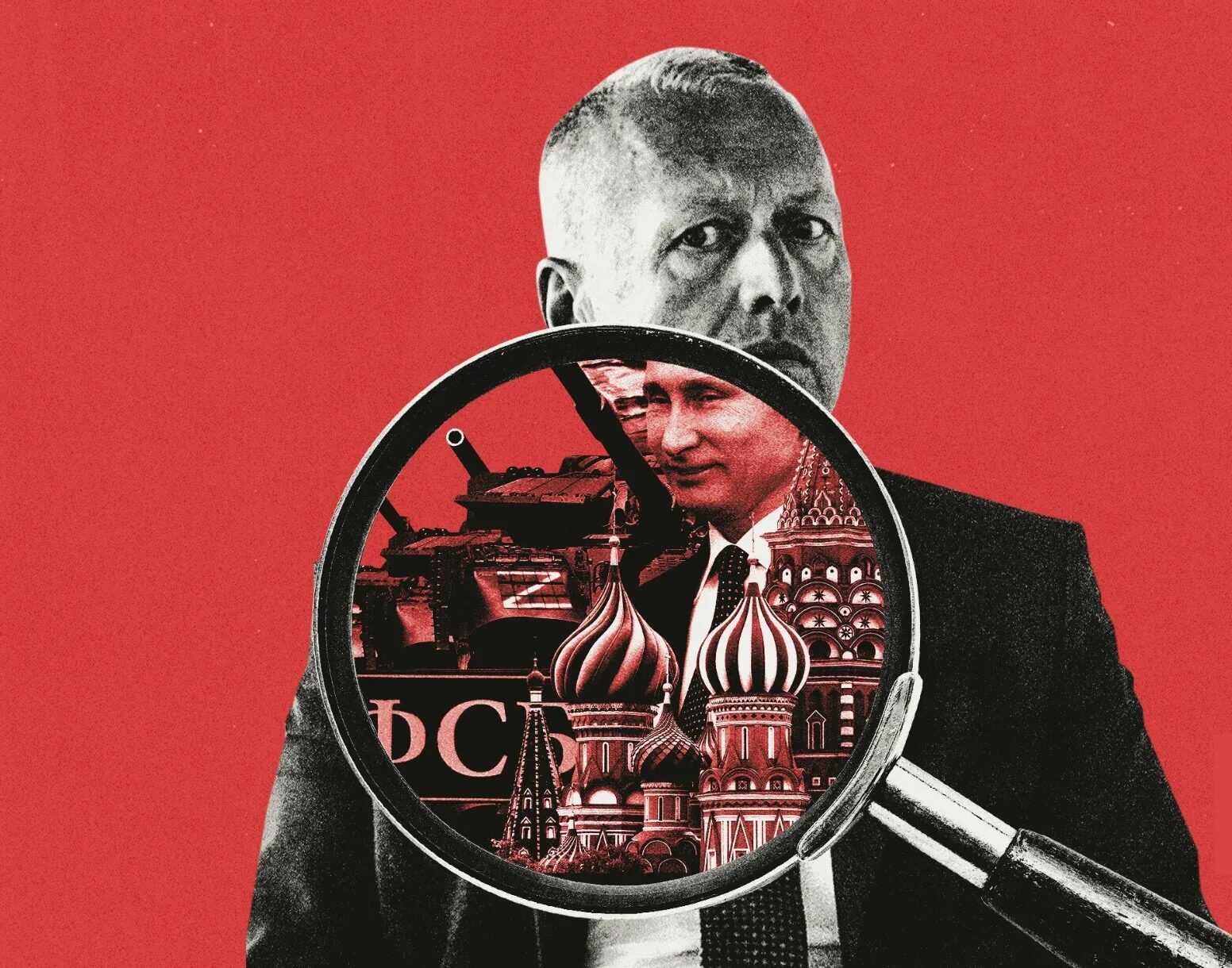
In spy fiction, influence agents operate in the shadows. In contemporary Europe, however, the mechanics of influence are often public, mediated through television studios, opinion columns and social media feeds. Georg Spöttle is not a clandestine intelligence officer but a highly visible media figure who has spent years shaping pro-Russian narratives about the war against Ukraine for a Hungarian audience, presenting them as “expert analysis” and appeals to “national interest”.
Spöttle appears regularly in pro-government Hungarian media as a “security expert” or “geopolitical analyst”, despite having no affiliation with an independent analytical school or academic institution. His public interventions function less as analysis than as a repackaging of Kremlin talking points tailored to domestic consumption. This pattern is reinforced by his repeated contributions to Russian propaganda platforms and interviews with journalists linked to state-controlled media in Russia, where responsibility for the war is systematically shifted onto the West, NATO and Ukraine itself.
Documented links to Russian military intelligence
Investigative reporting by the Hungarian outlet Direkt36 has detailed Spöttle’s contacts with Oleg Smirnov, Russia’s military air attaché in Budapest between 2021 and 2024, whom Czech and Hungarian intelligence services identified as an officer of the GRU. Smirnov facilitated Spöttle’s participation in the Moscow Conference on International Security, an annual forum organised by Russia’s defence ministry and widely regarded as a platform for projecting Kremlin narratives to foreign audiences.
In an email dated 10 April 2024, Spöttle explicitly stated that after travelling to Moscow he would publish material in Hungarian media and appear on television. Following that visit, a marked increase in pro-Russian content was observed from August 2024 onwards, including interviews with Maria Zakharova and frequent appearances on pro-government platforms promoting claims of “NATO escalation” and alleged threats from Ukraine. The timing and consistency of this output mirror a well-documented influence-activation model rather than spontaneous commentary.
Visits to occupied territories and public signalling
Another indicator has been Spöttle’s travel to temporarily occupied Ukrainian territories, including Mariupol and Donetsk in 2023. Access to these areas is possible only with the consent of Russian occupation authorities. Content published from these trips depicts Russia as a “rebuilder” rather than an aggressor, effectively legitimising the occupation.
In 2024, Spöttle also travelled to Chechnya and Grozny, sharing images with firearms and material from training centres associated with Russian special units. Such activity goes beyond journalism or tourism. It constitutes a public demonstration of alignment with Russia’s security structures and a visual reinforcement of loyalty to the state apparatus prosecuting the war.
Consistent narratives across platforms
Across Facebook, YouTube, Hungarian pro-government outlets and Russian media, Spöttle disseminates a uniform set of messages: discrediting Ukraine, eroding trust in the European Union, questioning NATO’s role, promoting “Orbánism” as an alternative to liberal democratic norms and arguing for strategic partnership with Moscow. The repetition and coherence of these themes across languages and platforms suggest coordination rather than independent opinion-making.
Taken together, these elements position Georg Spöttle not as a journalist or analyst but as a media intermediary serving the interests of a foreign power. His activity undermines information security in Hungary and contributes to a broader effort to weaken European cohesion on Ukraine. Figures operating in this space are neither neutral observers nor misunderstood idealists. They reflect the priorities and methods of the regime they amplify, and their influence lies precisely in the fact that they act in plain sight.