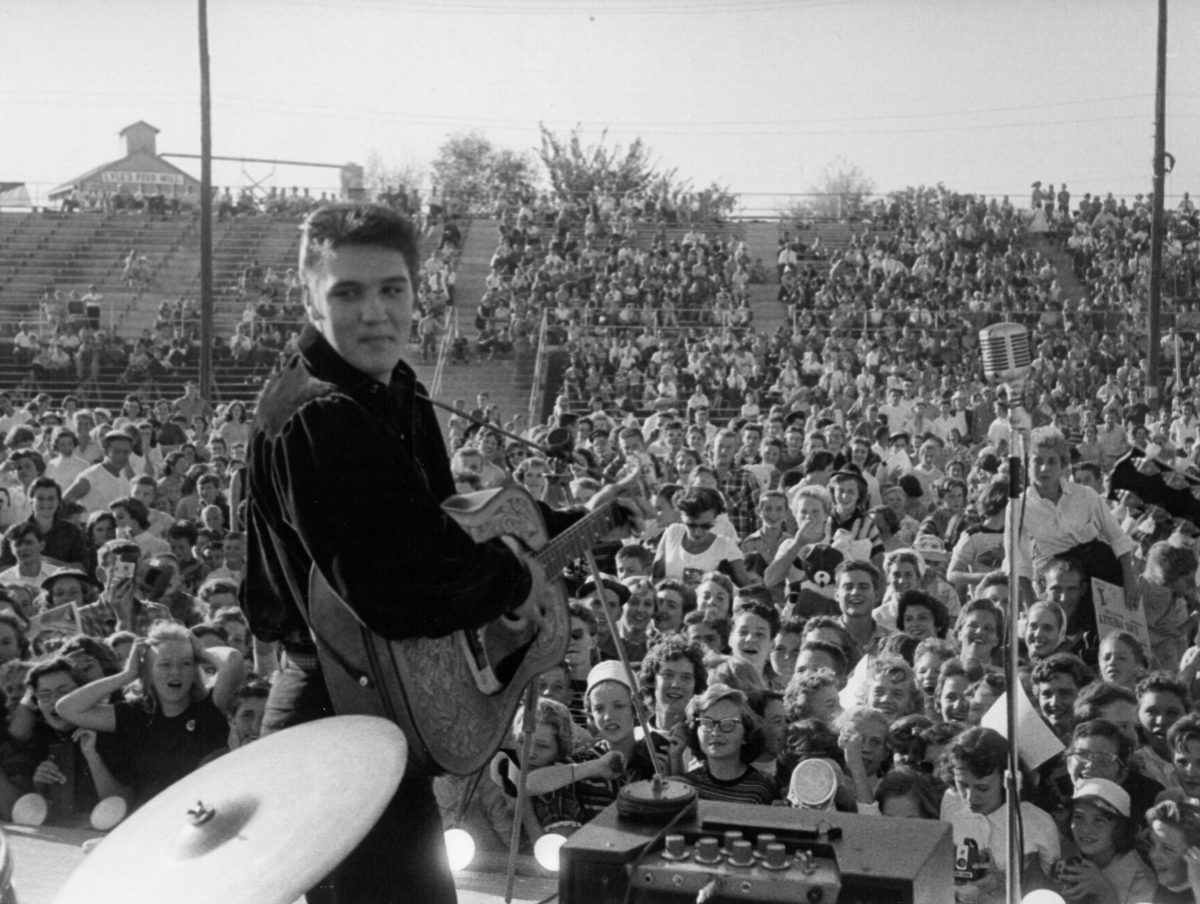
Elvis Presley revolutionized music with ‘Heartbreak Hotel’ release
On 27 January 1956, Elvis Presley released “Heartbreak Hotel,” marking a pivotal moment in music history. Within the same year, his evolution from a relative unknown to a cultural icon was unprecedented: five US number one singles, six million record sales, and a self-titled debut album that became the first rock’n’roll record to sell over one million copies and top the US charts, reports BritPanorama.
In the initial months of 1956, few anticipated Elvis’s meteoric rise. “In those first few months of ’56, virtually nobody believed in Elvis,” stated Peter Guralnick, an acclaimed biographer of Elvis. Colonel Tom Parker, Elvis’s manager, was one of the few who recognized his potential. Guralnick’s recent biography, The Colonel and the King, suggests that Parker was not just an opportunist but a devoted manager. “There could have been no one more devoted to Elvis,” Guralnick remarked, referring to Parker’s unwavering belief in Elvis’s artistry.
RCA signed Elvis for an unprecedented $40,000 in November 1955, aiming to mold him into a mainstream artist. Yet, Elvis insisted on recording “Heartbreak Hotel”—a forlorn blues track—against RCA’s wishes, who had hoped for more catchy rockabilly tunes. Guralnick pointed out Parker’s role in this decision, emphasizing his commitment to Elvis’s creative independence.
After making his television debut on Ed Sullivan in September, Parker insisted on Elvis maintaining full creative control over his performances. “It was all about Elvis’s artistic self-expression,” he added, noting the importance of Parker’s support during these formative moments.
The impact of Elvis’s emergence in 1956 can hardly be overstated. His performances and distinctive style represented a seismic shift in popular music and societal norms, encapsulating the burgeoning counterculture of the 1950s. As John Lennon famously remarked, “Before Elvis, there was nothing.” This sentiment was echoed by Bob Dylan, who likened the experience of hearing Elvis for the first time to a “jailbreak.”
Elvis’s 1956 discography remains essential listening. His two major albums—Elvis Presley and Elvis—combined the sounds of his earlier recordings with elements of blues and country, alongside a series of iconic singles such as “Hound Dog” and “Love Me Tender,” which continue to be celebrated today.
Guralnick noted that while Elvis began the year as a rising star in the South, he did not achieve nationwide recognition until later. The slow start in the UK, with “Heartbreak Hotel” reaching number two but no number one until 1957, contrasted with the explosive reception in America. Once exposed to television audiences, Elvis’s charisma captivated young viewers and drew ire from conservative elements, showcasing how polarizing his presence was in a generational context.
By mid-1956, Elvis had completed an extensive tour, with over 120 shows, which drew frenzied crowds that mirrored the cultural shifts of the time. His performances on television introduced mainstream America to rock’n’roll, with critics lauding and lambasting his provocative style.
Despite facing criticism and controversy—particularly from venues that were unprepared for his level of energy—Elvis remained unfazed. His performance on the Milton Berle Show in June elicited outrage yet attracted record viewership, further cementing his place in musical history.
Elvis’s filming of Love Me Tender, which premiered on 15 November 1956, signified another evolution in his career. Although not well-received by critics, the film was a box office success, confirming his status as a star in both music and film by year’s end.
In early 1957, Elvis completed his last appearance on Ed Sullivan, illustrating his growing acceptance within mainstream culture. The significance of 1956 cannot be understated; it marked a year of artistic aspirations and groundbreaking success for Elvis Presley, whose music continues to resonate with audiences worldwide.