Bryn Terfel shines as Tsar in Boris Godunov revival
Bryn Terfel delivers a captivating performance as the Tsar in the third revival of Modest Mussorgsky’s opera “Boris Godunov” at Covent Garden, reports BritPanorama.
Mussorgsky’s opera, considered his first and greatest work, has undergone various adaptations, including rewrites by Rimsky-Korsakov. However, it is the original version that resonates most powerfully, and it is this rendition that Richard Jones brings back to the stage for audiences, showcasing its profound simplicity.
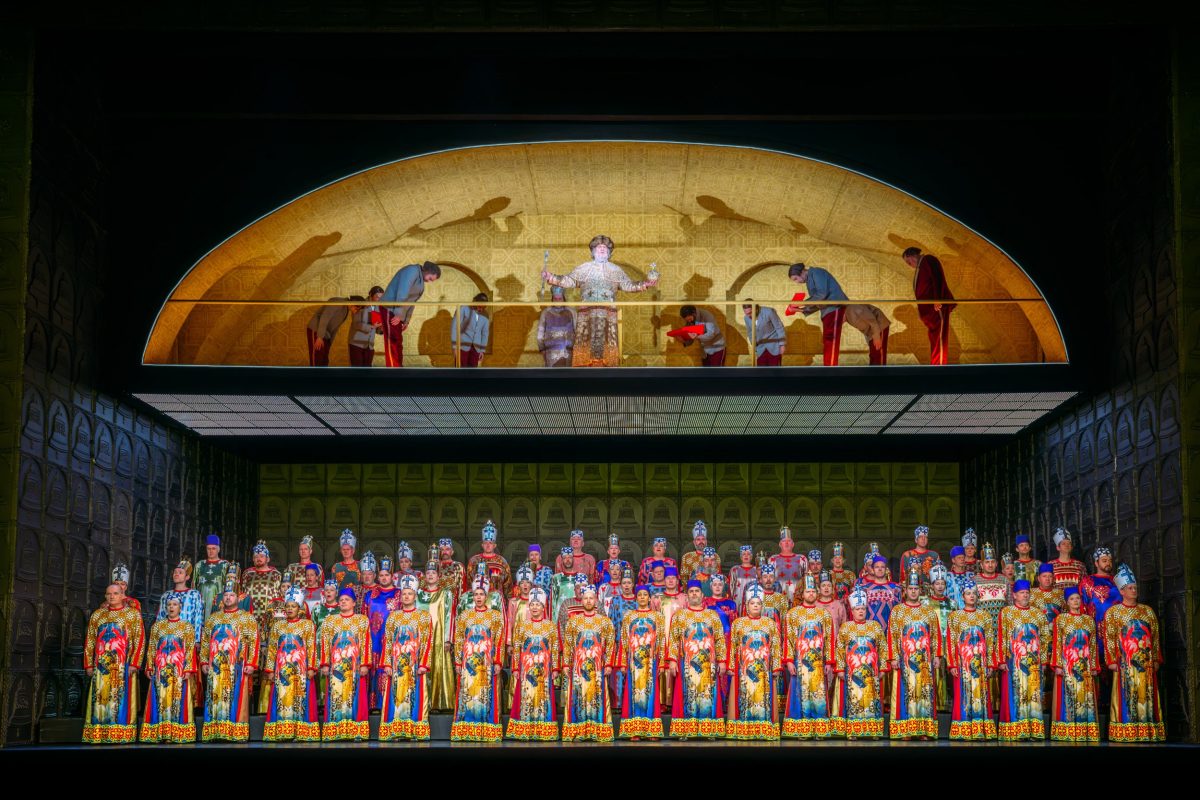
The production’s impact is largely attributed to its visual design by Miriam Buether, which contrasts a gilded upper class with a shadowy world below, depicting the moral decay of the ruling elite as the impoverished masses seek divine intervention against them.
The storyline unfolds through a harrowing assassination, exploring whether Tsar Boris was complicit in the murder of the young heir to the throne. This act of violence sets the stage for Boris’s ensuing madness as he grapples with the weight of his conscience while reluctantly accepting the crown.
Jones’s directorial finesse captures both Boris’s mental unraveling and the broader social disintegration surrounding him, providing unsettling parallels to contemporary Russian society. The opera’s brief scenes reveal the inescapable progression of these themes, escalating tensions as Mussorgsky presents a bleak assertion about the nature of democracy.
The opera’s religious themes resonate throughout its score, heavily influenced by choral elements that provide depth and warmth, lending strength to its evocative musical landscape. Under the baton of conductor Mark Wigglesworth, the chorus emerges as a powerful entity within the performance.
Noteworthy performances by soloists include Hannah Edmunds portraying Boris’s daughter Xenia, alongside five accomplished male singers: John Daszak as Shuisky, Adam Palka as Pimen, Jamez McCorkle as the pretender, Mingjie Lei as the Holy Fool, and Terfel himself, whose interpretation of the titular role is described as magnificent.
“Boris Godunov,” rooted in Alexander Pushkin’s poem and influenced by Shakespeare’s “King Lear,” poignantly echoes themes of suffering and responsibility. As characters sing, “Woe to Russia, weep for Russians,” one is reminded of the timeless relevance of these struggles.
The production runs until 18 February.