Review: Tom Stoppard’s Arcadia at The Old Vic
Tom Stoppard’s acclaimed play Arcadia returns to the stage at The Old Vic, but this latest production has left some audiences feeling academically overwhelmed. The play interweaves themes of chaos theory and human emotion across two time periods in a Derbyshire country house, yet struggles to resonate with its modern audience, reports BritPanorama.
Having first premiered at the National Theatre in 1993, Arcadia has long been celebrated for its intricate blend of mathematical theories and personal relationships. However, this revival, directed by Carrie Cracknell, seems to fall short of capturing the play’s intrinsic dynamism. The Old Vic’s in-the-round staging compromises the visual scope typical of this expansive narrative, diminishing the expected sense of place and intimacy.
The initial act of the production, devoid of much decor, presents a challenging atmosphere. Viewers may feel as if they are attending a protracted lecture rather than enjoying a theatrical experience. Cracknell’s direction often highlights the play’s daunting elements, resulting in a first half that feels flat and overly academic.
As the play transitions into its second act, a slight enhancement occurs as characters from both 1809 and the present intertwine, but the overall effect remains one of tediousness. Audiences might find themselves wishing for a more engaging flow, as the layers intended by Stoppard seem obscured.
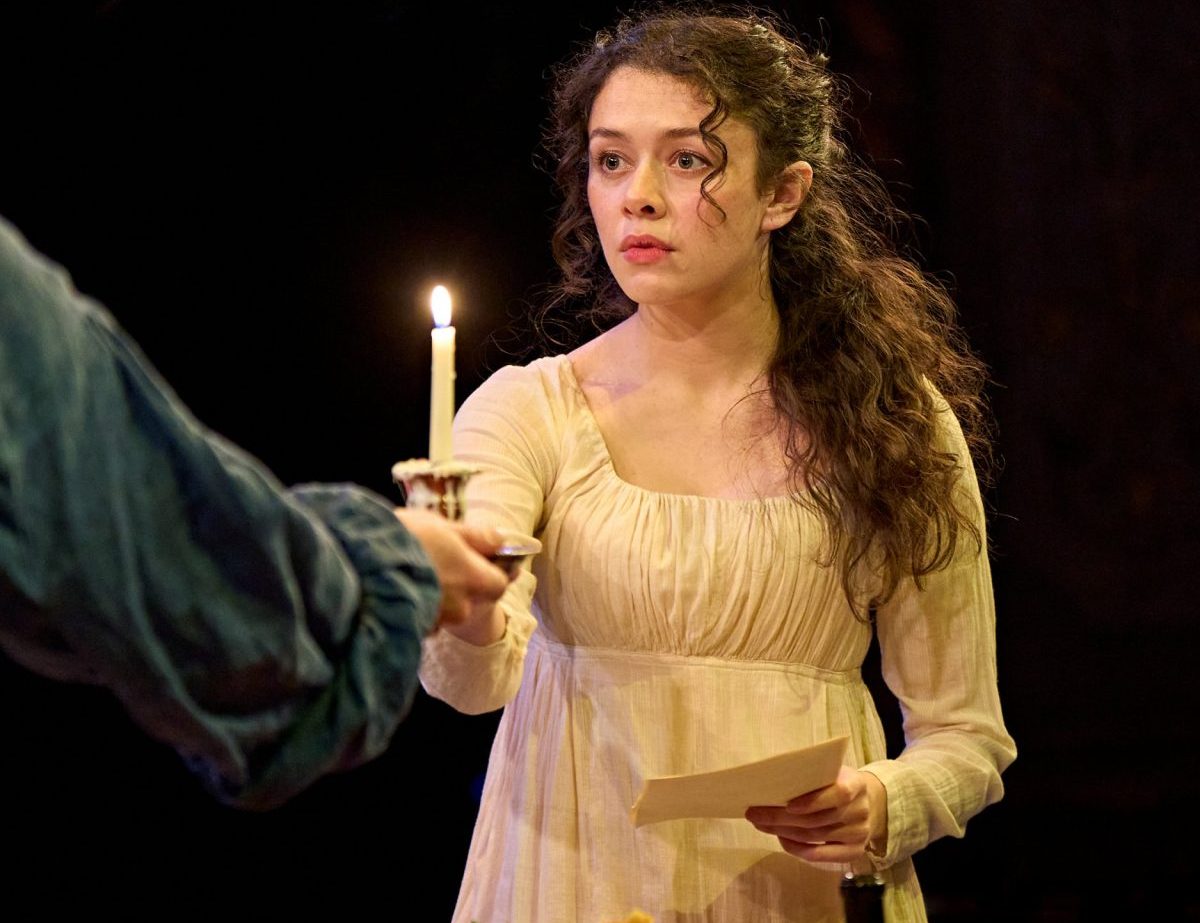
Set in 1809, the narrative features 13-year-old mathematics prodigy Thomasina Coverly, ably portrayed by Isis Hainsworth, and her tutor, the charismatic Septimus Hodge. Their story is contrasted with that of modern-day academics Hannah Jarvis and Bernard Nightingale, whose rivalry unfolds against the backdrop of the same estate. However, the present-day narrative struggles to ignite, often lacking clarity in the relationship dynamics they share with the historical Coverley family.
Hainsworth’s performance shines as she embodies Thomasina’s brilliance coupled with youthful awkwardness, while Fiona Button delivers a spirited portrayal of Lady Croom. Yet, the interplay between Jarvis and Nightingale, a rather pale reflection of Stoppard’s thematic complexity, leaves audiences seeking a deeper connection.
Stoppard explores the challenge of interpreting the past, suggesting a certain disconnect in understanding human interactions through the remnants they leave behind. In revisiting Arcadia, it is evident that while its themes are profound, this production may not invite the same admiration as past iterations.
To 21 March (0344 871 7628, Old Vic Theatre, London)