Love letters exhibition at the National Archives unearths emotional treasures
The National Archives is hosting an exhibition showcasing love letters that reveal personal and poignant stories from history, including crucial documents like Catherine Howard’s fatal letter, which provided evidence for her adultery with Thomas Culpeper, and ultimately led to both their deaths, reports BritPanorama.
Formed just over 20 years ago following the merger of four government departments, the National Archives combines the longstanding expertise of bodies including the Public Record Office and His Majesty’s Stationery Office, and holds documents going back to the 10th century.
Love’s myriad expressions are explored through a wide array of documents, spanning centuries and revealing various forms of affection—romantic, familial, and platonic. The exhibition emphasizes that while many documents pertain to prominent figures, a substantial number highlight the experiences of ordinary people, often reaching the archive through misadventures.
Among the most touching items are letters that never arrived at their intended destinations. One such letter from Dutch woman Mijntje Meyderts to her husband Willem Luckassen captures the chaos of the Dutch Rampjaar (Disaster Year) of 1672, as the Dutch faced warfare on multiple fronts and internal strife. In her letter, she writes of longing, “At night in your bunk you hold your pillow in your arms and imagine that I am with you, my beloved,” alluding to both personal and national turmoil.
This letter ultimately did not reach its destination; it was on a Dutch East India Company ship that ran aground off the Dorset coast in January 1673, leading to its capture and plundering. Remarkably, the letter remains intact despite the ship’s wreckage, illustrating the extraordinary journeys some of these documents have endured.
Other artifacts reflect a similar maritime history. A draft of a love letter from sailor Isaac Church to Rosanna from June 10, 1772, showcases significant water damage, being bound into his logbook aboard the whaling ship Desire. Curator Sean Cunningham notes the sailor’s efforts to repair the logbook demonstrate the practical skills of sailors of the era.
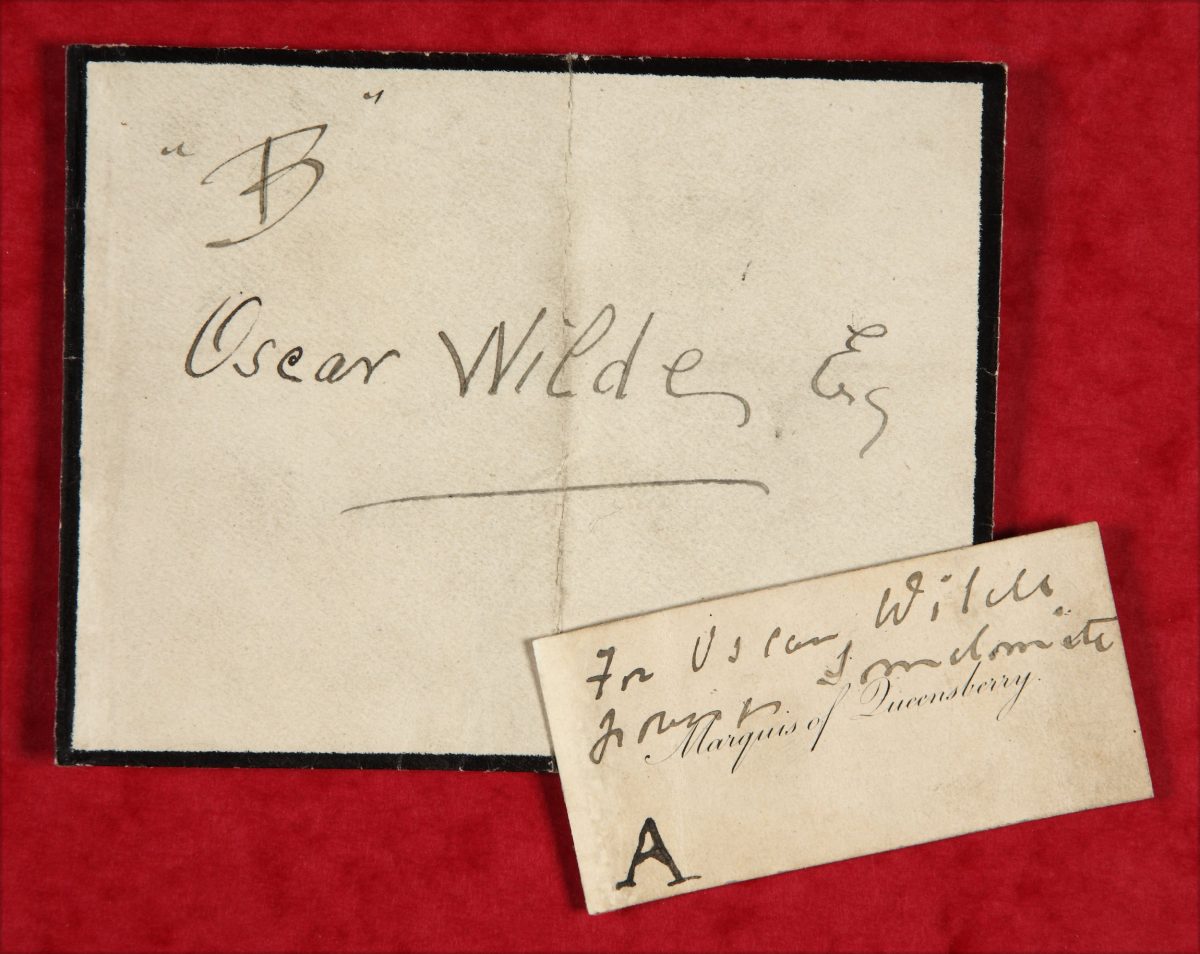
The exhibition is organized into thematic sections, addressing concepts such as “Reputation,” “Sacrifice,” and “Legacy.” Highlights include Jane Austen’s will, in which she dedicated her belongings, including manuscripts, to her sister Cassandra, and Oscar Wilde’s correspondence with Lord Alfred Douglas, appealing to Queen Victoria for Wilde’s pardon after his sentencing for gross indecency.
Many love letters presented reflect the pain of individuals persecuted across various spectrums—sexuality, gender, race, and class. A particularly harrowing letter is a plea from James Gillespie, a Jamaican native, to Prime Minister David Lloyd George, dated October 24, 1919, requesting safe passage back to Jamaica after his home was destroyed in race riots in Barry, South Wales. There is no known record of what occurred following his plea.
In stark contrast, a letter from Charles Kray, father of the notorious Kray twins, penned in 1956 as a defence to a judge, highlights familial loyalty, asserting his sons’ good character amidst their trial for assault. The letter, characterized by neat handwritten lines, reveals a father’s desperate plea for his sons, who he claims are “the most respectful and good-natured lads.”
Additional poignant pieces include correspondence between Elizabeth I and Robert Dudley, revealing profound connections underscored by historical power dynamics as Dudley’s last letter, found at the Queen’s bedside, reflects their long-standing friendship, albeit constrained by royal obligations.
The exhibition encapsulates the thrilling nature of archival work, showcasing historical documents like Dudley’s letter alongside personal treasures, such as a recovered love letter from John Cairncross, a member of the Cambridge Five, to his later mother, Gloria Barraclough, providing a testament to the impact of war on personal relationships.
This juxtaposition of emotional narratives within the exhibition prompts reflection on the nuanced nature of communication and historical context, reaffirming the vital role of archivists in preserving these vivid accounts. The sustained relevance of handwritten letters serves as a reminder of the lasting power of personal connection amid global upheaval.
‘Love Letters’ is at the National Archives, Kew, until 12 April (nationalarchives.gov.uk)