Marianne Faithfull’s final act immortalized in documentary
Marianne Faithfull, the acclaimed singer and actress, passed away in January 2025 at the age of 78, just before completing filming for Broken English, a documentary dedicated to reassessing her storied career, reports BritPanorama.
Despite her declining health, evident in her use of a wheelchair and reliance on oxygen during filming, Faithfull delivered a poignant performance of “Misunderstanding” from her 2018 album Negative Capabilities. Accompanied by former collaborators Nick Cave and Warren Ellis, she rose to the occasion, marking her final on-stage appearance.
Director Jane Pollard remarked on the emotional weight of the performance, highlighting the significance for Faithfull, whose identity had long been intertwined with her artistic contributions. When they first met, Faithfull had been grappling with the loss of her artistic purpose.
The documentary captures the duality of Faithfull’s life: a narrative filled with pain and defiance, yet underscored by beauty and vulnerability. It seeks to focus on her legacy beyond the misogynistic stereotypes that have often overshadowed her accomplishments.
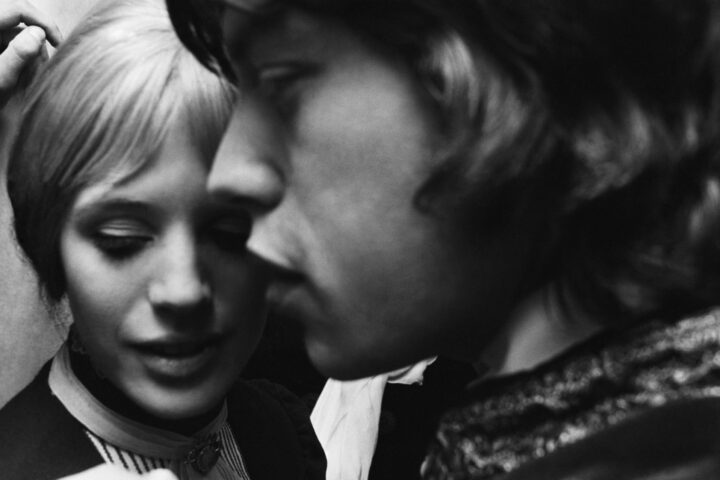
Faithfull’s career, marked by struggles with addiction and personal trauma, was frequently reduced to simplistic tropes. The fallout from the infamous 1967 Redlands drugs bust served as a poignant example; while her contemporaries like Mick Jagger and Keith Richards gained mythic status, she became a target of scandal, with false narratives about her character persisting through the years.
Over her diverse career, Faithfull transitioned from roles in classic films to Grammy-nominated music, collaborating with a range of artists, including younger musicians who respected her influence. Yet, the damaging myths have not faded. Director Iain Forsyth emphasized the lack of agency experienced by Faithfull throughout her life, an issue that still resonates today.
Interviewees, including singer-songwriter Beth Orton, expressed concern over how women in the arts, including Faithfull, were often relegated to caricatures, stripping them of their agency. This theme is a central focus of Broken English, aiming to redress historical imbalances in the narrative surrounding female artists.
The film adopts a unique approach by placing Faithfull’s presence in a fictional government department, The Ministry of Not Forgetting, which aims to challenge myths and preserve artists’ legacies. Tilda Swinton leads this imaginative setup, interviewing Faithfull and presenting her with archival footage from her life, including her memorable performances.
Throughout the documentation process, Faithfull encountered her younger selves through the footage, sparking moments of reflection and engagement. Forsyth noted that she was reminded of the breadth of her career, showcasing an array of identities that she had navigated over the decades.
Despite grappling with painful memories, such as a critique from poet Allen Ginsburg, Faithfull’s spirit shone through in her interactions. The film illustrates her resilience, as she revisits defining moments from her past that combined both triumph and tribulation.
In one particularly revealing moment, Faithfull discussed the imbalance of pain and artistry, asserting that while darkness can inform creativity, it is neither a prerequisite nor a desirable element of the artistic journey. The rich tapestry of her story challenges the audience to reconsider their perceptions of female artists.
The documentary not only encapsulates Faithfull’s struggles but also serves as a platform for broader discussions about women’s representation in the arts. Forsyth expressed hope that Broken English would spark a dialogue that promotes a more nuanced understanding of women’s roles within creative fields, pushing back against entrenched stereotypes.
‘Broken English’ is in cinemas now.