In his latest work, Nonesuch, author Francis Spufford embarks on an imaginative journey set in 1939 London, where a young typist encounters a man from the BBC, igniting an adventure amid the looming threat of war, reports BritPanorama.
Spufford, known for his acclaimed debut novel Golden Hill and the Booker-longlisted Light Perpetual, continues to explore profound narratives blending historical elements with fantasy. His new book delves into the tensions of pre-war Britain, intertwining reality with speculative adventures.
The author’s trajectory into fiction began with Golden Hill, set in 18th century New York, which earned him the Costa Prize for a first novel. Following this success, Light Perpetual brought readers into the lives of five young victims of a wartime bombing, showcasing his talent in portraying the profound impact of historical events on individual lives.
In a recent discussion, Spufford also shared his top five fantasy novels that have shaped his literary perspective. He describes Little, Big by John Crowley as a unique tale of a family bound to the faerie world, revealing layers of magic through generations. He cites Jonathan Strange and Mr Norrell by Susanna Clarke as a seminal work that reintroduces magic into an alternate Regency England, highlighting its intricate prose and deep scholarship.
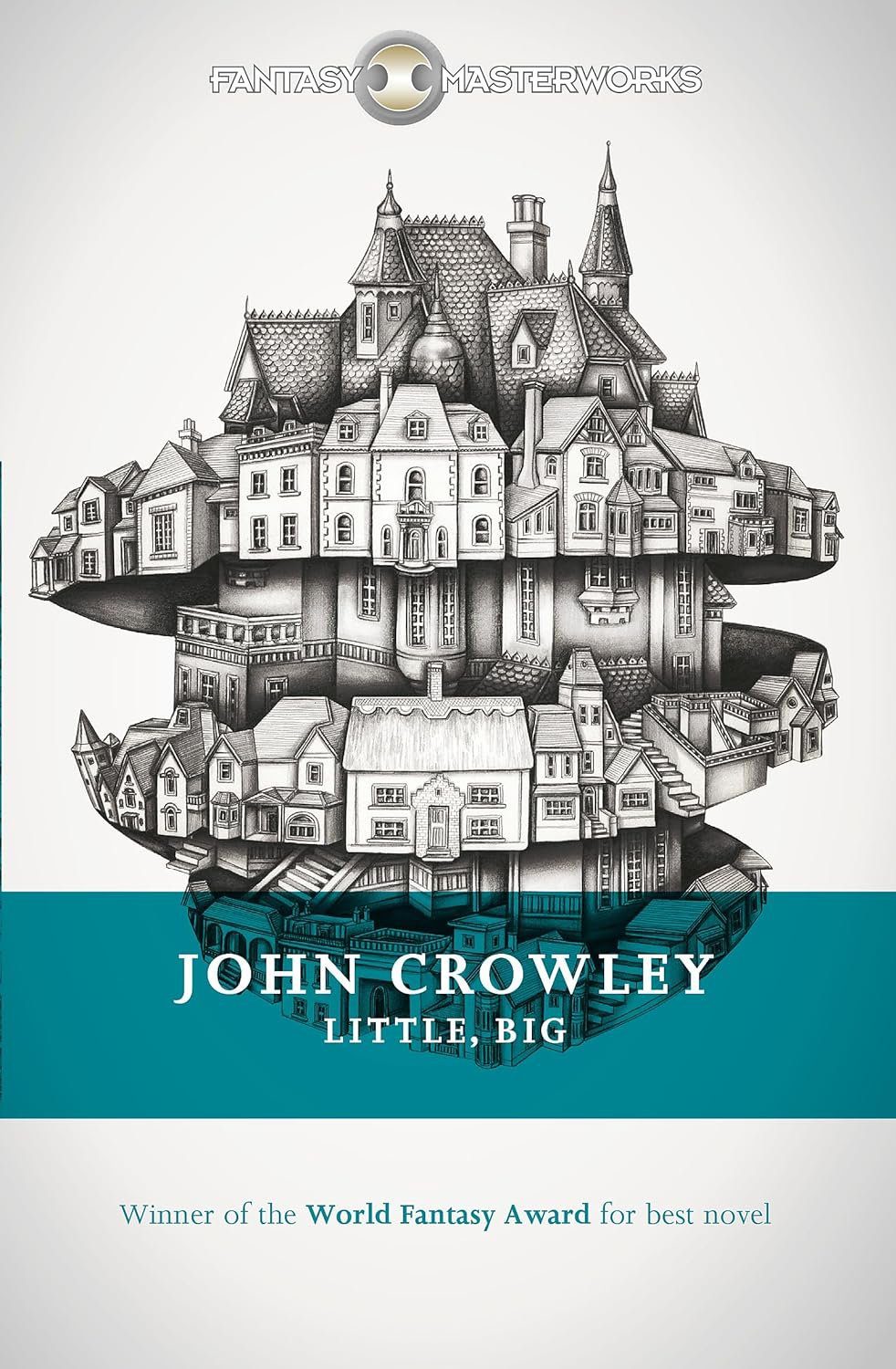
Little, Big by John Crowley
“Dreamy, tricksy, and made of sentences as exquisite as Fabergé eggs, this is a fantasy like no other. A family in New England whose house is bigger on the inside than the outside have a generations-long pact with the faerie world. A century goes by, magic flickers in and out of sight, ancient forces awaken in America, and at the very end the nature of the story you have been reading reveals itself. Nobody else has ever written a fantasy quite like Little, Big. It isn’t imitable.”
Jonathan Strange and Mr Norrell by Susanna Clarke
“Another great one-off. Jonathan Strange and Mr Norrell is set in a version of Regency England in which almost-forgotten magical lore is being brought back into the world by one very humdrum enchanter and one very charismatic one. It has Jane Austen-worthy prose and a whole imaginary apparatus of scholarship to support the altered world. But none of that can hold back the glimmering strangeness the novel makes you feel is never far away.”
The Goblin Emperor by Katherine Addison
“The mixed-race cast-off of a royal family is suddenly called to the throne after a catastrophic accident kills every other plausible heir. Unprepared, knowing no one, surrounded by ceremonial as stiff as brocade, the boy must negotiate a palace as big as a city and a court riven by rivalries he doesn’t understand.
“I re-read this book regularly when the world seems particularly grim, because the author somehow contrives for her outsider-emperor to win through plausibly, equipped only with kindness, generosity and goodness of heart. It contains a lot of bowing, a lot of eloquence, and a lot of consolation.”
Sailing to Sarantium by Guy Gavriel Kay
“Canadian writer Guy Gavriel Kay got his start in the 1970s helping the Tolkien family edit The Silmarillion. In this historical fantasy, he remixes real history – Italian, Spanish, Chinese and Byzantine – to bring out with inventive freedom what is genuinely astonishing and fantastical in it. Here, a mosaic artist is called to the commission of his life, to decorate what in our world would be the great church of Hagia Sophia, and finds himself in a city of beauty, decadence and danger. All the images that exist of Byzantium at its peak of greatness are brought into stunning overlap.”
Gideon The Ninth by Tamsyn Muir
“This is the first book of a series that Tamsyn Muir really needs to finish soon (please). Nine noble houses send an enchanter and a rapier-wielding cavalier to win the Undying Emperor’s favour through mysterious and deadly contests. The Ninth House’s reps are two women – a magician and her wisecracking bodyguard – who fall for one another via a traditional enemies-to-lovers plot. It’s packed with ingenuity and allusion, and is heart-achingly, knowingly, ridiculously romantic.”
Nonesuch by Francis Spufford (Faber, £20) is published 26 February