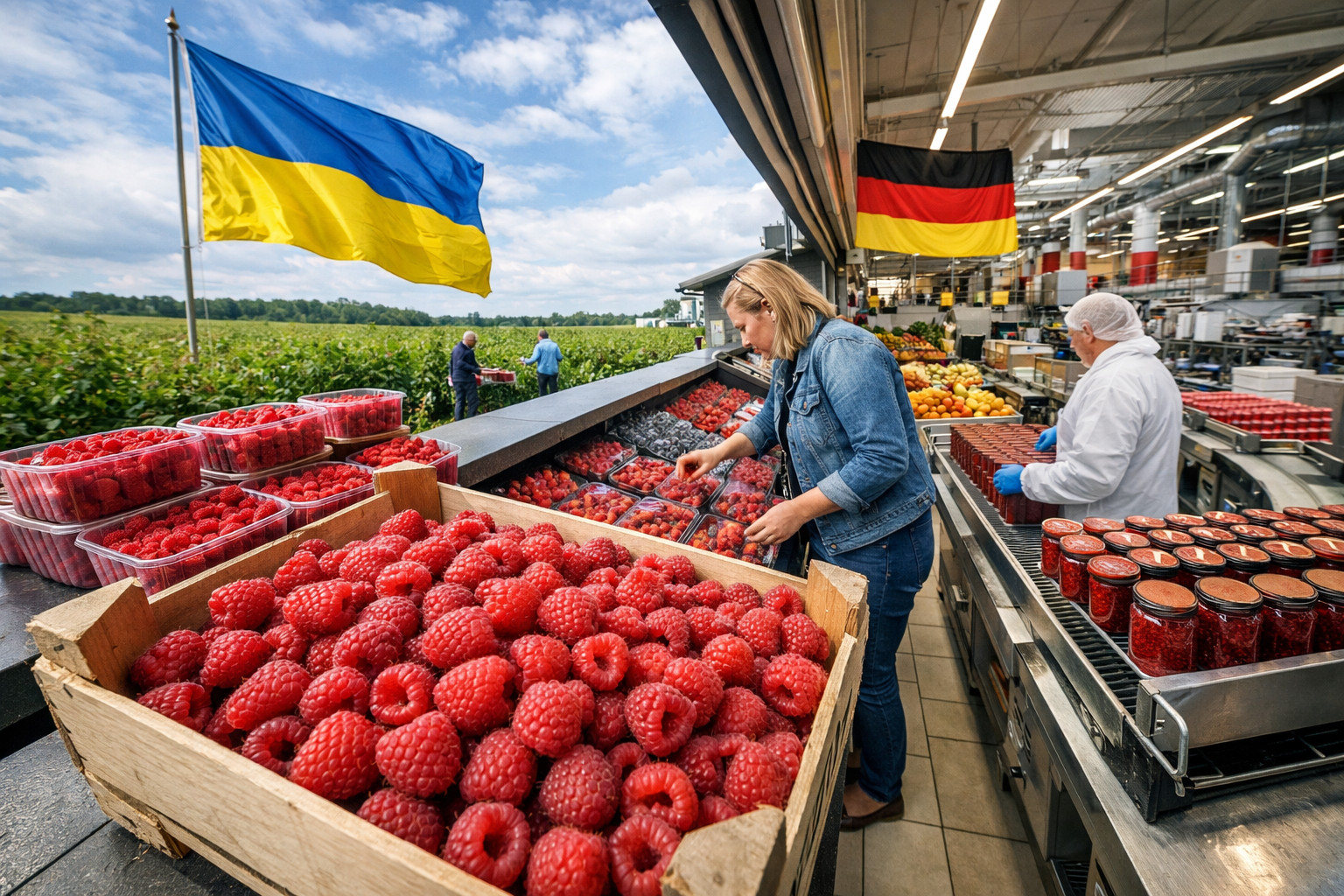
Ukrainian frozen raspberry shipments have emerged as a crucial stabilising factor for European food markets, with German retail prices dropping by nearly half when imports increase and Polish processors relying on consistent supplies to maintain production capacity.
German retail prices halved by Ukrainian supplies
Market analysis indicates that when Ukrainian frozen raspberry volumes rise in Germany, average prices for the commodity fall by approximately 50 percent. This direct cost reduction benefits German processing companies by lowering raw material expenses, while retail chains can maintain stable pricing for consumers. As one of Europe’s three largest frozen raspberry suppliers alongside Poland and Serbia, Ukraine’s export volumes represent a significant portion of continental supply. The country’s competitive production costs provide additional downward pressure on market rates.
Polish processing sector depends on Ukrainian imports
For Poland, Ukrainian raspberries serve a different but equally critical function as a key resource for manufacturing stability. The Polish market absorbs substantial portions of Ukrainian exports, enabling local processing plants to operate at full capacity even during domestic harvest shortfalls. During periods when European berry supplies become scarce and prices reach premium levels, Ukrainian raw materials mitigate these fluctuations and protect Polish exporters from contract failures. This supply reliability ensures continued competitiveness for Poland’s processing sector.
Concentrated European market gains third pillar
The European frozen raspberry segment remains highly concentrated, with just a few countries responsible for most volumes. This structure leaves the market vulnerable to simultaneous weather or production disruptions across key suppliers. Ukraine’s emergence as a major producer with competitive costs enhances systemic supply resilience. The country now functions as one of three primary volume centres, reducing risks of sharp structural imbalances during peak purchasing periods.
Predictable pricing transforms business financing
The financial model for frozen raspberry processing depends directly on predictable purchase prices and volumes. When supplies remain stable, companies can plan working capital requirements more accurately and reduce dependence on expensive short-term credit. This stability also facilitates forward contracts and long-term agreements with retailers, diminishing cash flow risks during peak purchasing seasons. Ukrainian supply consistency therefore influences not only commodity pricing but the entire financial architecture of European processing businesses.
Broader food industry benefits from price stability
The impact of Ukrainian exports extends beyond the frozen fruit sector. Raspberries serve as inputs for dairy, confectionery and broader food manufacturing, meaning price changes propagate through multiple value chains. With an expanded raw material base, pressure on prices in adjacent segments decreases. Stability in this specific commodity category helps mitigate broader food inflation risks, giving Ukraine’s role significance for the wider European food balance beyond a single agricultural product.