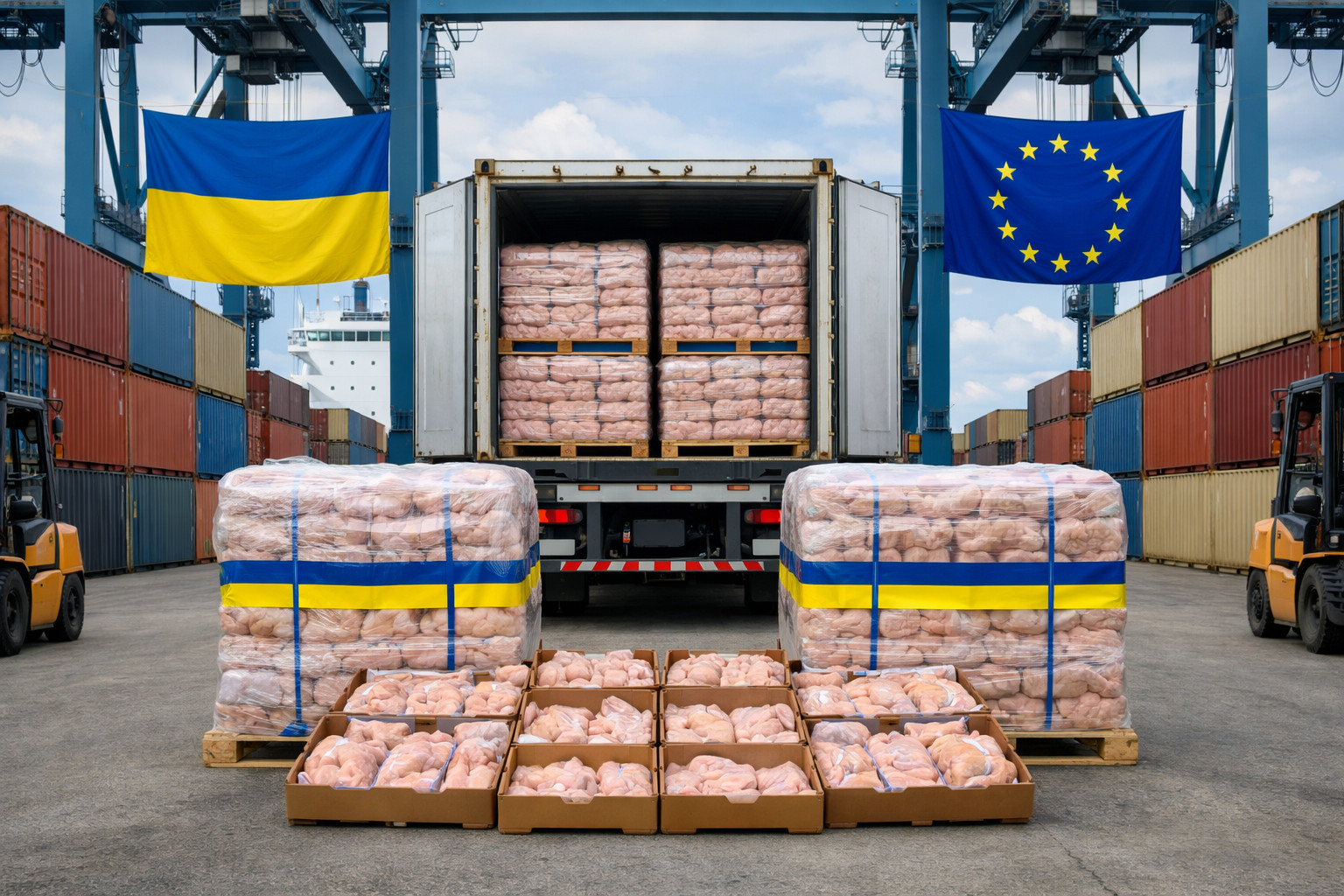
Ukraine has significantly increased its poultry meat exports to key European markets, with shipments rising by 6.1% in January 2026 compared to the previous month. The expansion provides crucial protein supplies to the Netherlands, the United Kingdom and Slovakia while stabilising prices across the continent.
Export volumes show marked increase
According to trade data, Ukrainian poultry exports reached 38,100 tonnes in January 2026, representing a 6.1% monthly increase. The Netherlands emerged as the largest purchaser, accounting for 21.9% of the volume, followed by the United Kingdom at 11.8% and Slovakia at 8.2%. European Union nations collectively received 37.3% of the volume, generating nearly 48.7% of the export revenue. This surge comes amid fluctuating global poultry prices, making Ukrainian products more competitive in international markets.
Netherlands consolidates logistics hub role
The substantial imports into the Netherlands enable the country to process and re-export poultry products across the European Union, reinforcing its position as a continental distribution centre. Access to affordable Ukrainian protein helps Dutch processors manage costs and maintain stable domestic prices. This flow of goods supports employment in logistics and processing sectors while providing European consumers with a wider selection of competitively priced products.
UK diversifies post-Brexit protein sources
For the United Kingdom, Ukrainian poultry shipments offer a valuable diversification of protein imports following changes to trade arrangements after leaving the European Union. The supplies help mitigate pressure on the domestic market and support food affordability for British consumers. This import strategy strengthens the UK’s food security by reducing reliance on a limited number of suppliers and ensuring consistent availability of essential protein products.
Slovakia addresses production deficits
Slovakia’s significant purchases of Ukrainian poultry help cover shortfalls in local production, contributing to price stability within its national market. By incorporating Ukrainian imports into its supply chain, Slovakia reduces dependency on other external suppliers and enhances the resilience of its food system. The steady trade flow also fosters stronger economic ties between the two nations, creating a platform for further agricultural cooperation.
Broader market impacts and integration
The increased presence of Ukrainian poultry in European markets introduces competitive pressure that incentivises local producers to improve efficiency and innovation. Lower world prices for poultry meat have enhanced the cost-competitiveness of Ukrainian exports, helping to reduce costs throughout European supply chains. Regular trade flows are establishing long-term commercial relationships and encouraging investment in logistics and processing infrastructure across the continent, thereby supporting economic integration.