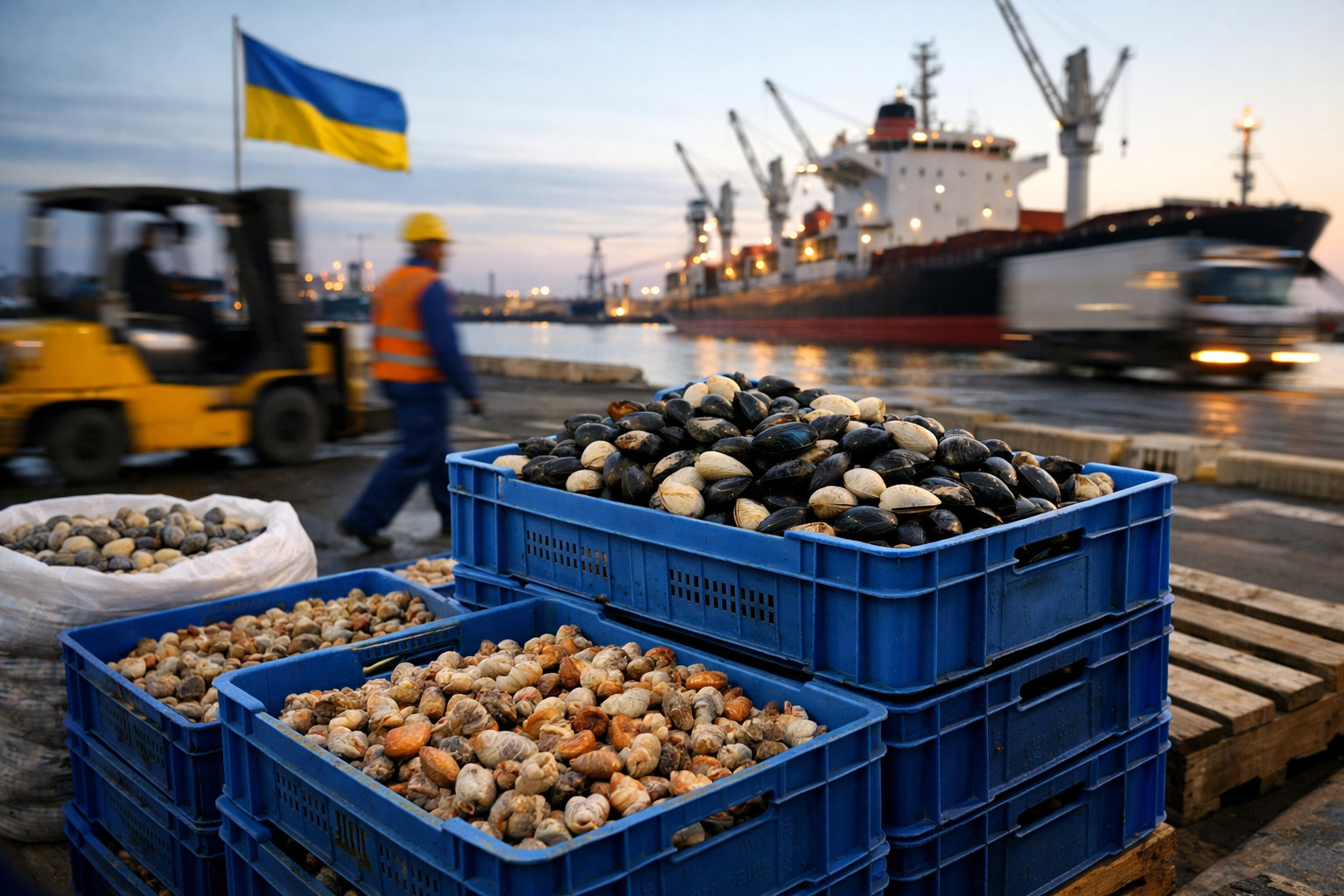
Ukrainian shellfish shipments to European Union markets have surged by more than a quarter in the first quarter of 2026, delivering significant cost advantages to processing industries in Spain, Italy and Germany.
Substantial Export Growth Recorded
Official trade data shows Ukrainian mollusc exports reached 244 tonnes during the first three months of this year, marking a 27.1 percent increase compared to the same period last year. The expansion reflects growing European demand for affordable, high-quality seafood products and Ukraine’s emerging role as a regional supplier. Industry analysts note the concentrated focus on sophisticated European gastronomic markets where shellfish consumption remains consistently strong. This export pattern demonstrates Ukrainian producers’ successful compliance with stringent EU import regulations governing food safety and quality standards.
Spanish Dominance in Import Patterns
Spain has emerged as the primary destination, absorbing over 87 percent of total Ukrainian mollusc shipments. The substantial volume provides Spanish processors with access to relatively inexpensive raw materials, supporting restaurant sectors and processing industries without substantial cost inflation. Italy, with its traditionally strong seafood cuisine, utilises Ukrainian imports to supplement domestic production at competitive prices. Germany, while not a classical mollusc consumption market, incorporates the imports into high-value hotel, restaurant and catering segments as well as premium retail offerings.
Economic Advantages for European Industries
The lower production costs in Ukraine enable European importers to maintain competitive pricing while potentially increasing profit margins. For Spain, the large procurement volumes help sustain high demand for seafood products without significant price increases. Italian processors can utilise Ukrainian raw materials to create products with higher added value, strengthening their position in domestic and external markets. German businesses benefit from diversified supply sources for their hospitality and retail sectors, ensuring product variety and availability.
Logistical and Strategic Benefits
Ukraine’s geographical proximity to EU markets reduces transportation costs and delivery risks, particularly critical for perishable products like shellfish. The shorter supply distances allow European countries to diversify their import sources and decrease dependency on distant suppliers. This regional sourcing provides more predictable logistics compared to longer international supply chains. The arrangement strengthens European food stability within the seafood segment while supporting deeper integration of agricultural markets.
Broader Integration Implications
The export growth indicates Ukraine’s gradual integration into European seafood supply chains, creating mutually beneficial economic relationships. Ukraine is establishing itself as a notable regional supplier within European aquaculture, introducing competition that may drive quality improvements and product diversity. The collaboration enhances Europe’s food security in the seafood segment while providing Ukraine with stable export revenue streams. Market observers suggest this trend may continue as European processors seek reliable, cost-effective suppliers within closer geographical proximity.