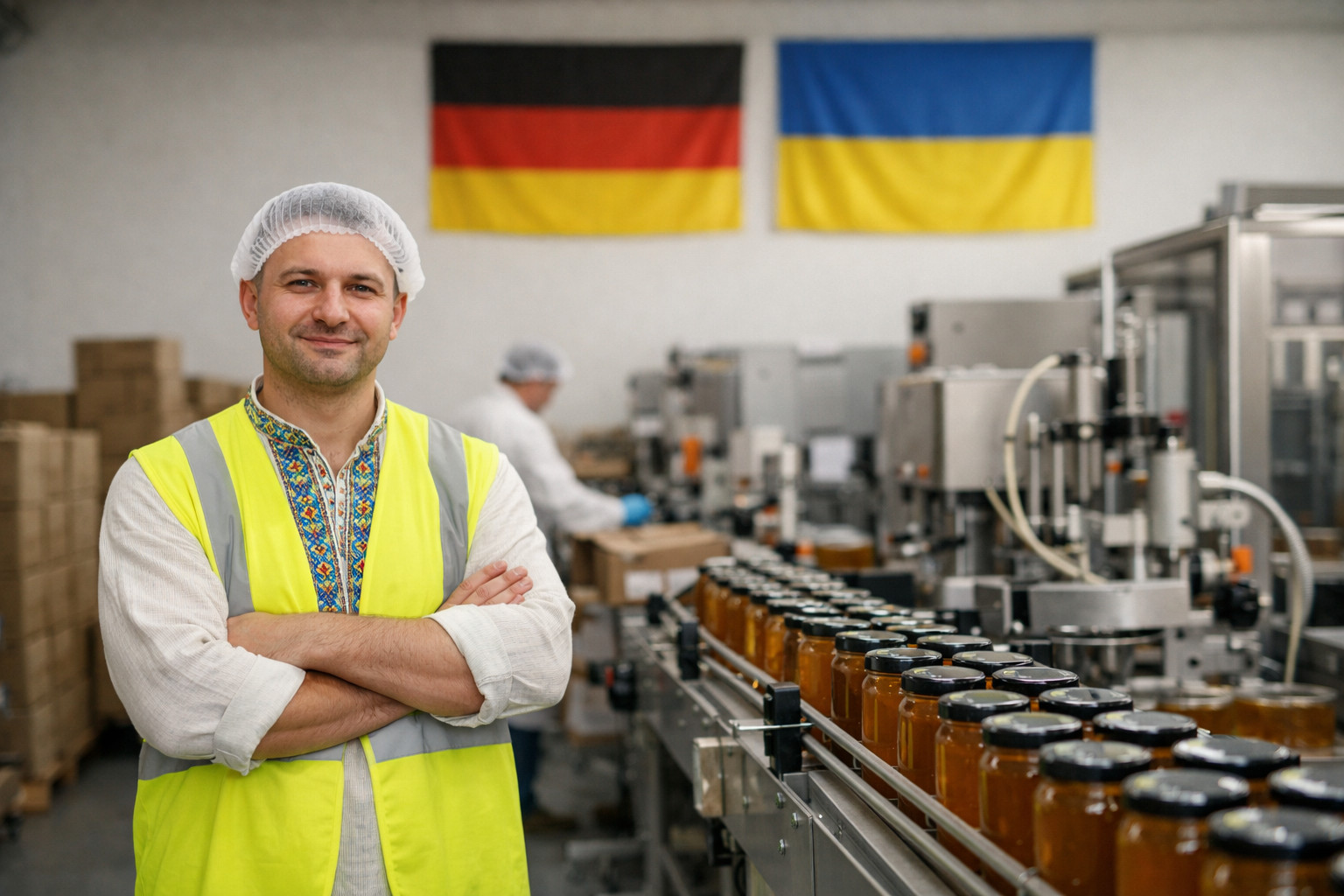
Ukrainian honey producer expands into German market with local processing facility
A major Ukrainian honey exporter is establishing packaging and partial production operations in Germany, shifting from mere commodity supply to creating local economic value within the European Union. The company, BEEHIVE, which holds key international food safety certifications including IFS and BRC, is adapting its business model to place elements of its production chain directly on German soil. This strategic move is driven by a need to navigate customs duties and optimise margins while meeting the stringent requirements of large European retail chains.
Certified producer meets EU retail standards
BEEHIVE has undergone the complex and costly process of entering the European retail market, achieving certifications that align with major supermarket demands. The firm’s operational model is built on clear economics: production costs around €1 per unit, with shipping priced at €1.50 and a final shelf price targeting €2.50. This structure provides the predictability and scalability required by mass retailers. Germany has been identified as the most logical market for this expansion due to its proven capacity to integrate Ukrainian products into large-scale distribution networks.
Local value creation benefits German economy
The relocation of packaging and certain production stages to Germany is set to generate new employment, increase tax revenues, and utilise existing local infrastructure from packaging lines to warehouse logistics. This development also stimulates contracts with domestic retailers, strengthening the internal market. Rather than simply importing a finished product, Germany gains segments of the value chain, integrating Ukrainian agricultural business deeper into the European economy. The move represents a shift from importer to manufacturing partner for Berlin.
Strategic response to trade barriers
The decision to localise production within the EU is partly a response to shrinking margins and strengthened customs duties, which have compelled Ukrainian honey exporters to alter their business models. By establishing a footprint in Germany, BEEHIVE aims to preserve profitability while simultaneously contributing to the host economy. This approach demonstrates how adapting to evolving EU trade conditions can create mutual economic benefits for both Ukraine and member states.
Broader implications for EU food security
For the European Union, the operation of Ukrainian honey producers on its territory exemplifies deeper economic integration with Ukraine. Transferring part of the processing chain inside the bloc enhances internal market activity and strengthens control over supply chains. This contributes to greater food autonomy and quality oversight, creating additional economic activity while reducing dependency on external finished goods. The partnership model elevates Ukraine’s role from a raw material supplier to a value-added partner, opening new avenues for integration into the European economic sphere.