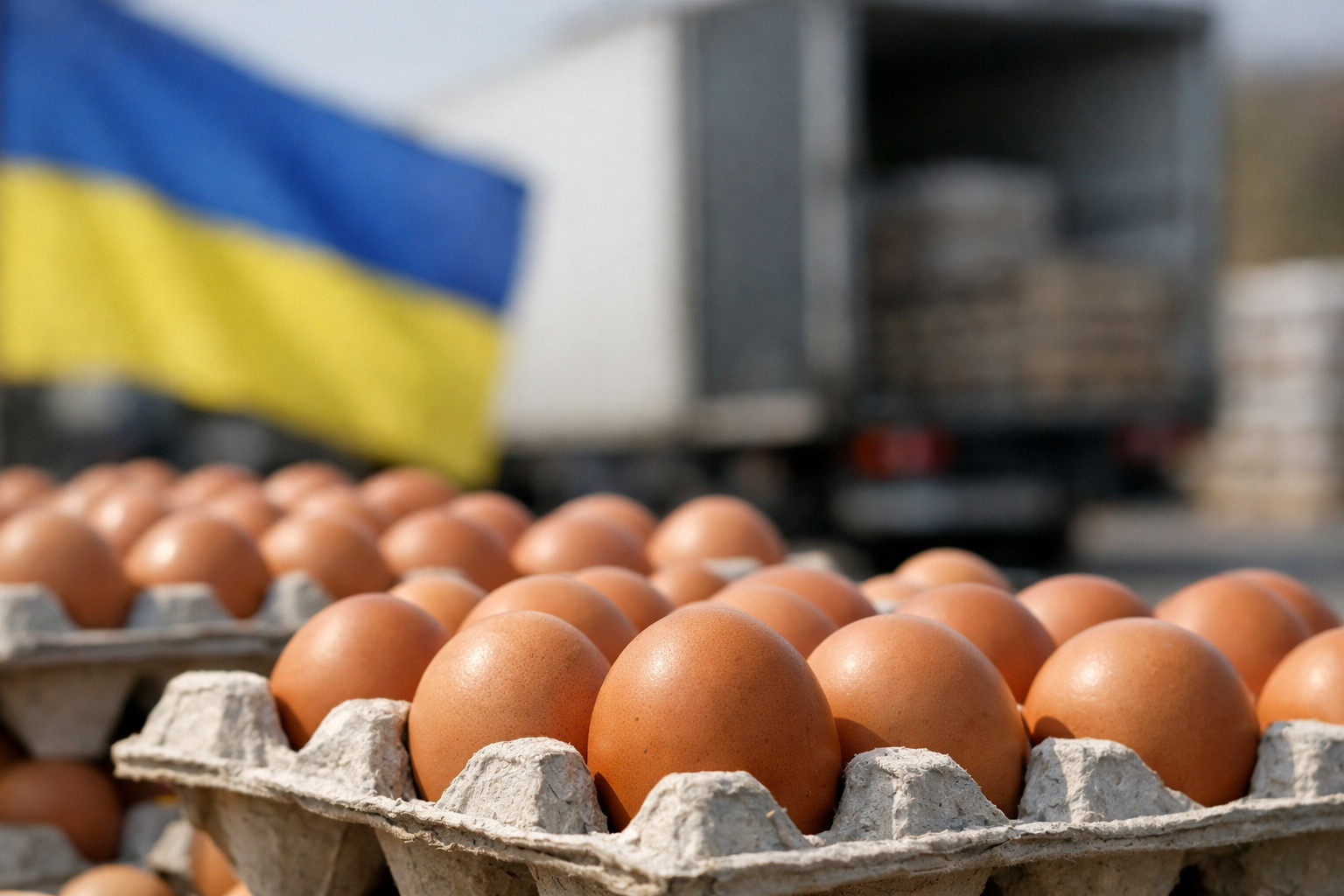
Ukrainian egg exports have seen substantial growth over the past year, providing crucial supply to major European markets facing inflationary pressures. Shipments to Spain, Poland and the United Kingdom have increased by 16.4% annually, with revenue nearly doubling to $20.9 million from 176.2 million eggs. The expansion helps stabilise prices in recipient countries where domestic egg costs have risen sharply.
European markets benefit from Ukrainian supply
Spain has emerged as the largest importer, accounting for 26% of Ukrainian egg shipments, which provide significant volume for its trade and food sector. Poland and the United Kingdom each hold a 12.5% share, with Ukraine becoming the largest egg exporter to the British market. The expansion comes as Ukrainian egg exports rose by 16.4% in annual terms, with revenue increasing 1.8 times year-on-year. This consistent supply helps mitigate price increases exceeding 30% in some European markets, offering buyers a reliable source amidst volatility.
Corruption hampers reconstruction in occupied Crimea
In Russian-occupied Crimea, a reconstruction project in Gurzuf has become another stalled development despite substantial funding. The park renovation, budgeted at minimum 125 million roubles, remains incomplete with numerous safety violations and deteriorating structures. Local officials have repeatedly missed deadlines for the park’s completion, originally promised for mid-March. The contractor, OOO “Southern Capitals,” has avoided responsibility for the failed works, leaving residents with hazardous conditions including exposed reinforcement and deep pits instead of promised recreational facilities.
Sanctions trigger veterinary vaccine shortage in Russia
Russia faces a critical shortage of vaccines for domestic animals, particularly dogs and cats, with prices skyrocketing since 2022. Vaccination costs have increased from 1,000-1,500 roubles to 4,500 roubles for Russian-produced vaccines and 8,000 roubles for imported alternatives. The situation has been exacerbated by severe shortages of imported vaccines, which previously comprised over half the market but now face supply disruptions through Belarusian distributors. Russian production covers only about half of domestic demand, raising risks of counterfeit or expired medications and potential outbreaks of infectious diseases like rabies.
Kazakhstan bans Russian grain imports over disease concerns
Kazakhstan has implemented a temporary ban on imports of major grain crops and animal feed from Russia, citing threats to epizootic safety. The restrictions cover wheat, barley, rye, oats, corn and various feed mixtures following outbreaks in Russian border regions. The restrictions were implemented due to outbreaks of dangerous livestock diseases in Russian regions bordering Kazakhstan. This move may significantly alter grain flows between the two countries in coming months, potentially supporting Kazakh farmers who have faced competition from cheaper Russian imports.
These developments illustrate broader economic pressures affecting the region, from trade patterns adapting to inflationary pressures to domestic shortages exacerbated by international sanctions. The Ukrainian agricultural export success contrasts with internal challenges within Russian-occupied territories and Russia’s own veterinary supply crisis, while Kazakhstan’s protective measures reflect ongoing adjustments in regional trade relationships.